
The cut is where a slab becomes a room. Everything we make is fabricated in our own shop in Bridgeport. Nothing is brokered out, nothing is cut by someone we have never met. That matters more than it sounds, because almost every failure in a stone countertop happens between the slab arriving and the crew leaving.
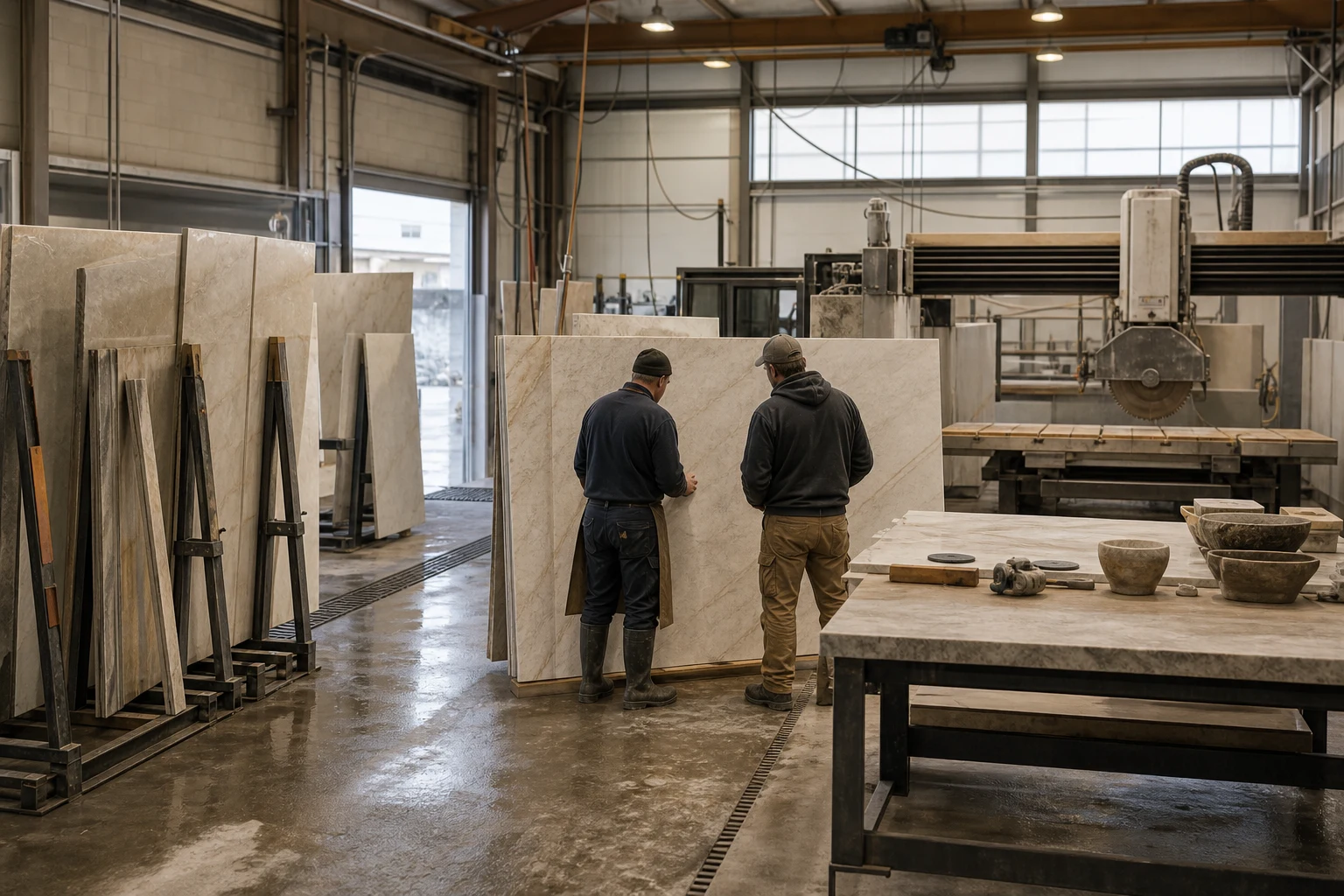
Not every company selling countertops owns a shop. Some hold a slab catalog and send the work to a fabricator elsewhere, which is a perfectly legitimate way to run a business. It is worth knowing which you are hiring, because it changes who is accountable when something needs solving.
We hold the slabs, we template the space, we cut the stone, we finish the edges, and our own installers set it. One company is accountable from the first showroom visit to the last bead of silicone. When a wall turns out to be an inch out of square, the person who has to solve it is the person who measured it.
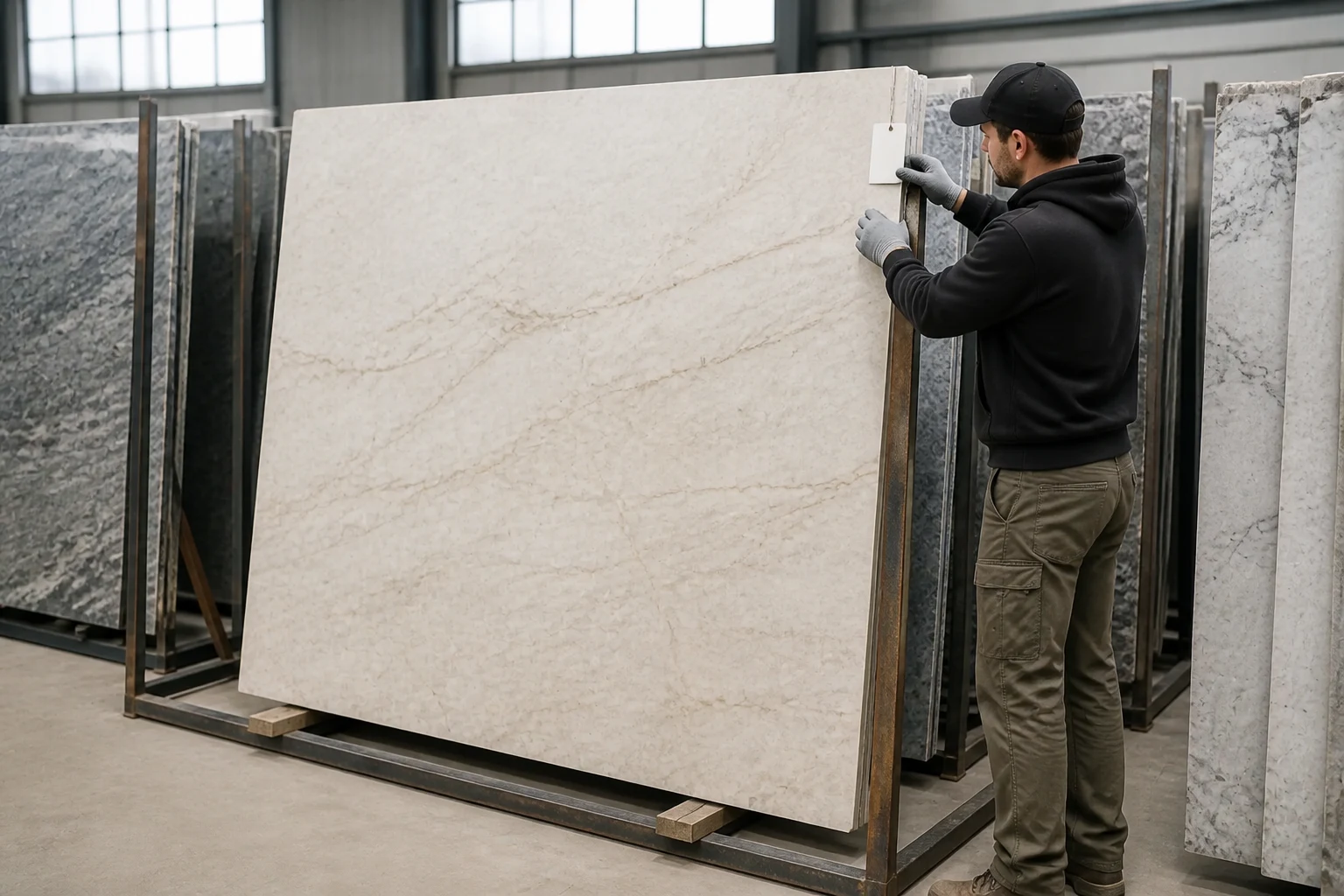
You choose the actual slabs, not a sample chip. In natural stone the piece you saw and the piece that arrives are different objects unless someone reserves the specific one. We tag yours.
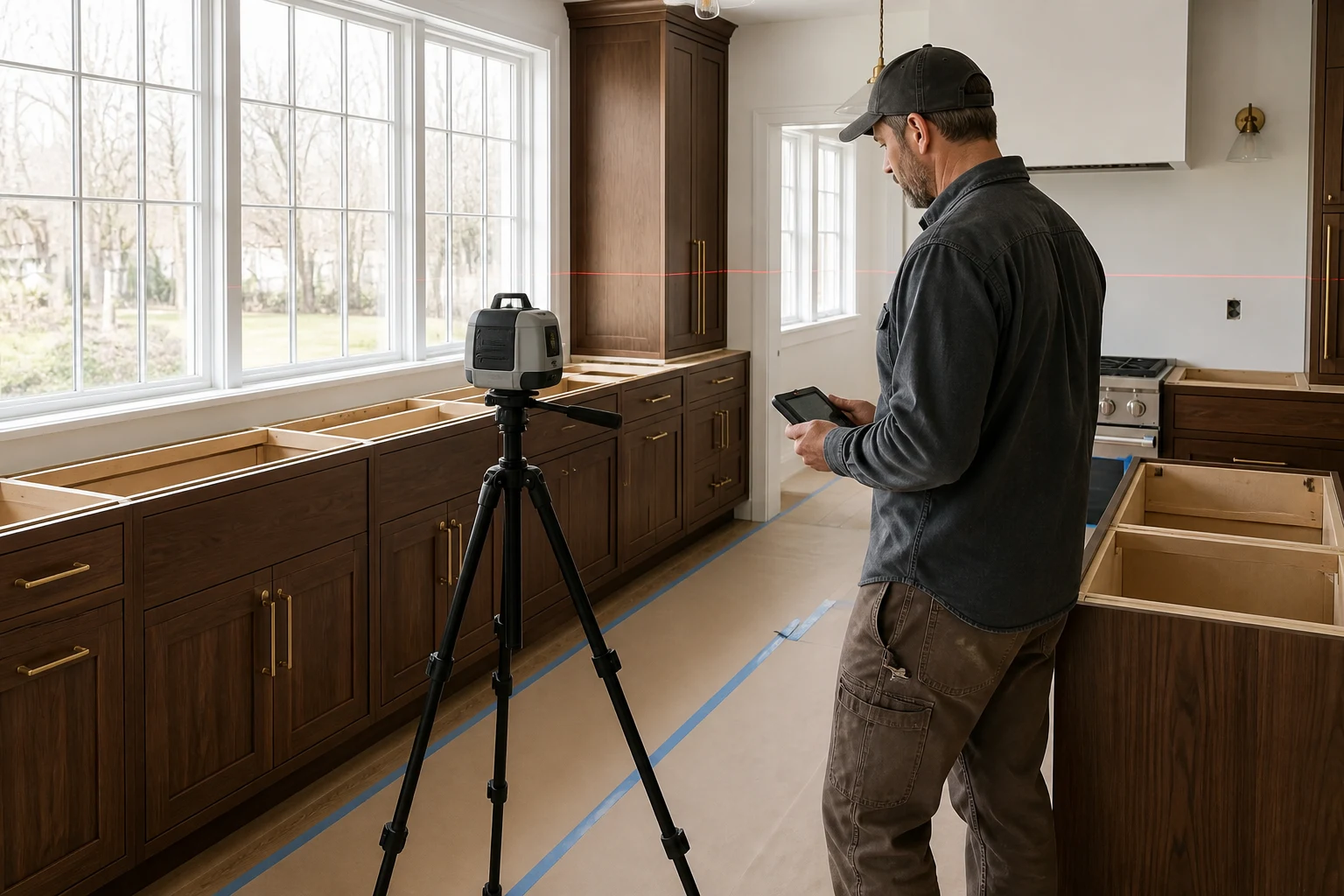
Once cabinetry is set, we template digitally to capture real dimensions: walls out of plumb, cabinet runs that drift, appliance tolerances. Paper templates are how gaps happen.
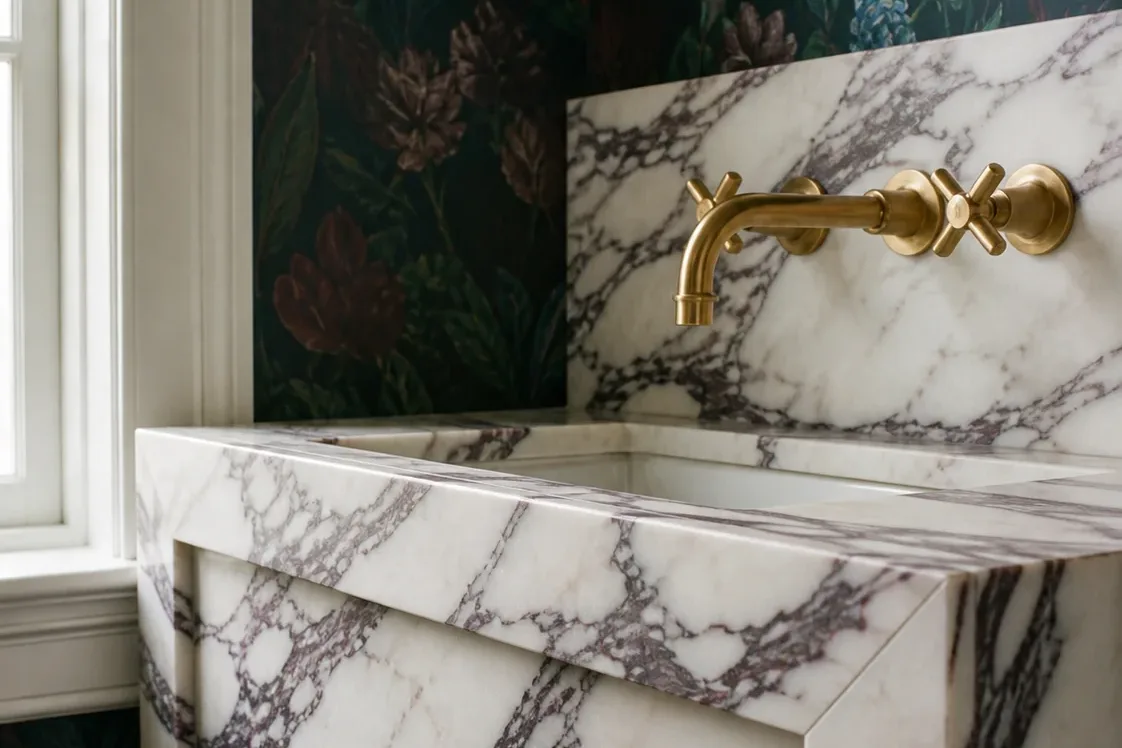
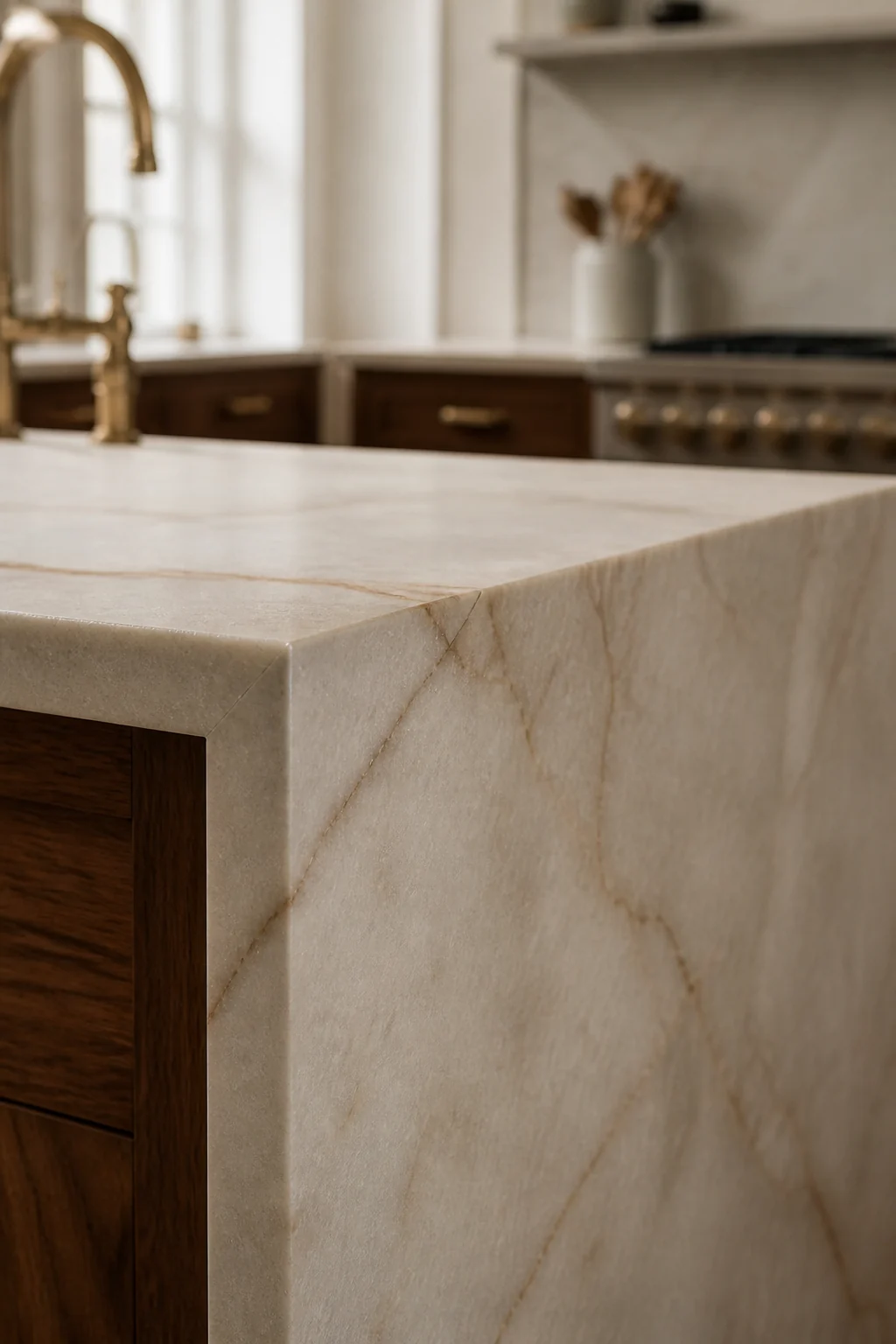
We lay the template over a photo of your slab and position every piece before cutting: where the vein crosses an island, where a seam falls, and whether a waterfall can be mitered so the vein runs around the corner.
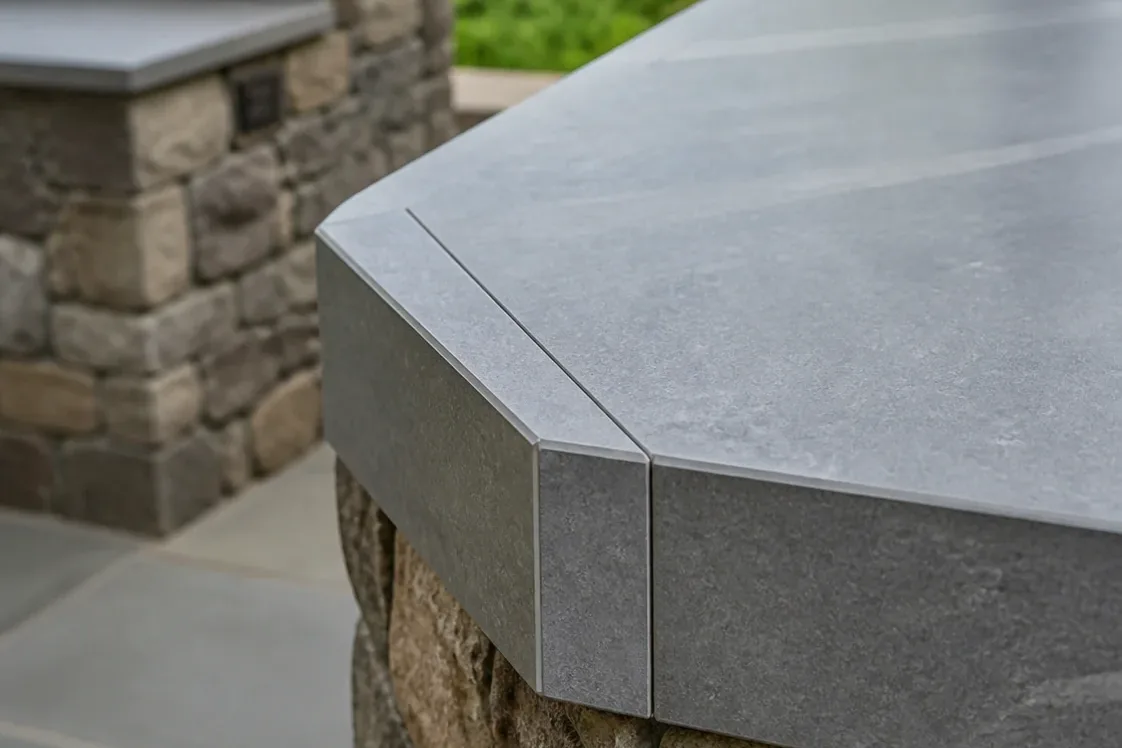
Cutting, sink and cooktop cutouts, edge profiling and hand polishing. Mitered and built-up edges are assembled and dressed in the shop so the joint is hard to find.
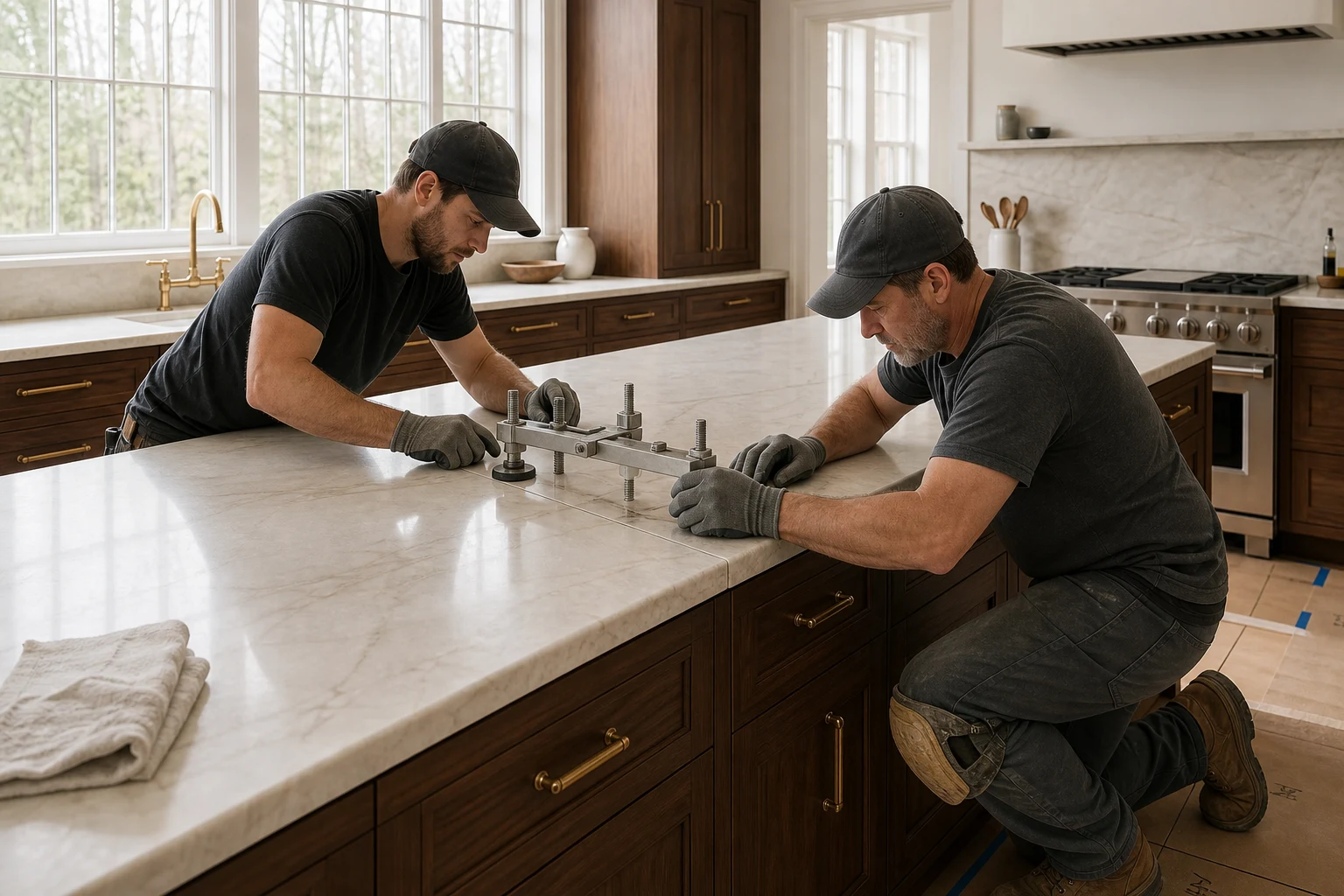
Delivery, setting, seam joining, on-site polishing and sealing where the material needs it. Our own crew, and a site left clean enough that the next trade can work in it.
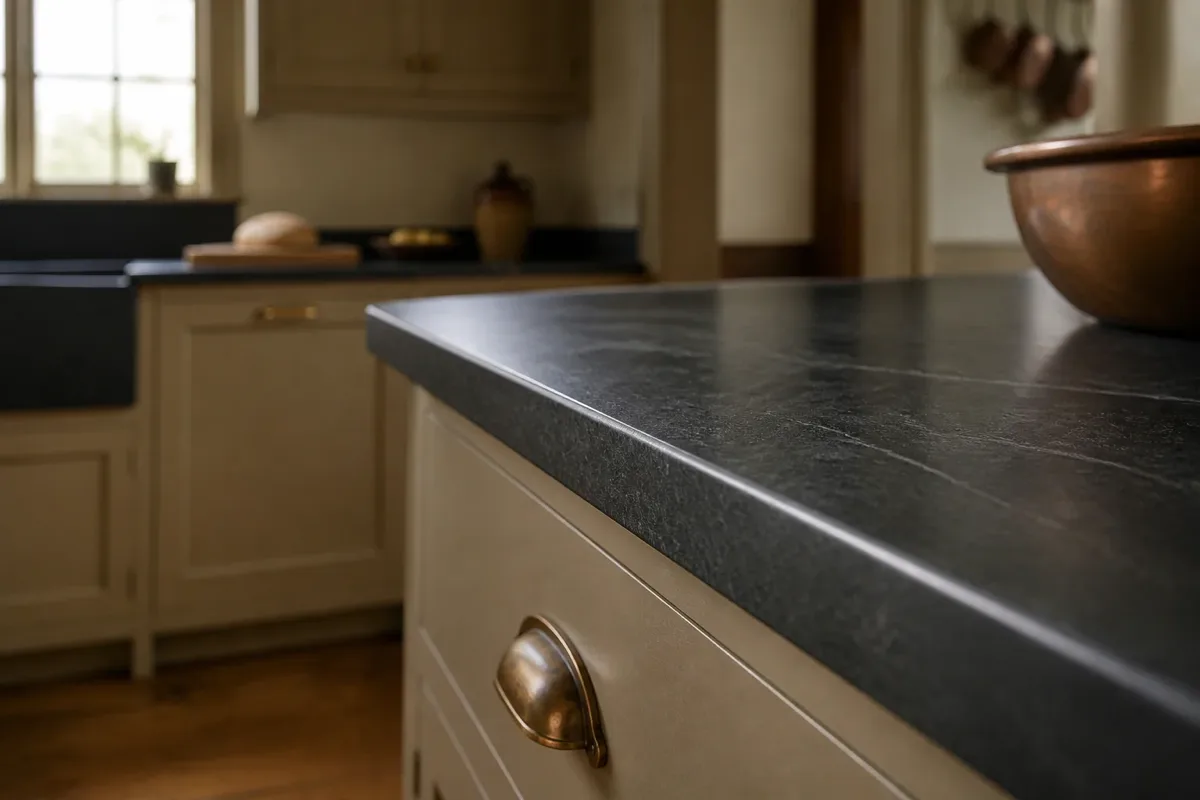
Care guidance specific to your stone, because soapstone, Calacatta and porcelain need three completely different things. Resealing and repair work when you need it years later.
Almost every kitchen needs at least one seam. Slabs come in finite sizes and most islands in Fairfield County and Westchester homes are longer than the stone. The question is never whether there will be a seam. It is where it lands, and whether anyone notices.
A seam placed badly sits in the middle of the island where everyone stands. Placed well, it falls at a sink cutout or a natural break in the veining, and the pattern carries across it because the two pieces were cut adjacent from the same slab. That is a planning decision made days before anything is cut, and it is the clearest difference between fabrication and manufacturing.
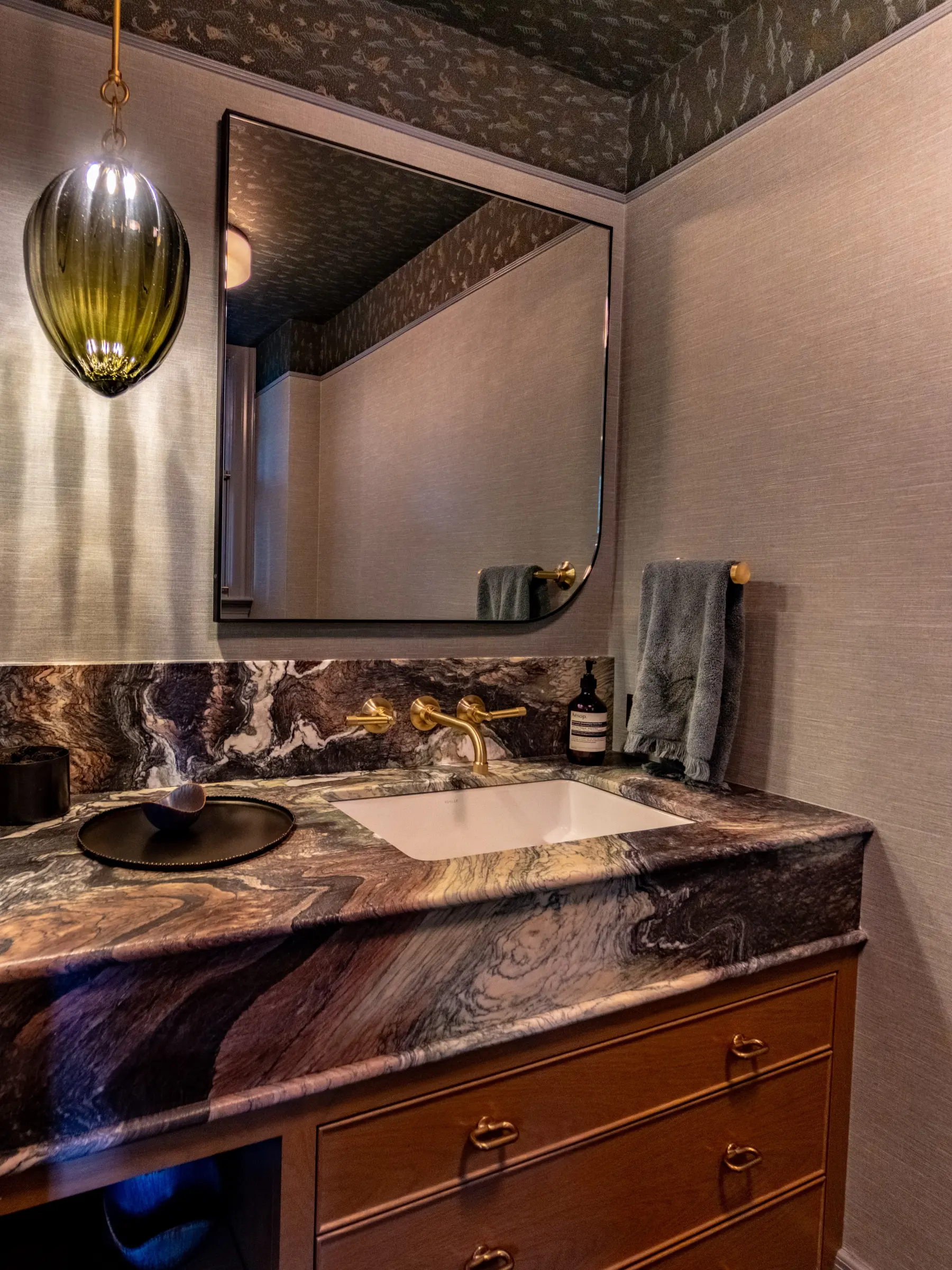
Bookmatching, vein alignment and mitered returns are not upgrades. They are what make stone look like it belongs in the room.
The machines matter less than the people running them, but both are here, under one roof in Bridgeport, on every job.
The best way to judge a shop is to stand in it. The yard is open by appointment. Call 203-717-1978 to set a time and see the slabs and the saws in person.
Fully insured
40+ years in the trade
Family-owned & operated
Our own crews, no subcontractors
Template to install: typically 1–2 weeks
No badges we didn't earn, no claims we can't keep. If you want references from recent Fairfield County and Westchester projects, ask and we will put you in touch.
Some shops advertise three-day installs. We could rush too, but a proper job has an order to it: template after the cabinets are set, lay out every cut on your actual slab, fabricate, match the seams, then install once and correctly. The same crew handles every step, which is why we quote one to two weeks from template to install and hold to it.
Three days buys you whatever slab is closest to the saw. Two weeks buys you the stone you chose, cut the way it deserves.