
Quartzite is sandstone that was buried, heated and squeezed until the grains fused into solid quartz. It can look a lot like marble, but it is harder than granite and it does not etch. When someone falls for marble and then hears what living with it involves, quartzite is usually the next slab we show them.
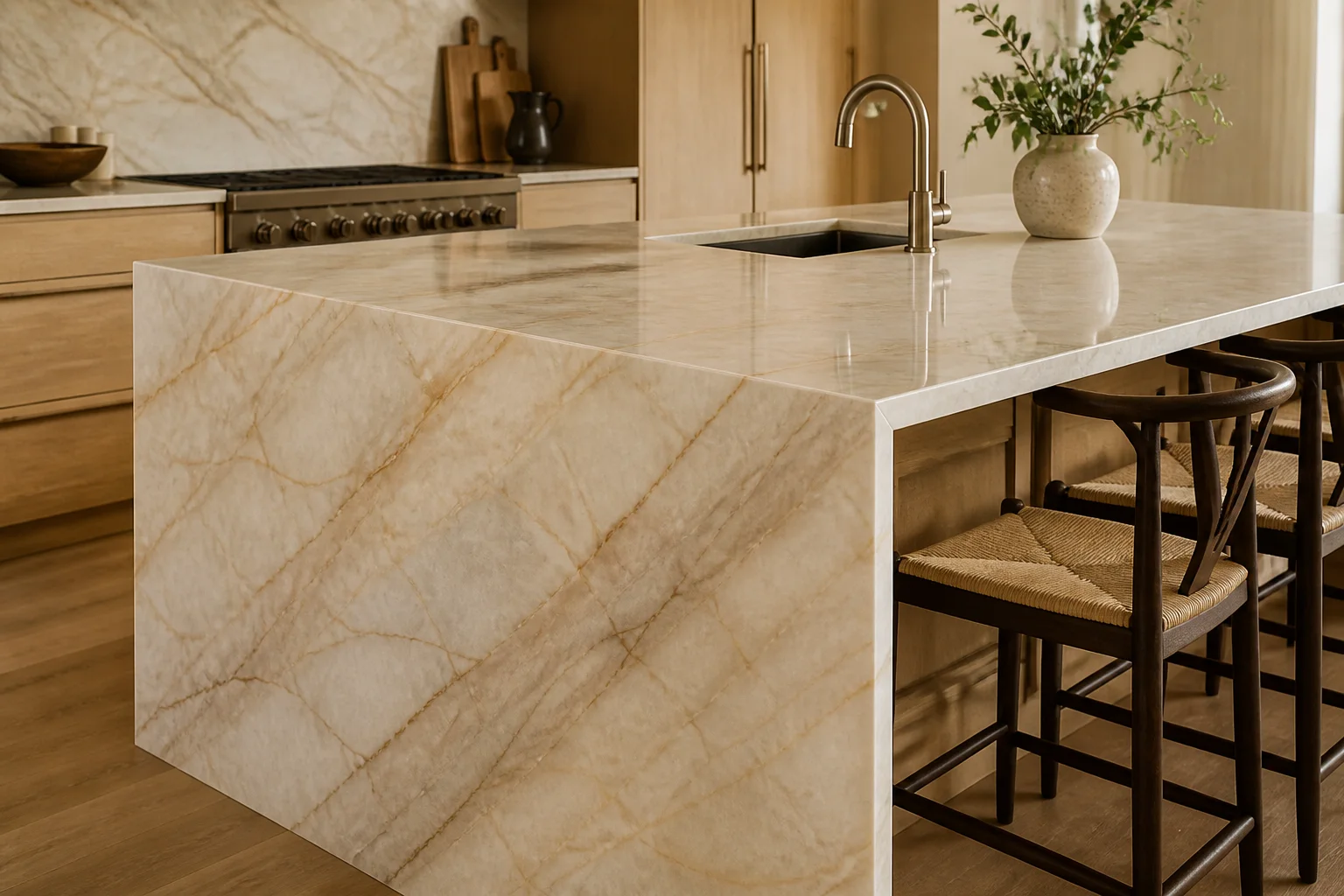
Quartzite is sold under trade names, and nobody polices them. Some slabs marketed as quartzite are really dolomitic marble, which means they will etch, the very thing you chose quartzite to avoid. It is a common problem, and it is how people end up with an expensive countertop that does not behave the way they were told it would.
We acid-test slabs before we commit them to a kitchen instead of trusting the label. It takes a minute on an offcut, and it tells us whether the stone will shrug off a lemon.
Taj Mahal is the warm one: a creamy background with soft beige and gold veining that looks right with wood cabinets and brass hardware. It is the quartzite we are asked for most in Fairfield County.
Mont Blanc is the cool one: white to pale gray with soft gray veining, much closer to Carrara. We suggest it where the warmth of Taj Mahal would clash with a cool white kitchen.
We also carry or can source Sea Pearl, Macaubas, Cristallo and others. Quartzite is worth seeing in person more than any other stone, because its depth and translucency do not come through in photos.
Seal it at installation and check once a year with the water test: leave a few drops on the surface for fifteen minutes. If the stone darkens, reseal. If the water beads, leave it alone. Day to day, warm water and a pH-neutral cleaner are all it needs, and a spilled glass of wine is not an emergency.
The owners cook every day and wanted a warm white kitchen without marble's etching, so we used Taj Mahal. Both pieces of the waterfall were cut in sequence from the same slab, mitered at forty-five degrees and dry-fitted in the shop before glue-up, so the veining turns the corner and runs to the floor.
See the project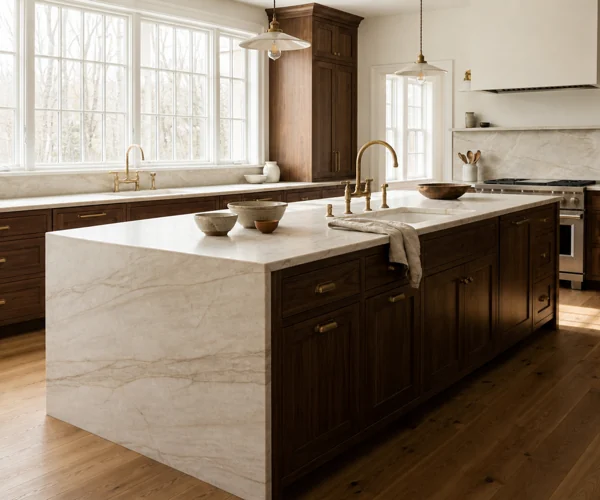
The ones we hear most at the yard. Anything else, call us at 203-717-1978.
For most working kitchens, yes. True quartzite does not etch, takes heat and is harder to scratch, while marble etches from lemon, wine and tomato. If you love the look of marble and cook every day, quartzite gets you most of the look with far less worry.
Yes. It is porous, so we seal it at installation. Check it once a year with the water test and reseal if a few drops left for fifteen minutes darken the stone.
Real quartzite scratches glass and does not react to acid. We acid-test an offcut before we commit a quartzite slab to a kitchen, so you are not relying on the name on the tag.
Taj Mahal is warm, cream with beige and gold veining, and suits wood cabinets and brass. Mont Blanc is cool, white to pale gray with gray veining, and suits white or gray kitchens. Our guide to the two compares them side by side.
The slabs cost more to begin with, and the stone is so hard that cutting, edging and polishing take longer and wear through tooling faster. A waterfall end or mitered edge in quartzite is real shop time.
Quartzite is hard on saw blades and unforgiving at the edges, which is why we cut and finish it in our own Bridgeport shop and install it with our own crew. Still deciding? Compare it with marble, read our quartz vs. quartzite guide, and see how often to seal it. We fabricate quartzite for homes across the area, including Fairfield, Westport, Greenwich and Rowayton.
Quartzite has a depth and translucency that photos miss, and two slabs with the same name can look nothing alike. Walk the yard with us, hold a light to the stone, and put the slabs you like on hold.
Book a slab-yard visitGet an estimate