
Soapstone is a talc-rich metamorphic stone, soft to the touch and completely non-porous. It has been used in American kitchens and lab benches for well over a century, which says a lot about how it holds up. It arrives a soft gray and darkens toward charcoal as it is used.
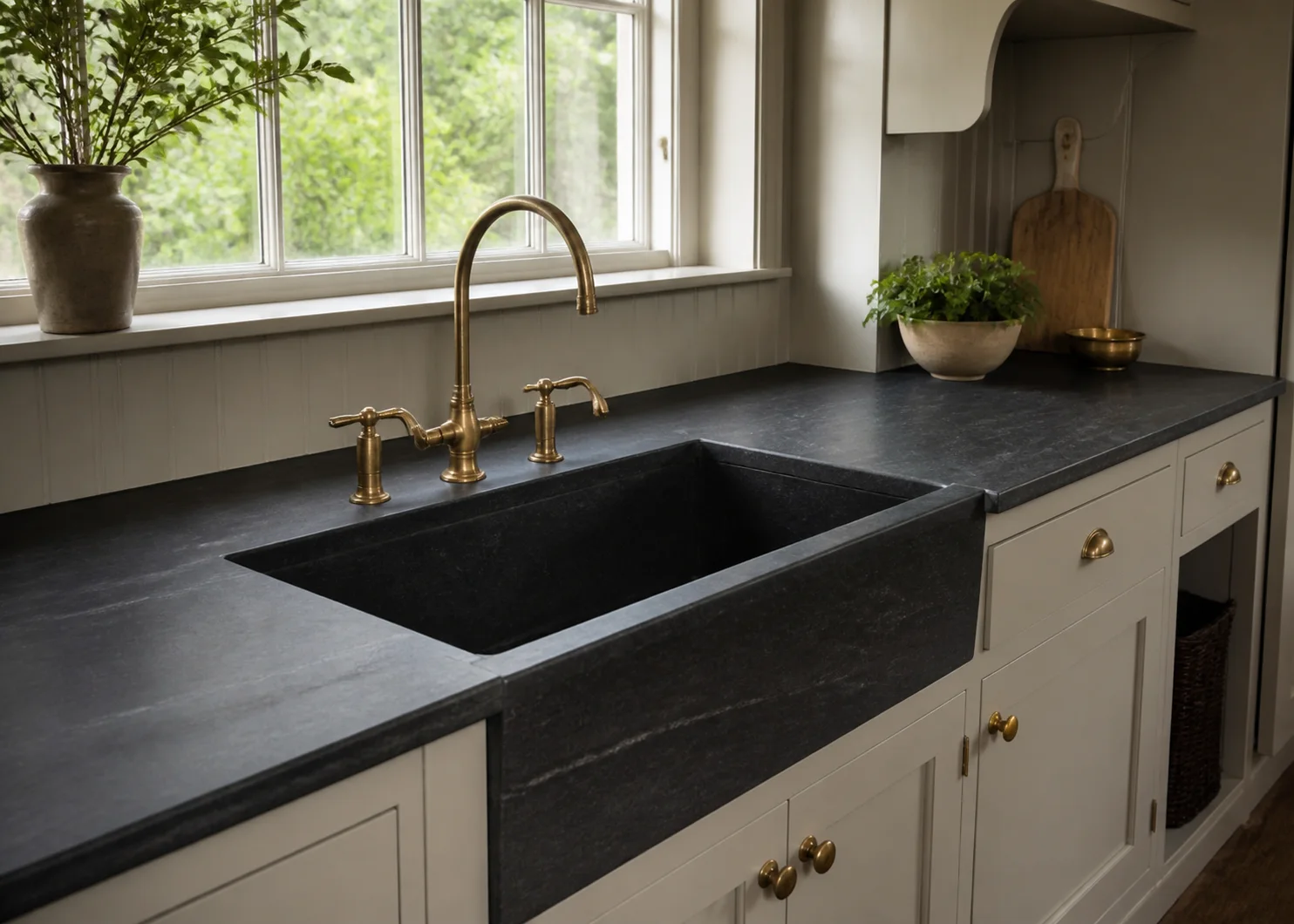
Because soapstone is non-porous, nothing soaks in. Red wine, olive oil, lemon juice and turmeric leave nothing permanent. It never needs sealing and acid does not touch it, so it is the opposite of marble on the point that causes the most kitchen regret.
It also handles heat very well. A cast iron pan straight from the burner can sit right on it. Soapstone was used for wood stove surrounds because it absorbs and gives off heat without damage.
This area has a lot of old houses: Colonials, farmhouses, converted barns and carriage houses. In a 1780s kitchen, a soapstone counter and an integral soapstone sink look right in a way engineered quartz never will, because soapstone was in kitchens like that when they were built.
We fabricate primarily Alberene soapstone from Schuyler, Virginia, which is quarried domestically and has a shorter supply chain than imported stone. Brazilian and Finnish soapstones are also available and tend to be slightly harder.
Left alone, soapstone darkens slowly and unevenly as oils from cooking and hands work into the surface. With mineral oil it darkens right away and evenly to a deep charcoal that brings out the veining. Neither is wrong. Oiling speeds up and evens out something that will happen anyway, and you can stop whenever you like.
Charcoal Alberene soapstone on the perimeter, a matching window sill, and an integral sink built from five pieces of the counter slabs, seamed and eased so the inside reads as one carved block. We did the first oiling in the shop. The owners oil it each season, which is the point of the material.
See the project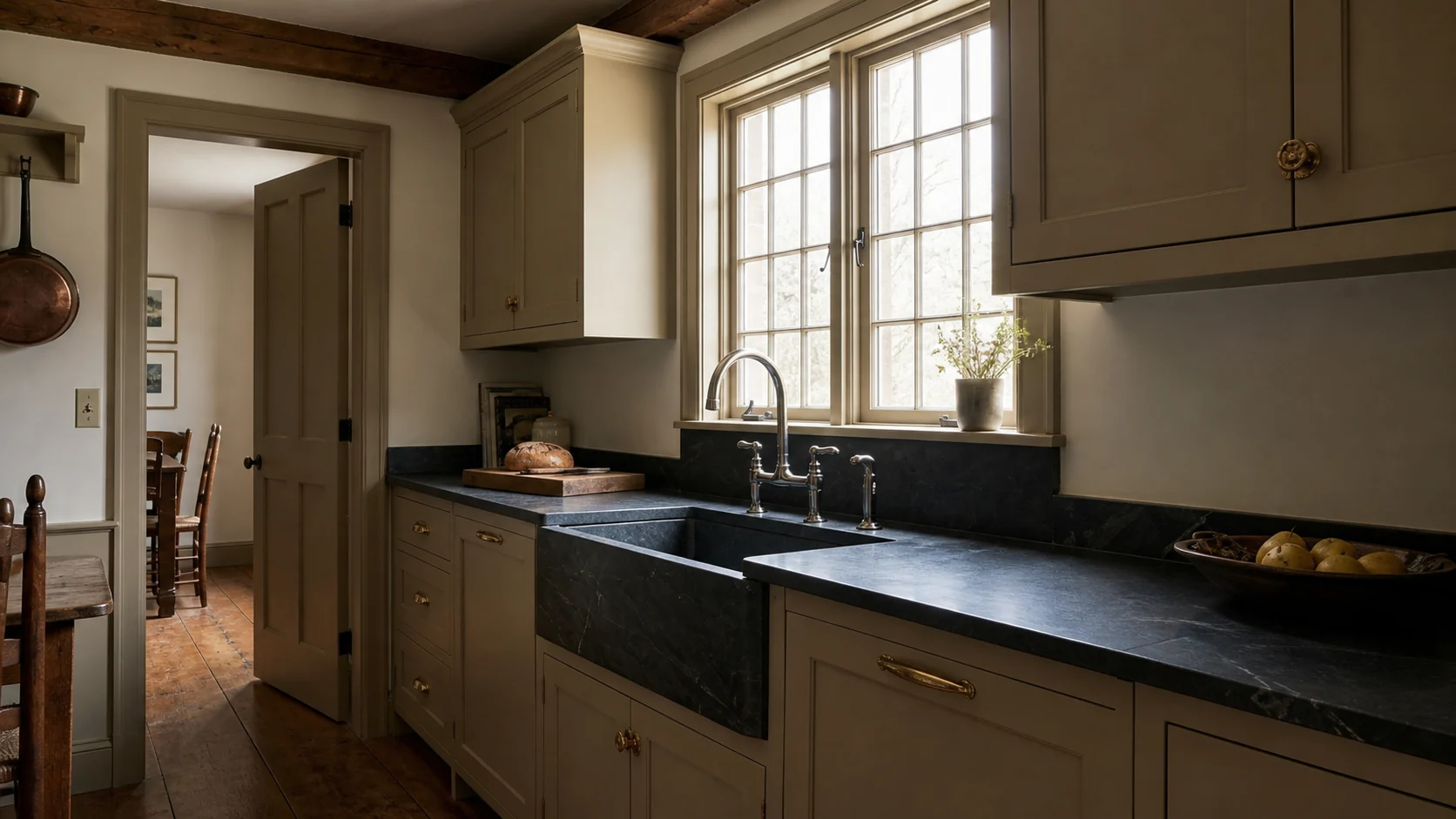
The ones we hear most at the yard. Anything else, call us at 203-717-1978.
Yes. It is soft enough to mark with a key, and you will see scratches in the first week. Light ones disappear with a little mineral oil and deeper ones sand out with fine sandpaper. Most owners stop noticing after the first few months.
No. Oil is cosmetic. It darkens the stone evenly and brings out the veining, but soapstone does not need protecting. Many people oil it every few weeks at first and then let it go its own way.
Yes. We build integral sinks from the same slabs as the counter, seamed at the corners, so the sink and counter read as one piece. The Easton farmhouse kitchen above has one.
It can. It handles heat and freeze-thaw well and will not stain, so it works under a covered porch or pergola. Outside it weathers and darkens unevenly, which some people like and some do not.
Mostly Alberene soapstone from Schuyler, Virginia, quarried here in the US. We can also get Brazilian and Finnish soapstones, which tend to be a little harder.
Soapstone is cut and finished in our Bridgeport shop and installed by our own crew. Read our stone care guide for oiling and sanding out marks, and see our edge profiles: soapstone takes a soft eased edge well. It suits older houses particularly well, from Bridgeport and Fairfield to New Canaan and Darien.
Soapstone feels different from every other stone, and seeing a slab oiled next to one left natural makes the choice easy. Come by, bring photos of the kitchen, and we will show you both.
Book a slab-yard visitGet an estimate