
Sintered porcelain is pressed and fired at very high temperature into a surface that is harder than granite, completely non-porous and UV stable. Slabs come in large formats, typically about 126 by 63 inches, big enough for a full island top or a floor-to-ceiling backsplash without a seam. For a covered terrace kitchen in Westport or Southport, it is the surface we recommend first.
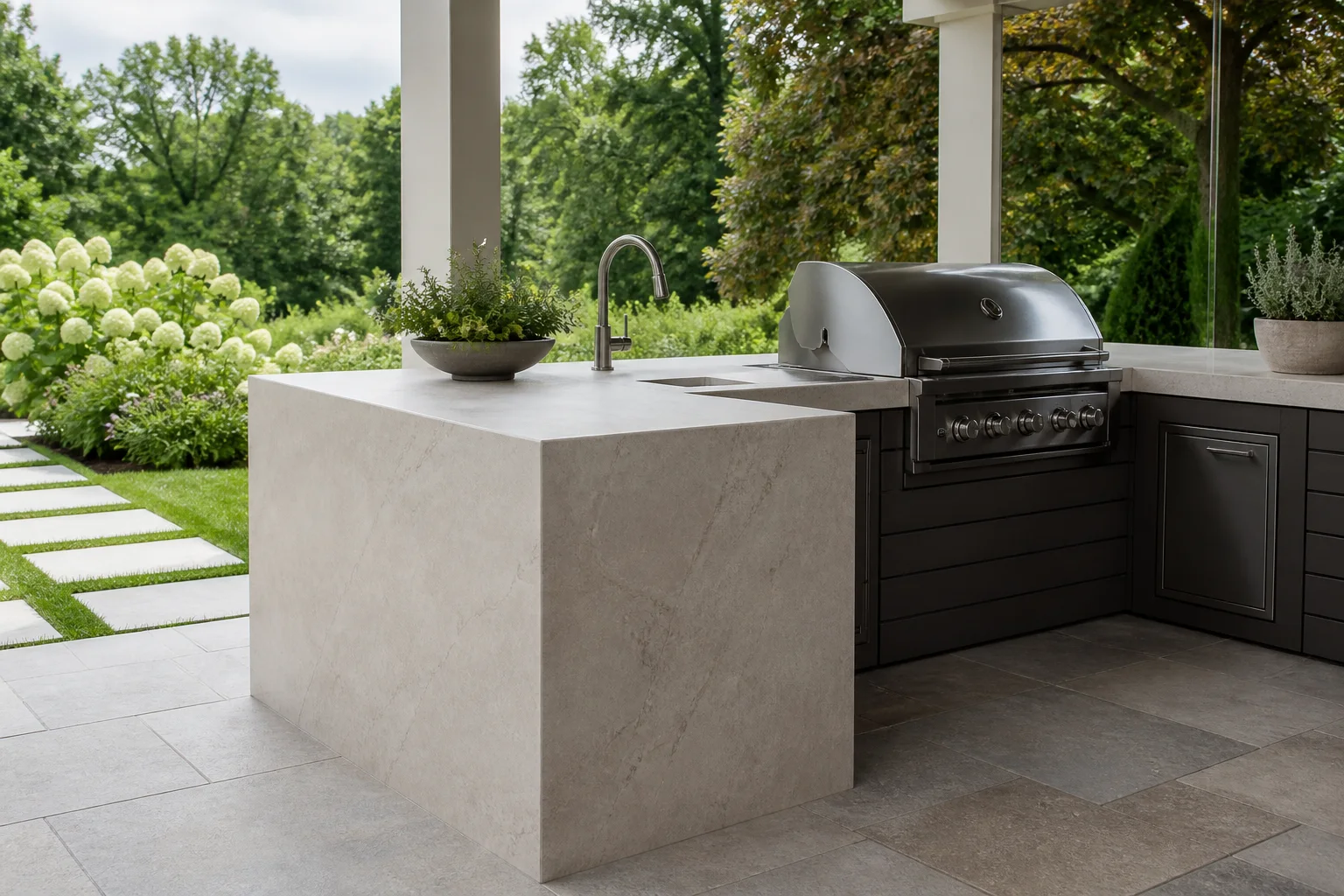
Engineered quartz does not belong outdoors, because its resin yellows in sunlight and scorches under heat. Marble etches in acid rain and stains. Granite works well, but the color range is narrower. Porcelain will not fade, will not crack through a Connecticut freeze-thaw winter, will not stain and never needs sealing. Outside, nothing we fabricate asks less of you.
This is the least forgiving material in our shop. Slabs are thin and brittle until they are installed, and they crack if handled carelessly. Because the pattern is printed on the face and does not run through the body, every exposed edge has to be built up with a mitered return: two pieces cut at forty-five degrees and joined so the pattern carries over the corner.
A mitre cut a fraction off true shows as a dark line along the whole edge, and it cannot be polished out afterward. Ask any fabricator how many porcelain jobs they have actually completed before you hand them yours.
We fabricate the major sintered surfaces, including Dekton, Neolith, Laminam, Florim and Lapitec, in thicknesses from 6 mm cladding up to 20 mm countertop gauge. Finishes range from high polish to soft matte, plus textured finishes with real slip resistance for outdoor use.
A grill surround and bar top under a timber pergola, built to sit through Connecticut summers and winters. We chose large-format porcelain over quartz for UV stability, cut precise appliance openings, and built every exposed edge up with a mitered return so the pattern carries over the corner.
See the project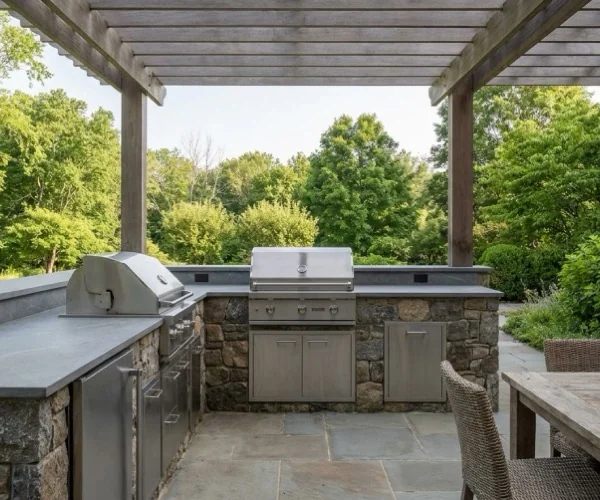
The ones we hear most at the yard. Anything else, call us at 203-717-1978.
They are close relatives. Dekton, Neolith and Lapitec are sintered surfaces, made by pressing minerals under heat until they fuse. Porcelain slabs are made the same general way from clay-based mixes. On a countertop they behave much the same: heat proof, UV stable and non-porous.
Yes, and it is our first choice outdoors. It will not fade in the sun, grill grease wipes off, and it handles freeze-thaw winters. We still suggest covering an outdoor kitchen in winter to protect the appliances.
It can, mostly at edges and corners from a hard knock. We build edges up with mitered returns and soften the corners slightly to make that less likely. Chips cannot be sanded out, so a damaged piece is usually replaced.
It will not hurt the porcelain, but it will dull your knives fast, so use a cutting board.
Most porcelain countertops are 12 or 20 mm thick, with the edge built up by a mitered return so it reads heavier. Thinner 6 mm sheets are for wall cladding and cabinet fronts.
Porcelain edges are built up with mitered returns and aligned so the pattern wraps the corner, precise work we do in our own Bridgeport shop. Planning an outdoor kitchen? Read our guide to outdoor kitchen countertops in Connecticut and see the built-up options on our edge profiles page. We fabricate porcelain for homes including Westport, Rowayton, Stratford and Fairfield.
Bring your grill and appliance specs and a sketch of the layout. We will show you porcelain finishes that hold up outside, talk through edges and overhangs, and walk you through what the job involves.
Book a slab-yard visitGet an estimate