
We keep marble, granite, quartzite, quartz, soapstone, porcelain and onyx on the floor at our Bridgeport yard as full slabs you can walk around, photograph and reserve, by appointment. Below is what each stone is like to live with, where it works best, and how they compare side by side.
Heat proof, scratch resistant and hard to hurt. Our widest range, from quiet honed blacks to wild Brazilian slabs.
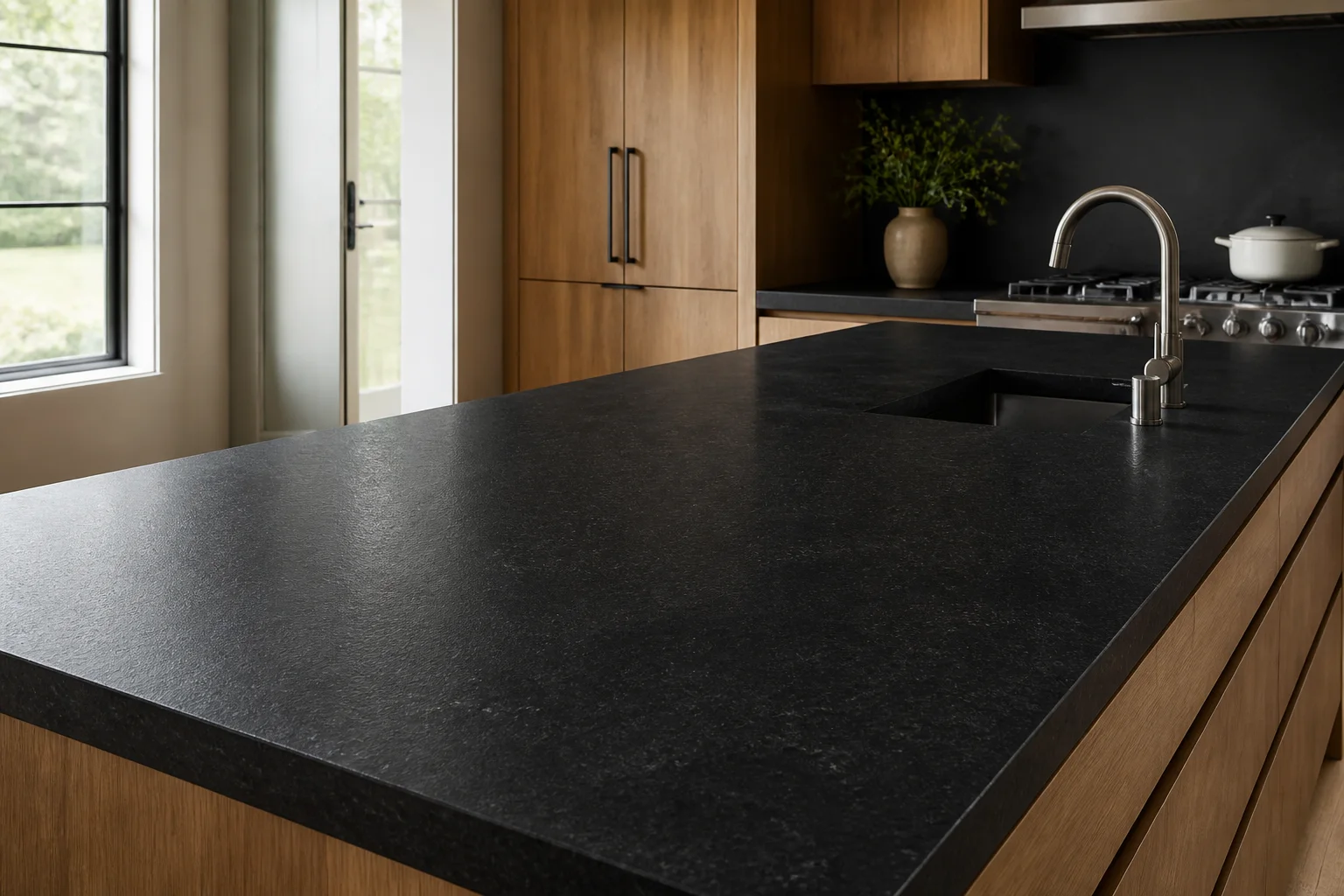 Explore granite →02
Engineered and non-porous, so it never needs sealing. Keep hot pans off it and keep it indoors.
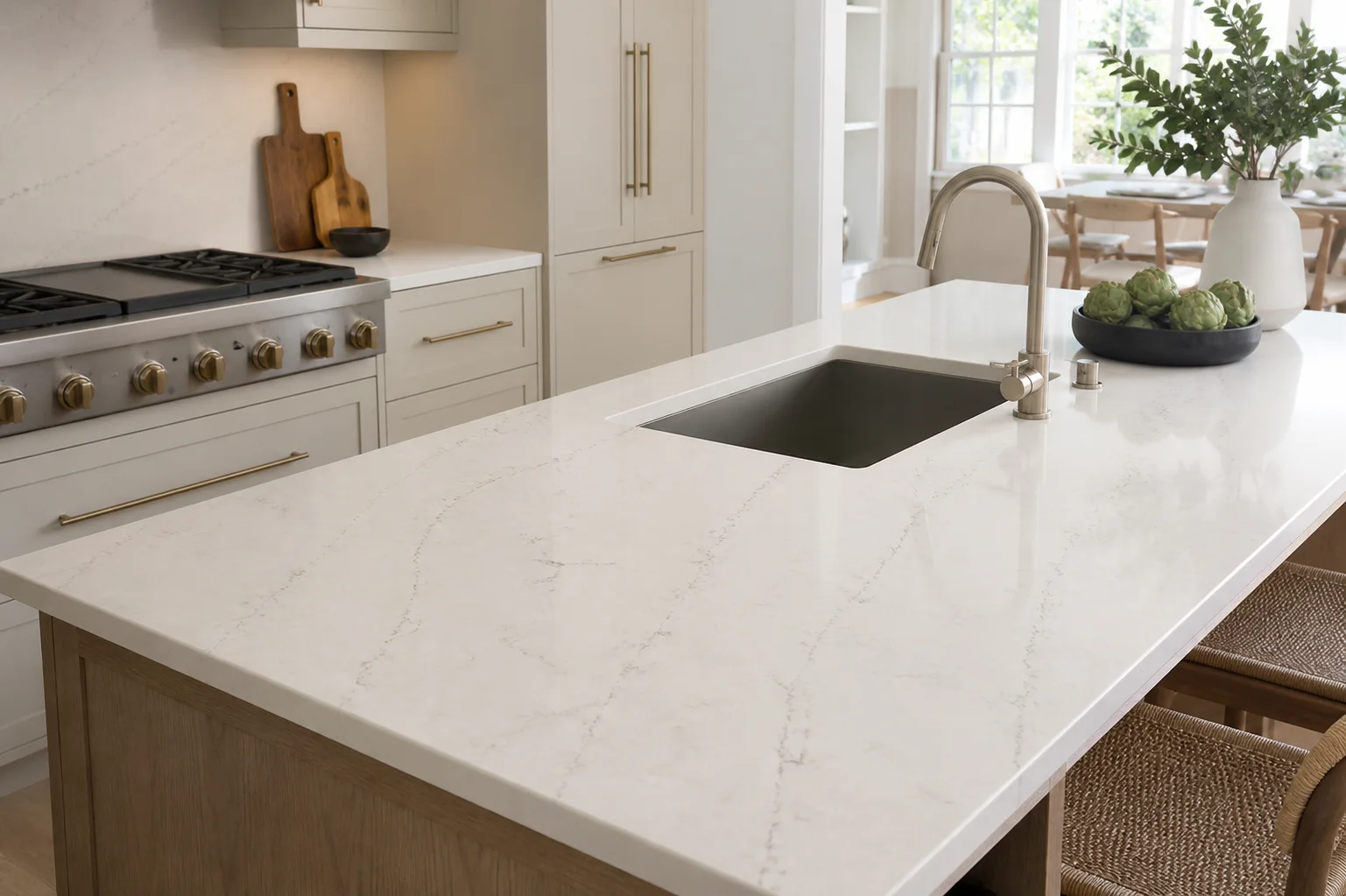 Explore quartz →03
Natural stone with the soft veining people want from marble, minus the etching. Taj Mahal, Mont Blanc and more.
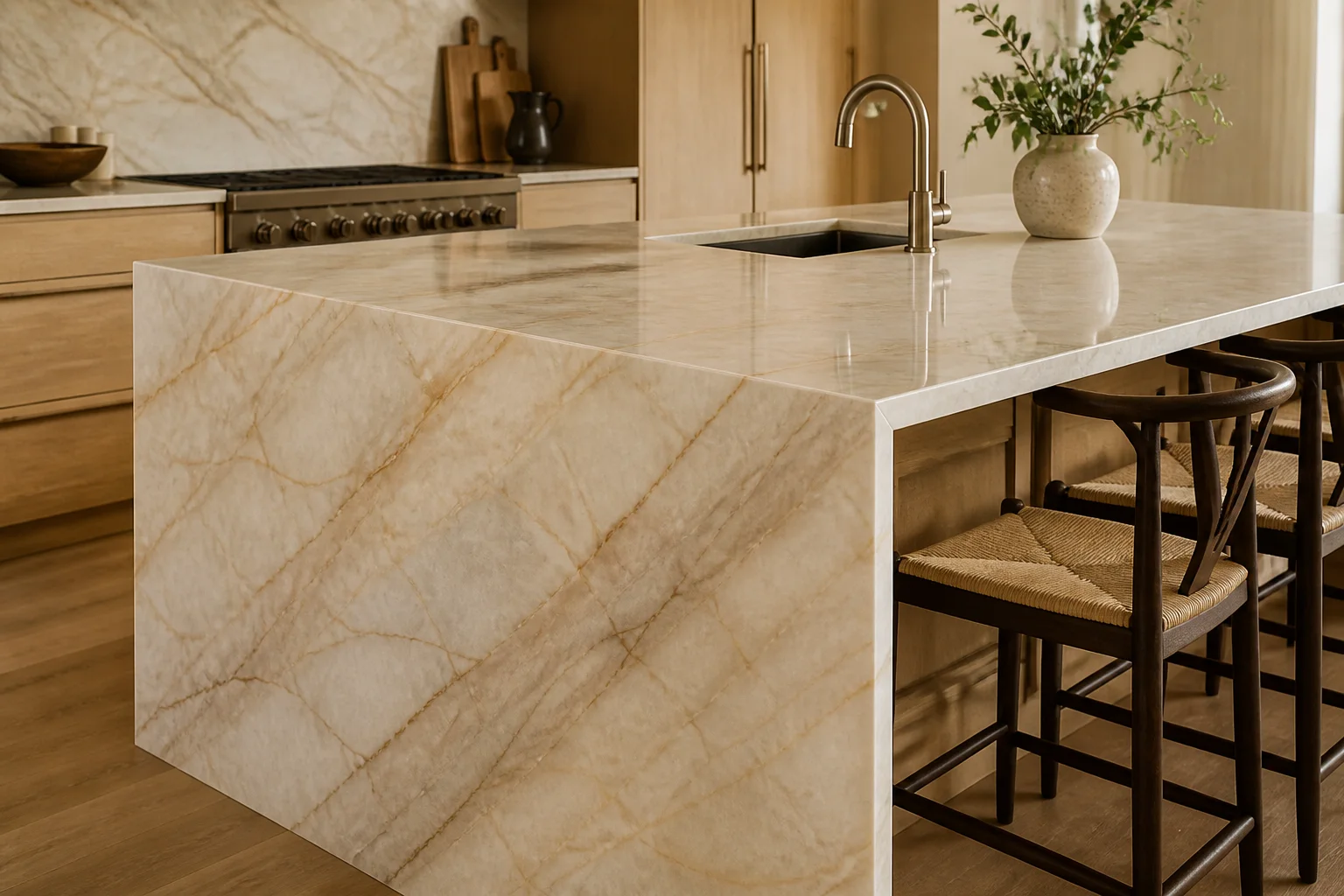 Explore quartzite →04
Calacatta, Carrara, Statuario and Danby. It etches and wears a patina, and plenty of people choose it for exactly that.
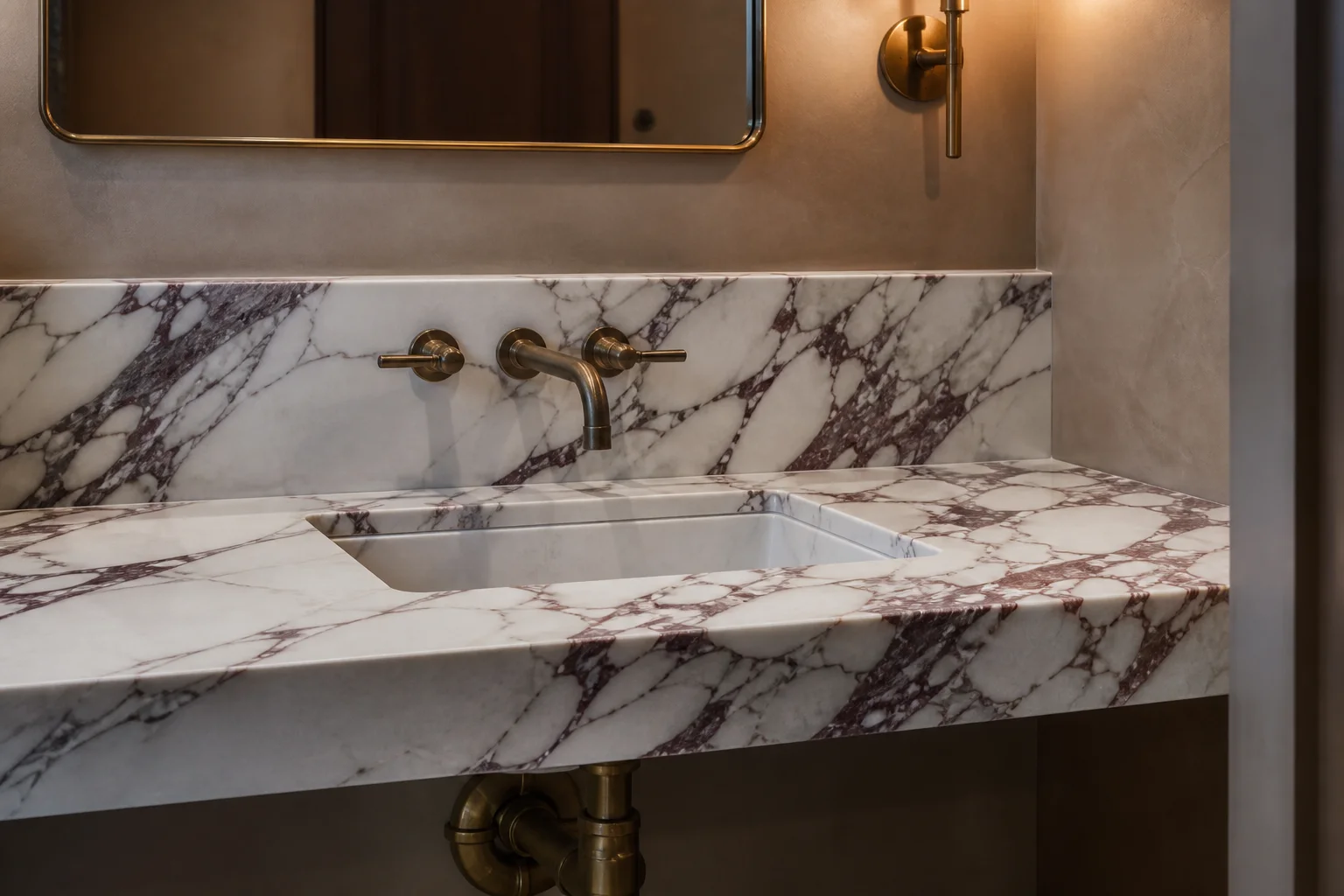 Explore marble →05
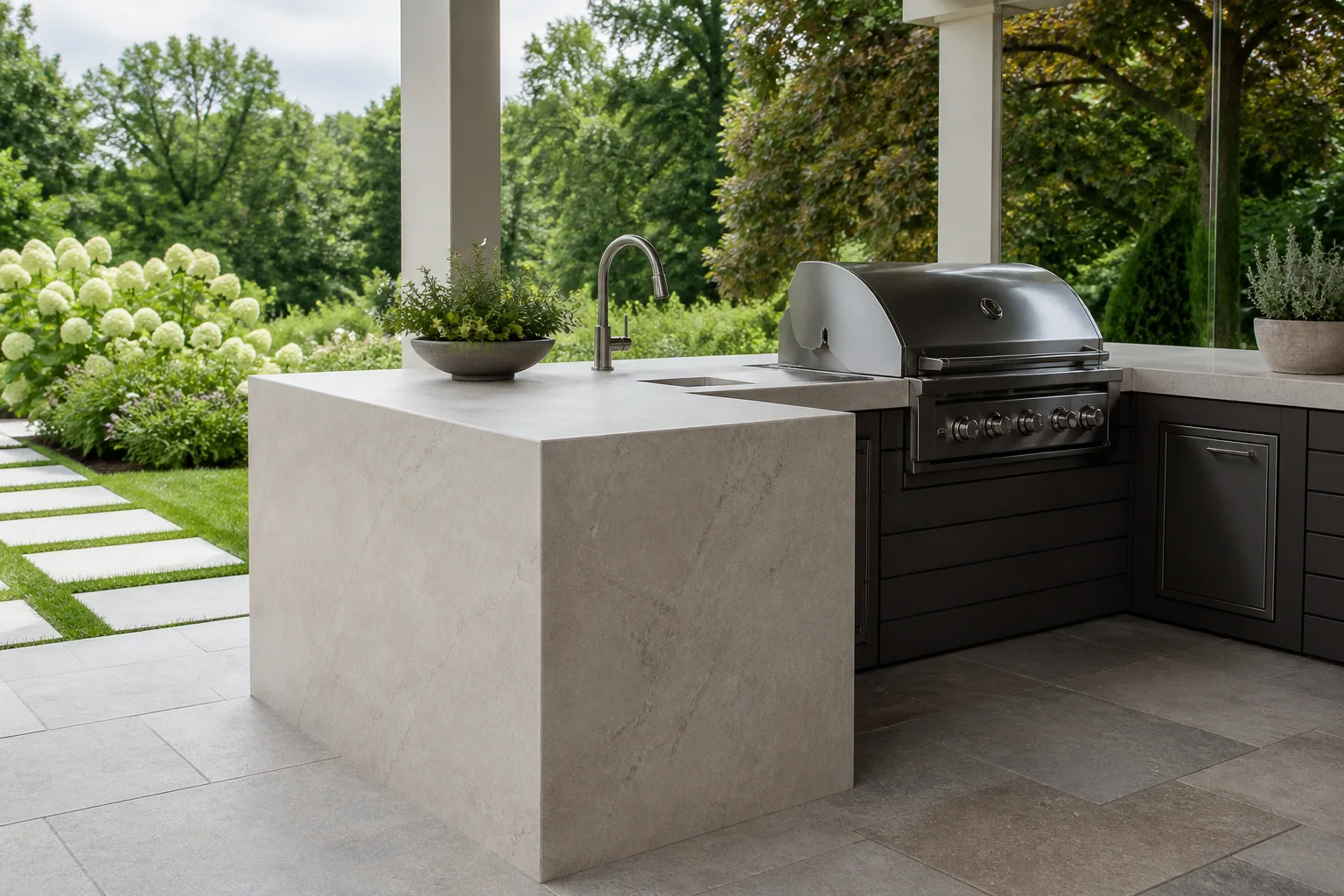
Large-format slabs that hold up to sun and frost. Our first choice for outdoor kitchens.
 Explore porcelain →06
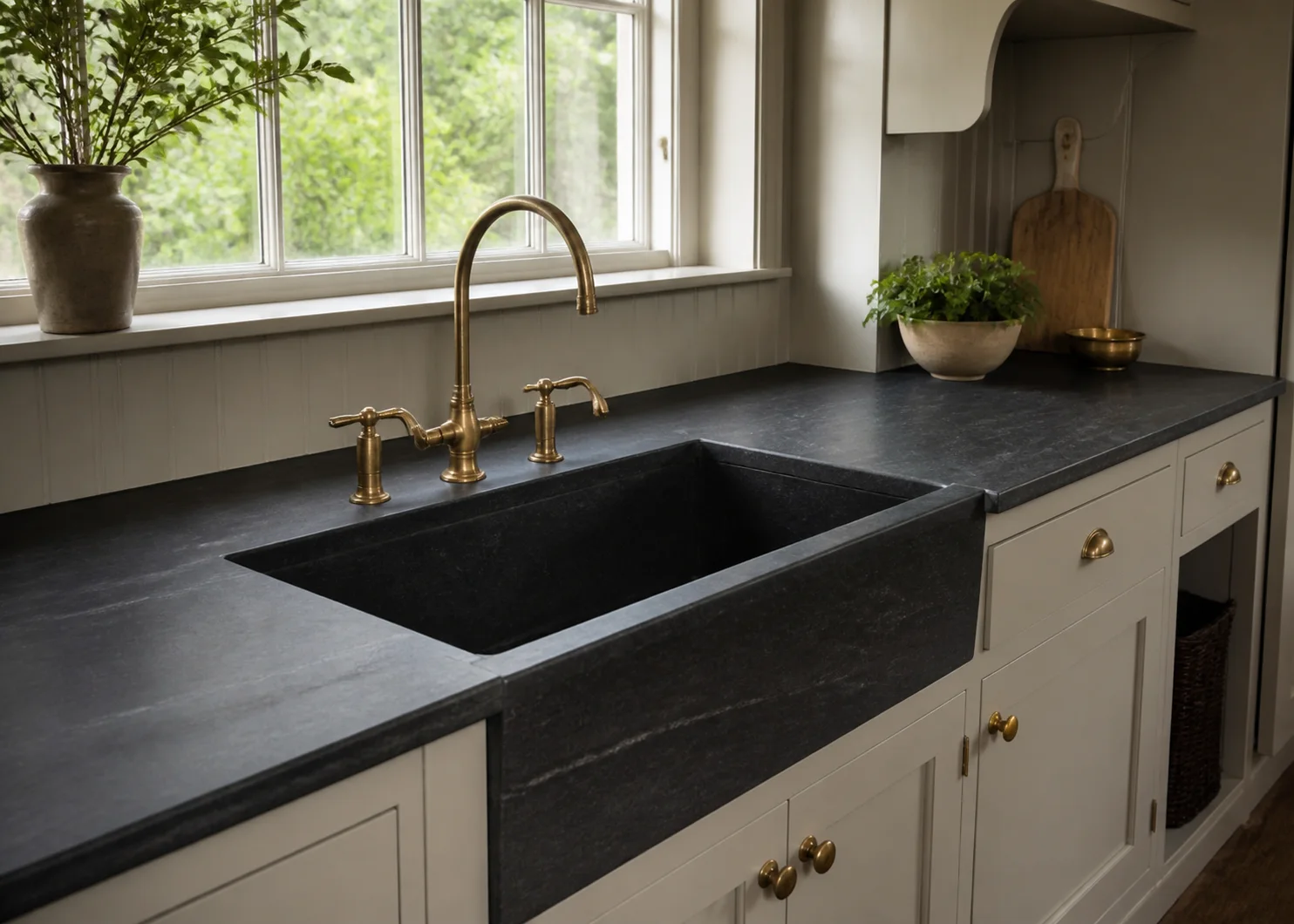
Dense, dark and soft to the touch. Shrugs off acids and heat, and scratches sand out.
 Explore soapstone →07
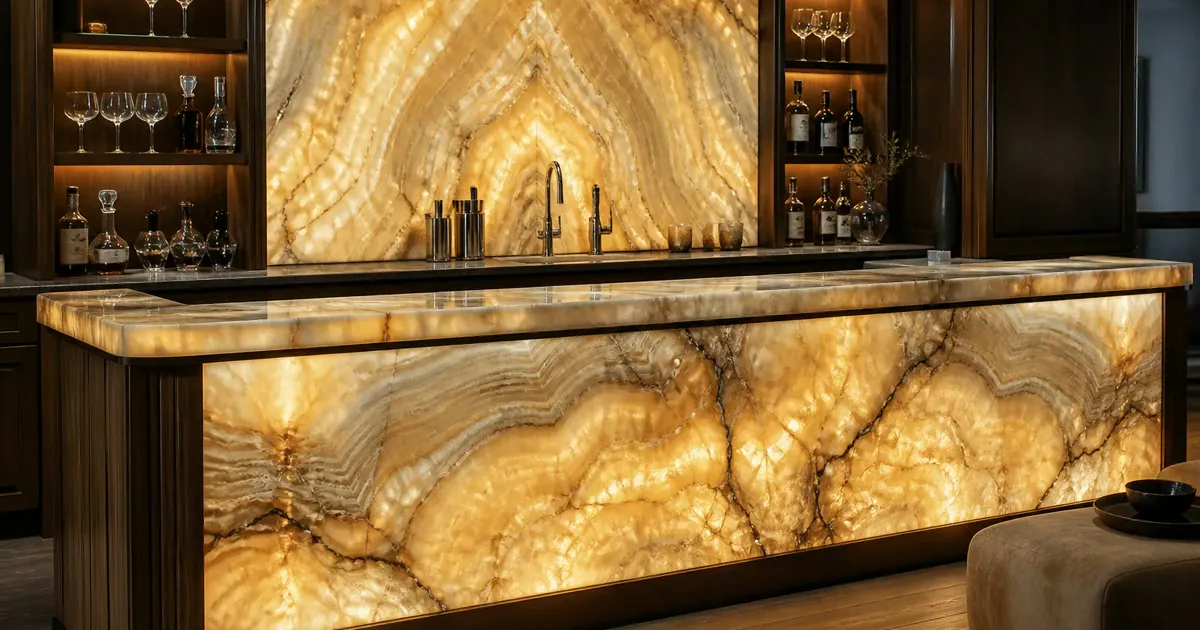
Translucent feature stone for backlit bars, powder rooms and walls. Soft, so we keep it off working counters.
 Explore onyx →
The short version of seven long conversations. Each stone has its own page with the detail, and the slabs themselves are at our yard.
Ratings are for typical slabs of each stone. Some slabs sold as quartzite are really dolomitic marble and will etch, so we acid-test quartzite before we commit it to a kitchen. On phones, swipe the table sideways to see every column.
Most people arrive with a photo and leave with two or three slabs on hold. These are the questions we ask first.
If you cook every day and never want to think about the counter, start with granite, quartzite or quartz. Marble and onyx suit people who like a surface that shows its history.
Marble and onyx etch, so acids leave dull spots on the polish. Quartzite, granite, quartz, soapstone and porcelain do not.
Granite, porcelain, quartzite and soapstone handle Connecticut sun and freeze-thaw. Quartz yellows in UV and marble weathers, so we keep both indoors.
For calm surfaces look at quartz, honed Absolute Black or Mont Blanc. For movement, Calacatta, Taj Mahal, Patagonia granite and onyx. Bring a photo of the room and we will pull slabs that fit.
Each project page names the town, the slab, the edge and the finish.
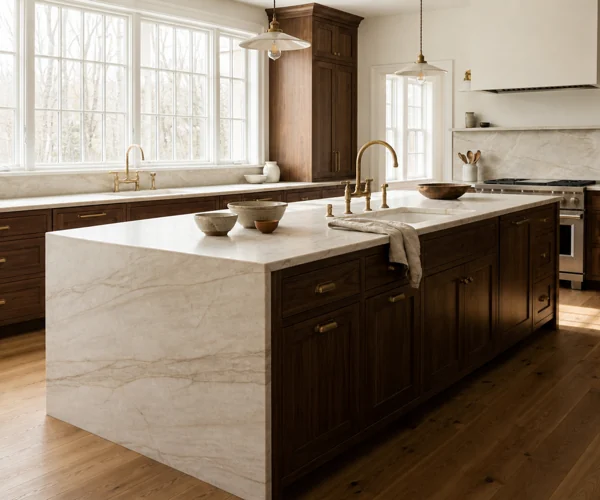
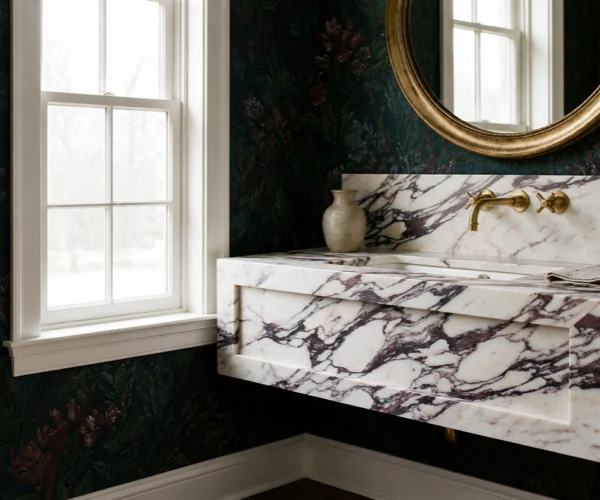
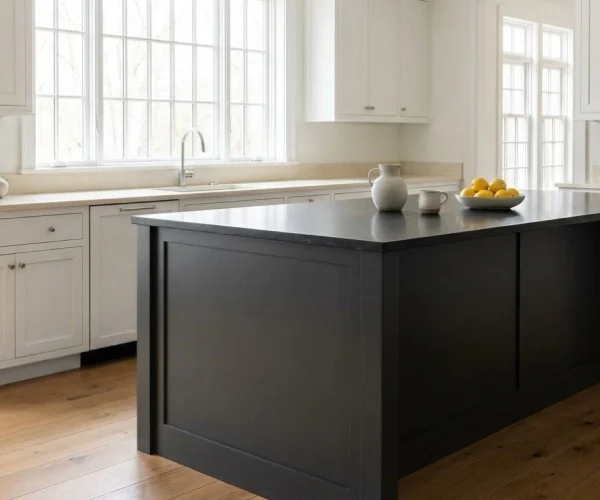
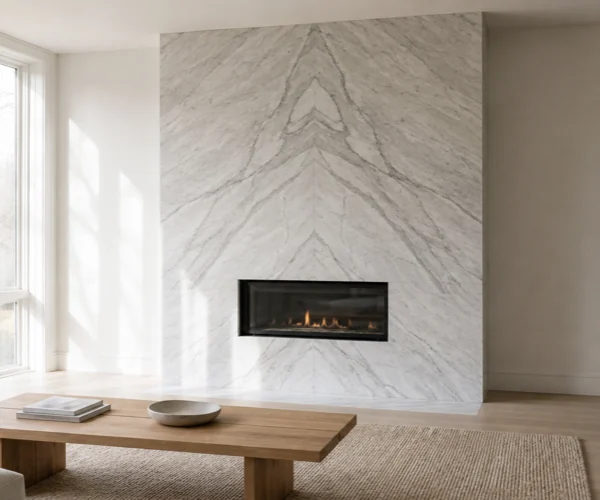
A two-inch chip cannot show you how a vein runs across a ten-foot island. Bring your cabinet plan or rough dimensions and a few photos of the room, and we will walk the yard with you and put your favorites on hold.
Book a slab-yard visitGet an estimateIf your question is about one stone, its own page goes deeper. If it is about your kitchen, call us at 203-717-1978.
Yes, and we would rather you did. You choose the slabs at our Bridgeport yard by appointment and we tag them in your name. Before anything is cut, we lay your template over a photo of the slab so you can approve where the veining and seams fall.
Quartzite is natural stone: sandstone that heat and pressure turned into solid quartz. Quartz is engineered from crushed quartz and resin. Quartzite handles heat and sun and needs sealing. Quartz never needs sealing but should stay indoors and away from hot pans. Our quartz vs. quartzite guide goes through it in detail.
For a kitchen, granite and true quartzite are the hardest to hurt. Both are heat proof and scratch resistant, and neither etches. Porcelain is just as tough on the surface, but its edges chip more easily, so we build them up with mitered returns.
Granite, quartzite, marble and onyx are porous to different degrees, and we seal them at installation. To check later, leave a few drops of water on the counter for fifteen minutes. If the stone darkens underneath, it is time to reseal. Quartz, porcelain and soapstone never need sealing.
Usually four to six weeks from slab selection, and most of that is waiting for cabinets. Once your cabinets are in and we template, installation is typically one to two weeks later.
Often, yes. Offcuts from larger jobs are a good fit for vanities, bar tops, laundry counters and fireplace hearths, and they cost less than opening a full slab. Ask to see what is on the remnant rack when you visit.