
Marble is the most beautiful surface we fabricate and the most demanding. It will etch, it will patina, and it will look different in five years than it does on installation day. Some clients find that unbearable and some find it the entire point. Our job is to make sure you know which you are before we cut.
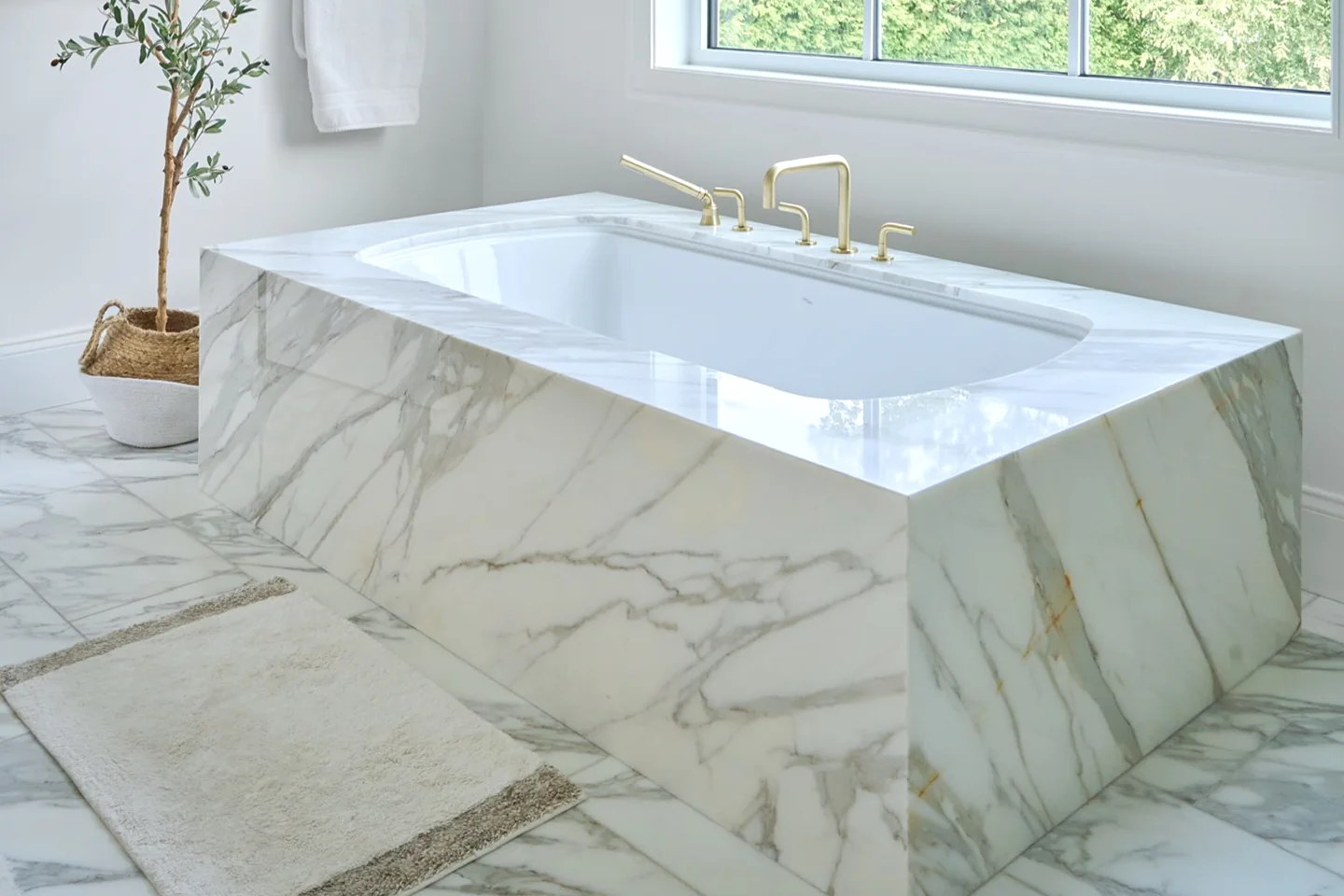
This is the most misunderstood thing about marble, and the cause of most marble regret. Marble is calcium carbonate. Anything acidic, such as lemon, wine, vinegar, tomato and some cleaning products, reacts with the surface and removes the polish, leaving a dull mark. That is an etch.
A sealer prevents staining, which is liquid soaking into the stone. It does nothing about etching, because etching is a chemical reaction on the surface. Anyone who tells you a sealer will stop etching is mistaken or selling something.
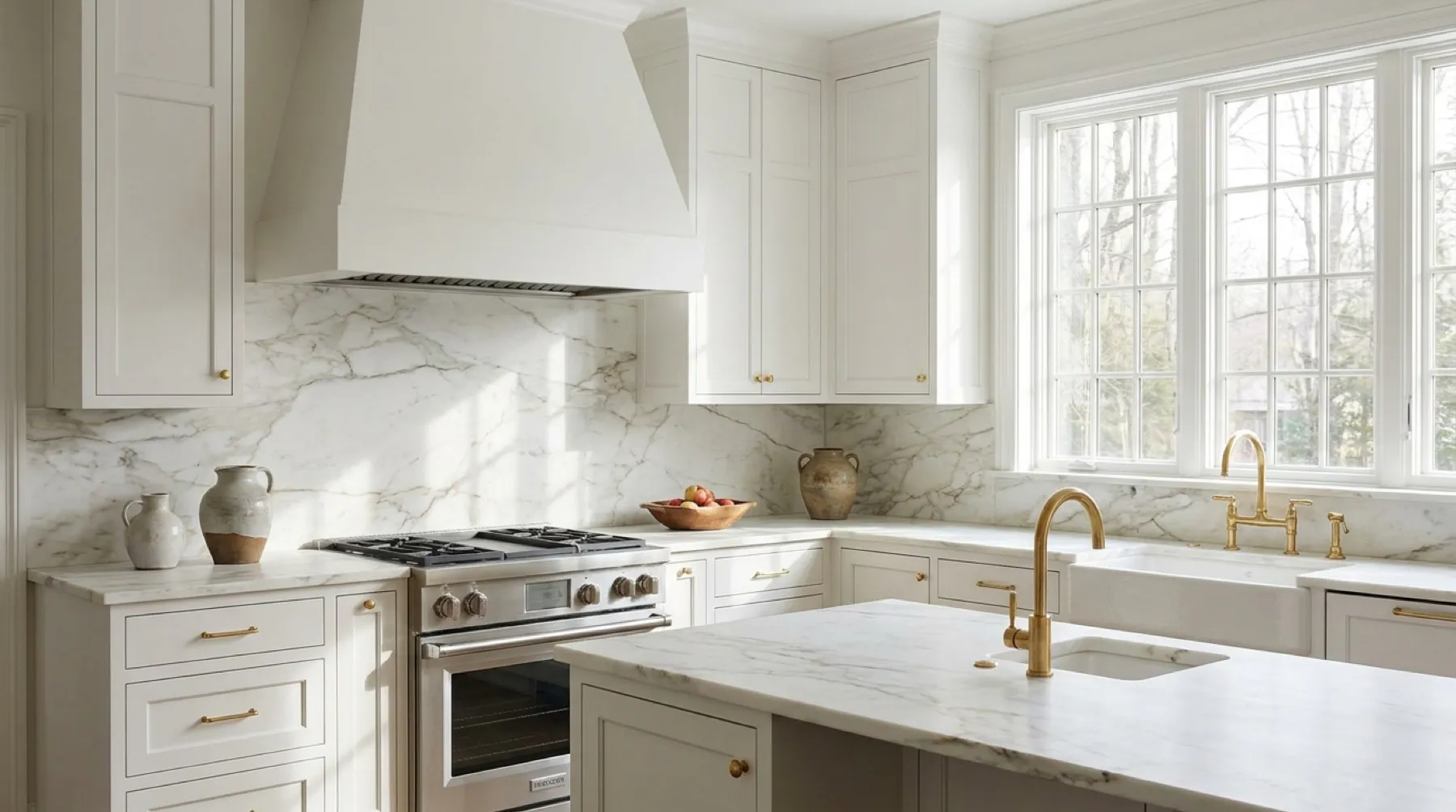
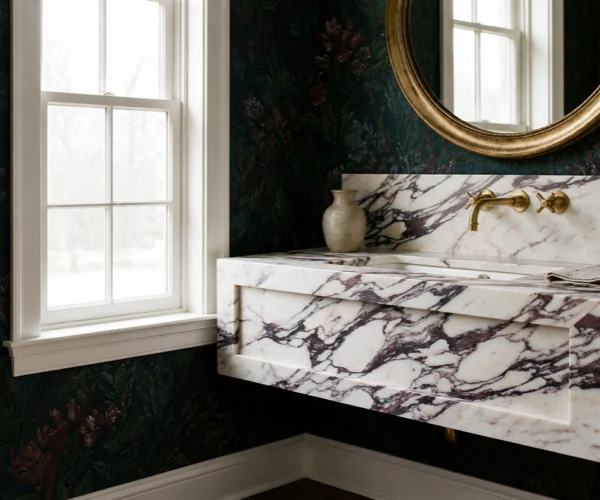
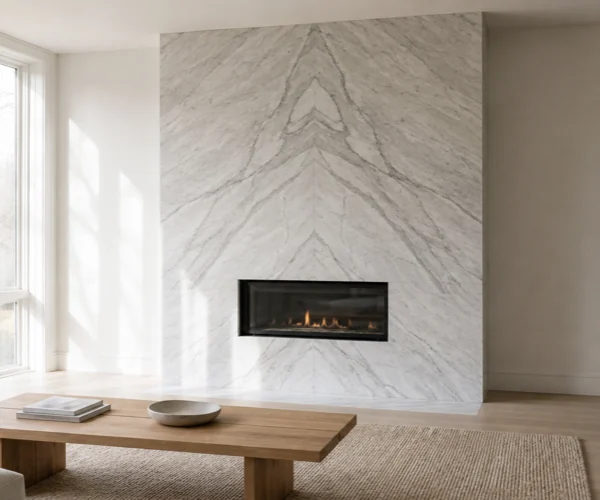
What does help is a honed finish. A honed surface has no polish to lose, so etches are much harder to see. In a working kitchen we recommend honed marble almost every time. Polished marble belongs on a powder room vanity or a fireplace surround, where nothing acidic lands.
Quartzite is a natural stone that reads like warm or cool marble from across a room, but it is much harder and it does not etch. Taj Mahal and Mont Blanc are the two we point people to most often. For a kitchen where someone cooks every day, it is often the better fit.
If you love marble and know what you are signing up for, we will lay it out and cut it with the care it needs. If you love the look but would rather not think about lemons, we will show you quartzite.
Marble veining is large-scale and directional, so layout matters more here than with any other stone. We photograph your slab, lay the template over it, and position every piece so the veining lands where it should: across an island, mirrored at a bookmatched seam, or carried around a mitered waterfall. An expensive slab cut without that planning looks accidental.
Explore the stone, the fabrication details and the finished installations.
The ones we hear most at the yard. Anything else, call us at 203-717-1978.
Yes. Lemon, wine, vinegar, tomato and some cleaners react with marble and leave dull marks, and sealing does not prevent it. A honed finish makes etches much harder to see, which is why we suggest it for kitchens.
It can. Marble is porous, so oil, wine and coffee can soak in if they sit. We seal it at installation, and resealing once or twice a year keeps stains rare. Wipe spills promptly, especially on light marble.
Honed for kitchens and other working surfaces, because etches blend into the matte finish. Polished for powder rooms, fireplaces and walls, where it shows off the veining and rarely meets anything acidic.
Light etching on honed marble can often be blended out with a marble polishing powder. Deeper etches, or dull patches on polished marble, need professional honing and repolishing.
It is for people who like a surface that ages and shows its history. If every mark would bother you, quartzite or a marble-look quartz will make you happier, and we will say so before we quote.
Every marble top is templated, laid out and cut in our Bridgeport shop and installed by our own crew. Before you decide, compare it with quartzite, choose an edge on our edge profiles page, and read how to care for marble. We fabricate marble for homes across Fairfield County and Westchester, including Westport, Greenwich, Darien and New Canaan.
With marble, the veining is what you are paying for, and no two slabs share it. Pick your slabs at the yard, and before we cut we will show you the template laid over a photo of the stone so you can approve where every vein lands.
Book a slab-yard visitGet an estimate