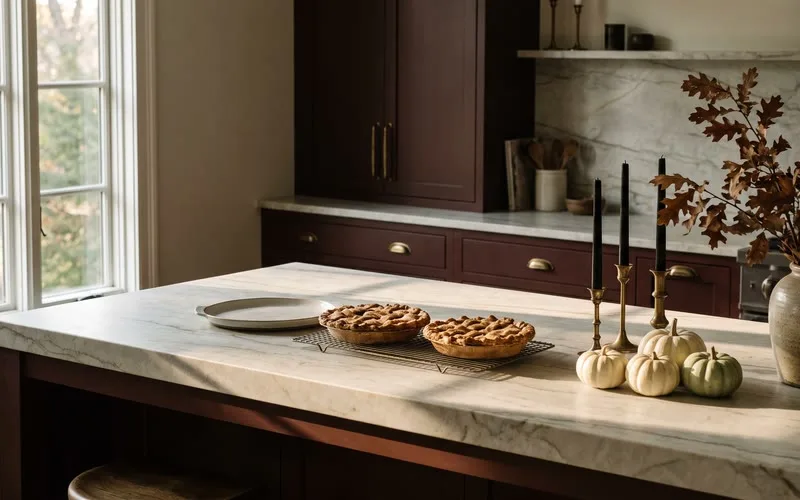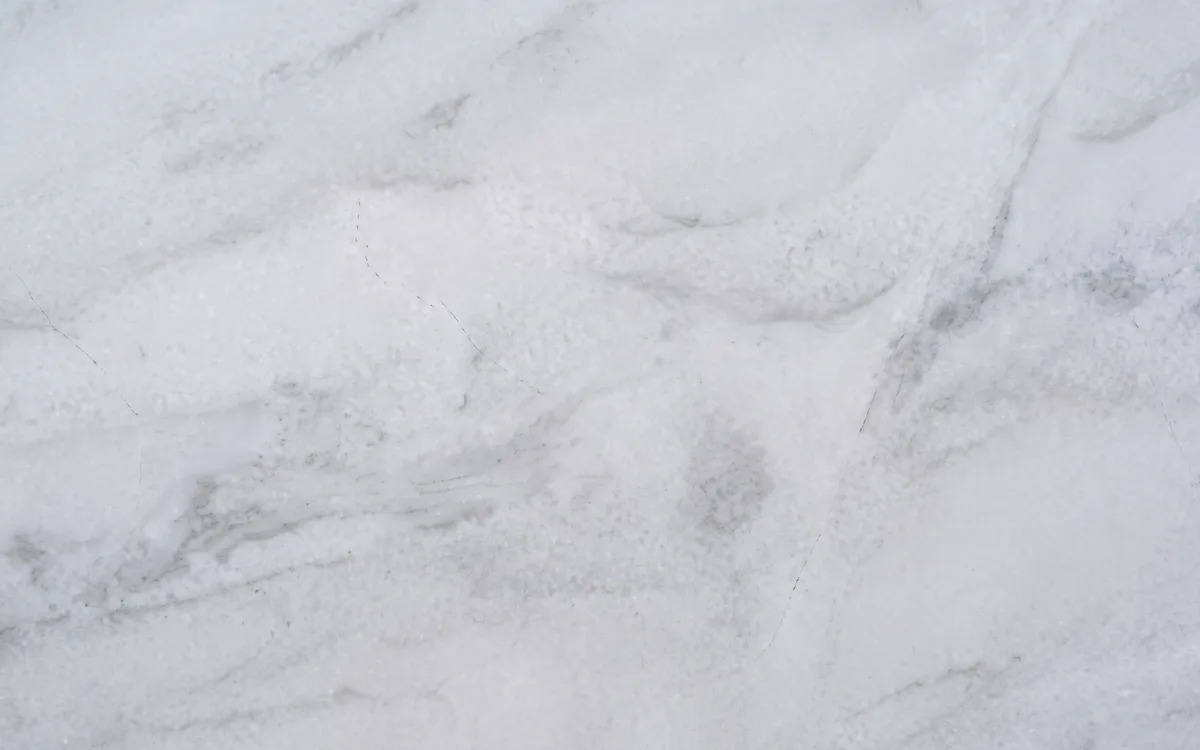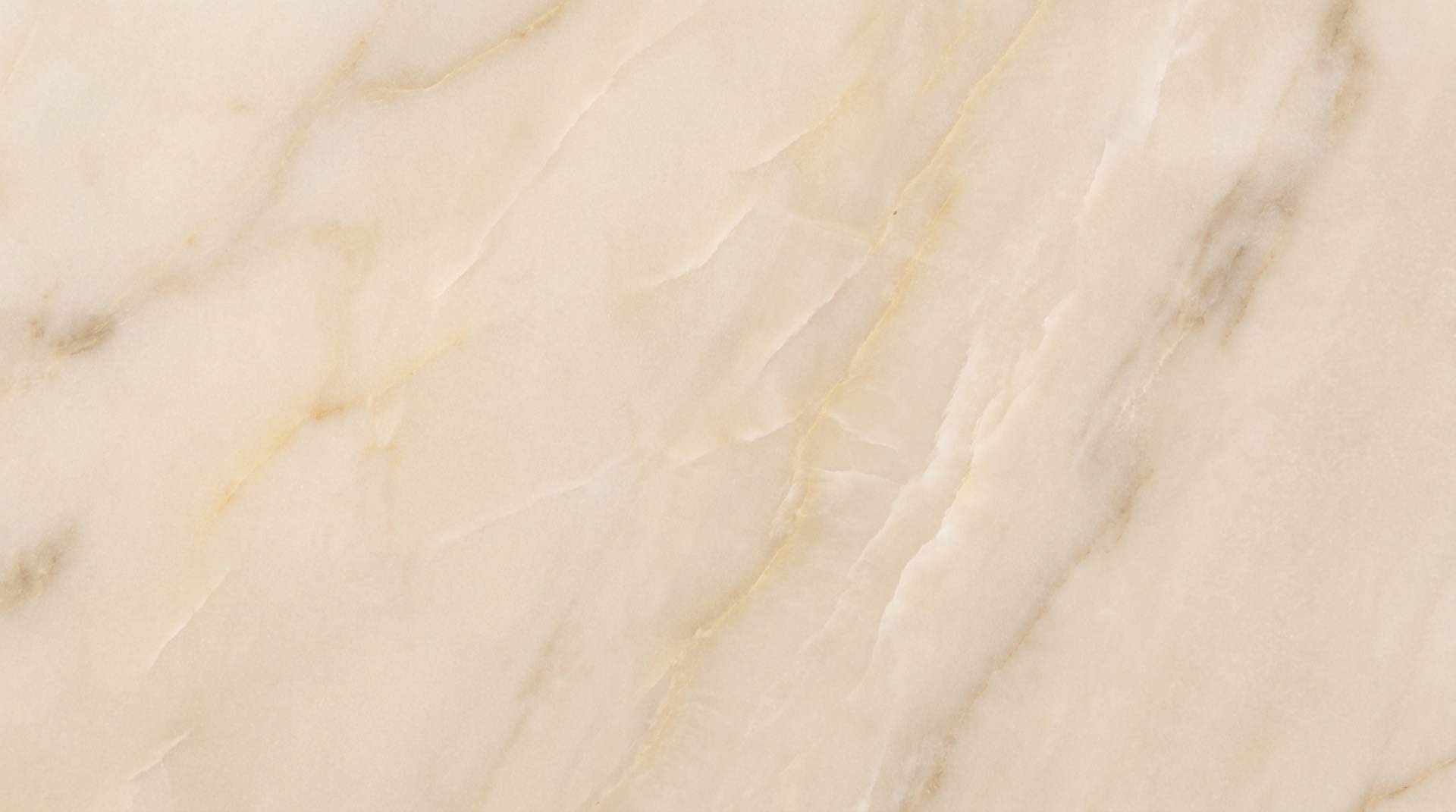
Etching, sealing, honed versus polished, and what a marble counter really looks like after five years of family cooking.
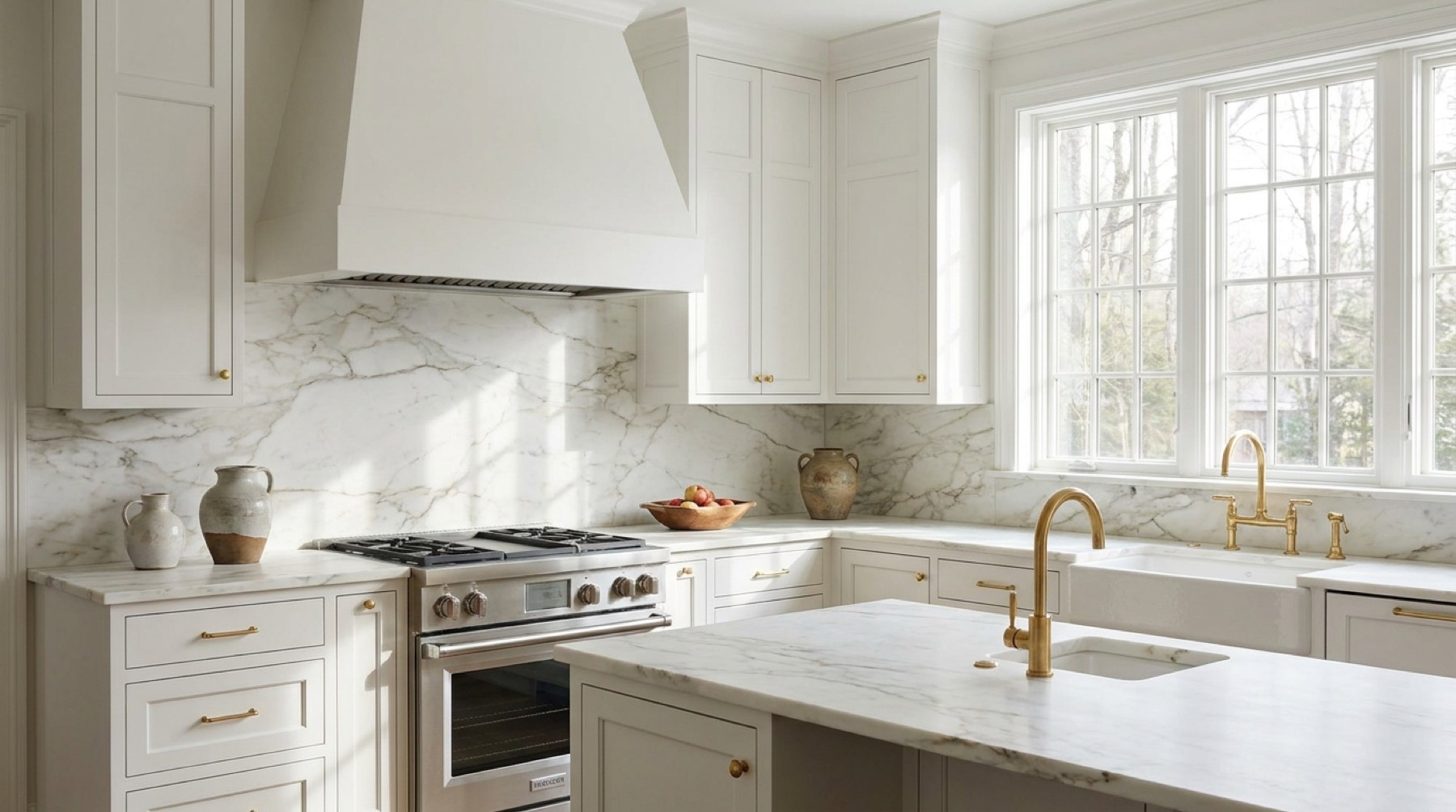
Someone falls in love with Calacatta at the yard and then asks the question we hear every week: can I actually live with marble? Yes, if you know what it does and decide you like it. Marble is calcium carbonate, and acid reacts with it. Everything else follows from that.
What marble is, and why it behaves the way it does
Marble is limestone that heat and pressure turned into a crystalline stone. That's where the veining and the depth come from. It's also why marble is softer than granite or quartzite. It can scratch under a dragged cast-iron pan or a grain of sand caught under a pot, and it reacts with acids in a way harder stones don't.
None of that makes marble fragile. It has been used on counters, floors and tables for centuries, and it wears in over time instead of staying exactly as it looked on the first day.
What etching actually is
An etch is not a stain. It's a dull spot where an acid has dissolved a very thin layer of the surface. On polished marble, etches show as matte marks under raking light. On honed marble, which is already matte, they nearly disappear. That's why we recommend honed marble for kitchens you cook in, and save a high polish for baths, bars and fireplace surrounds.
The usual culprits:
- Lemon, lime and other citrus
- Vinegar, salad dressing and tomato sauce
- Wine, soda and fruit juice
- Some household cleaners, especially bathroom and glass cleaners
Staining is a different problem
A stain is something soaking into the stone: oil, red wine, coffee, turmeric. Marble is porous, so a spill left long enough can darken it. That's where sealing helps.
Sealing, and what it does not do
A sealer slows staining and buys you time to wipe up. It does nothing against etching, because etching is a chemical reaction on the surface, not absorption. Marble should be sealed when it's installed and resealed periodically. A simple water test tells you when: put a few drops on the counter, and if the stone darkens within a few minutes, it's time. Resealing is a short job most owners can do themselves.
Honed or polished
Polished marble has depth and shine, and it shows every etch. Honed marble has a soft, matte surface that hides etches and fine scratches, with a little less color depth. For a working kitchen, honed is the practical choice. Our guide to honed vs. polished stone covers the trade-off in more detail.
Which marbles suit which rooms
Busier marbles with fine gray veining, such as Carrara, hide everyday marks better than bold, open stones. Calacatta and Statuario have larger, more dramatic veining and look their best where they can be seen in full: an island, a full-height backsplash, a fireplace wall. Calacatta Viola and other colored marbles are often chosen for powder rooms and bars, where the stone is the feature and the wear is light.
Everyday care
- Clean with a pH-neutral stone cleaner or mild soap and water.
- Wipe acids when you notice them. There's no need to panic the moment they land.
- Use cutting boards, for your knives as much as the stone.
- Lift heavy pots instead of dragging them.
- Use coasters under glasses of wine and citrus drinks.
When marks do happen
Light etches on honed marble can often be blended with a marble polishing compound made for the purpose. Deeper etches, scratches or a tired polish are work for a stone restoration professional, who can re-hone or re-polish the surface in place. Many owners do neither and simply let the counter age.
A note on cleaners
Many everyday cleaners are wrong for marble. Vinegar-based sprays, lemon cleaners, bathroom descalers and many glass cleaners are acidic and will etch it. Abrasive powders and scouring pads scratch it. Bleach and ammonia can dull the surface over time. Stick to a pH-neutral cleaner made for stone, or warm water with a drop of mild dish soap, and dry the surface with a soft cloth.
What five years actually looks like
A well-used marble kitchen after a few years usually shows a soft, even patina around the sink and the main prep area, a few faint rings where glasses or bottles sat, and a slightly warmer tone overall. On honed marble, most of that looks like character. Polished marble shows the same wear more clearly, which is why it suits rooms with lighter use.
Marble beyond the kitchen
Marble is easiest to live with in rooms that don't see daily cooking. A primary bath vanity, a powder room, a fireplace surround or a bar top gets far fewer acids and far less abrasion, so even polished marble keeps its look for a long time. See our pages on bathroom vanity tops and fireplace surrounds.
Questions to ask at the yard
- Is this slab honed or polished, and can it be finished the other way?
- How does it react to a drop of water or lemon on a sample?
- Where will the seams fall on my layout, and how will the veining carry across them?
- Is there enough of this slab, or a matching one, for the whole job?
Marble and heat
Marble handles everyday warmth well, which is why it has been used around fireplaces for centuries. Direct, concentrated heat is another matter. A pan straight off a high burner can leave a mark, and sudden temperature changes are hard on any stone. Use a trivet for hot pans and baking dishes, the same habit you'd keep with quartz.
Marble outdoors
Marble weathers outside. Rain is mildly acidic, and sun, freeze-thaw cycles and garden debris all wear at the surface, so an outdoor marble counter changes much faster than an indoor one. For outdoor kitchens we recommend porcelain or dense granite; see our page on outdoor kitchen countertops.
Where to think twice
If you want a counter that looks the same in ten years as it does on installation day, choose a different stone for your kitchen. Quartzite gives you a marble look without the etching, and quartz gives you a consistent surface that needs no sealing. Our guide to quartzite vs. marble puts the two side by side.
The short version
- Choose honed over polished for kitchens you actually cook in.
- Seal it, and test it with water now and then.
- Keep the edge simple; softer profiles chip less on a softer stone.
- Let it age. On honed marble, five years of soft wear looks lived-in.
Marble suits people who like a surface that changes with use, and it frustrates people who want it to stay the same. Come to the yard and look at full slabs instead of samples, and read our marble countertops page and stone care guide before you decide.