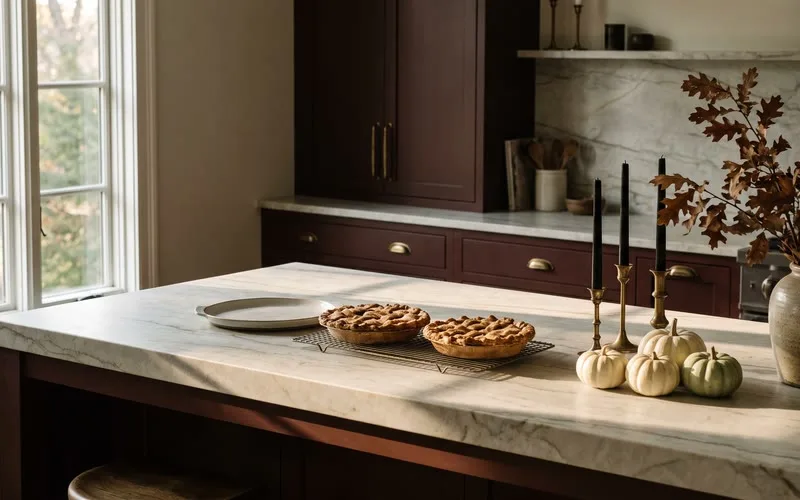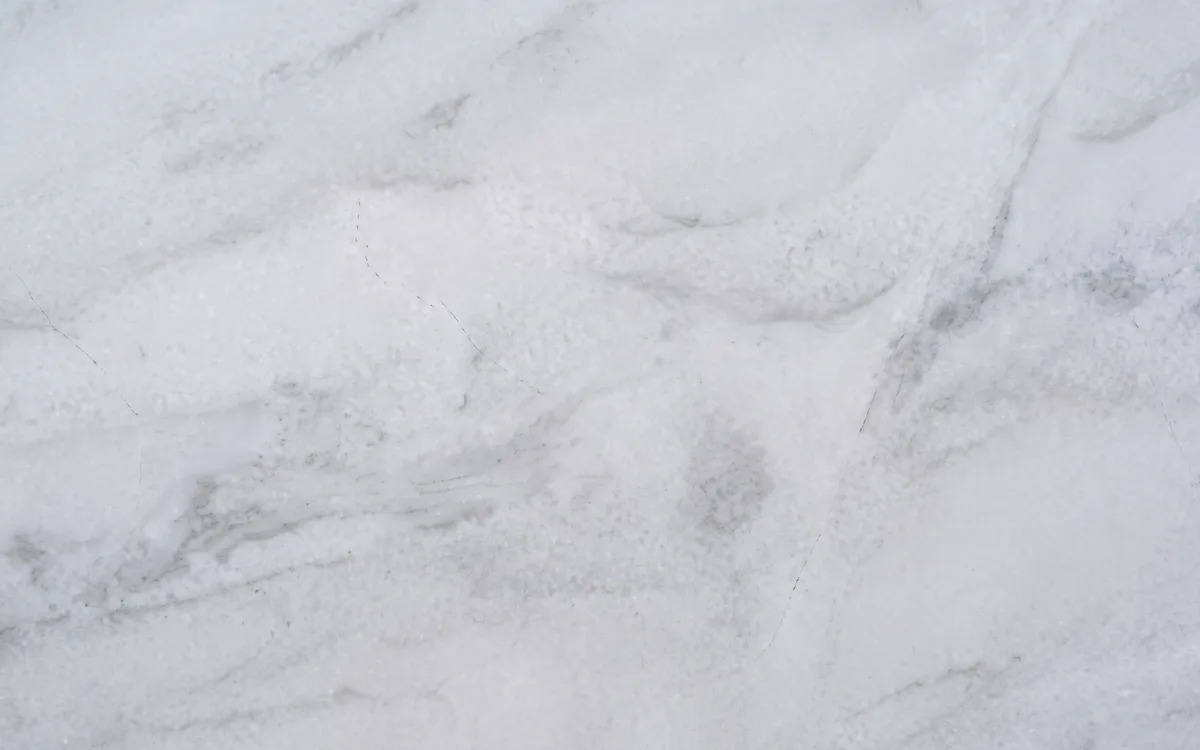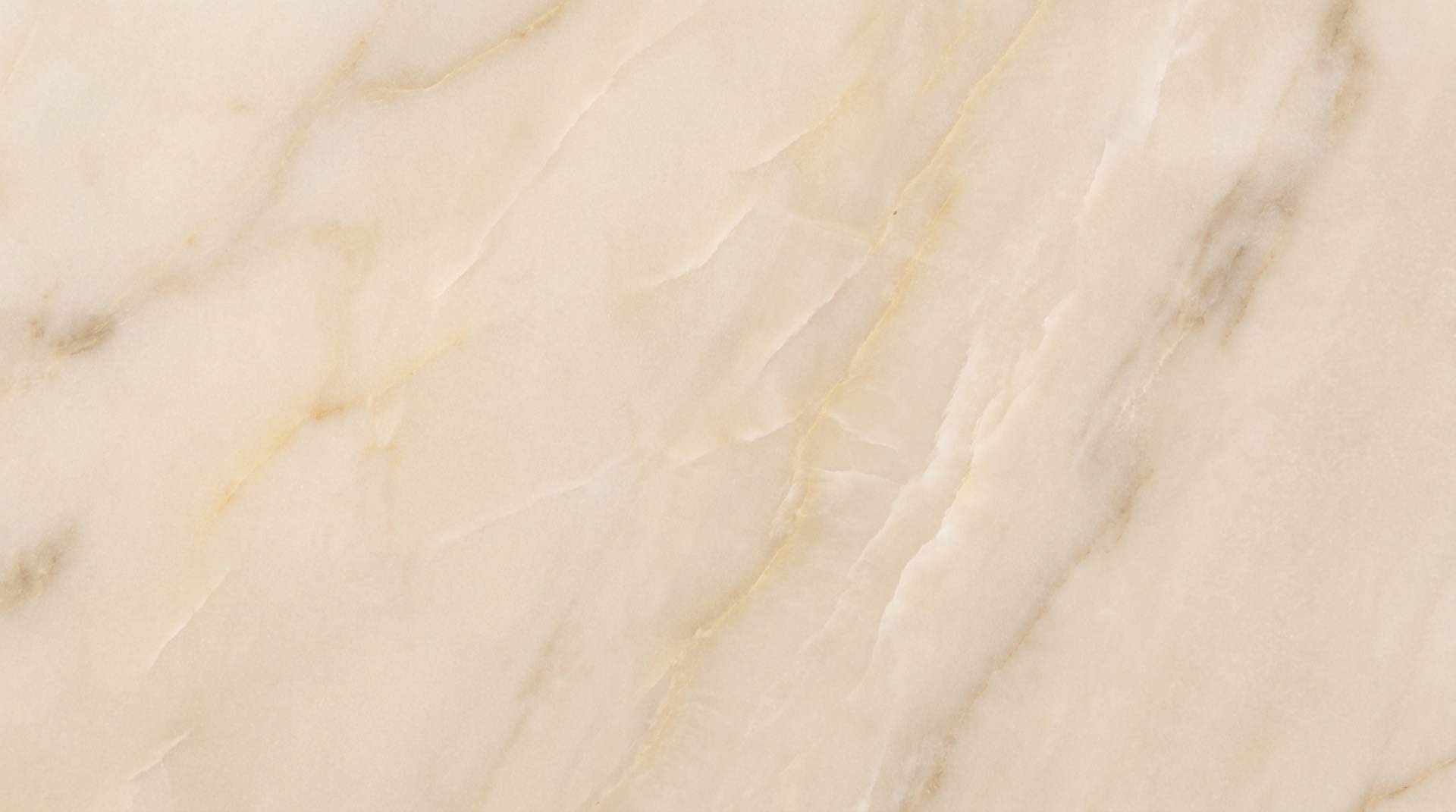
Honed or polished? How each finish looks and wears on marble, granite, quartzite and soapstone in kitchens, baths, fireplaces and bars.
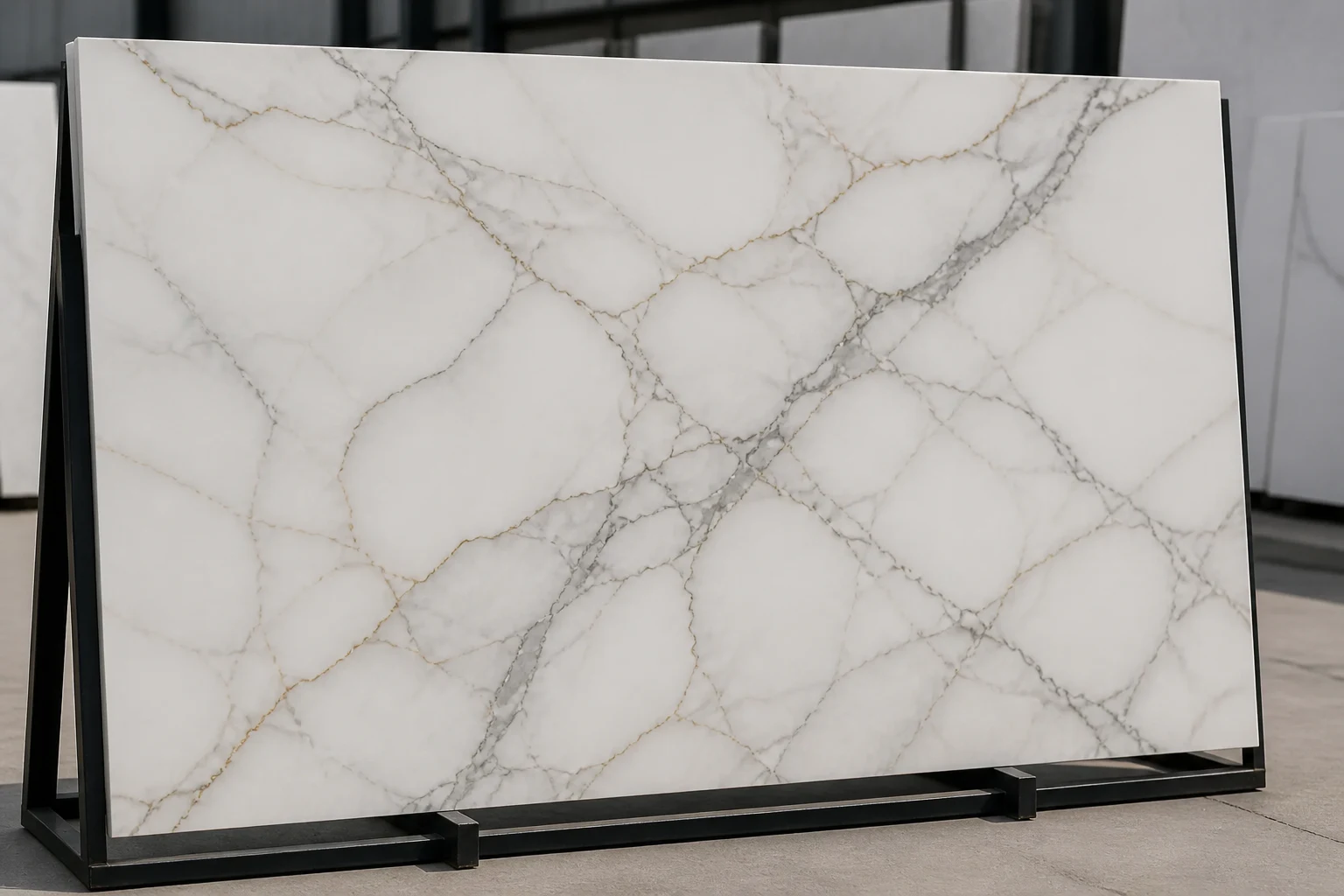
Honed and polished are two finishes on the same stone, and neither is a higher grade. A polished finish is refined until it reflects light and shows deeper color. A honed finish stops at a lower sheen, leaving a smooth matte or satin surface. Which one suits you depends on the material, the room, the light and how you want everyday wear to look.
What polishing does
Polishing makes dark stones look darker and white stones crisper, and it brings out the crystal structure. Veins and color shifts usually show stronger contrast. Reflections can make a large island feel brighter, especially in a room with controlled natural light.
A polished surface is easy to wipe, but its shine shows fingerprints, streaks and wear. On marble and other calcite-based stones, acidic foods can dull small areas. Those marks are called etches. They aren't stains, and sealer doesn't prevent them.
What honing does
Honing gives a quieter surface that scatters light. Color can look slightly lighter and the movement softer. In strong daylight, honed stone often looks more even because it doesn't mirror every window and fixture.
On marble, honing makes minor etching harder to see because the surrounding surface is already matte. It isn't maintenance-free, though. Oils and dark liquids can show more on some honed materials, and a rougher hone can hold residue until it's cleaned thoroughly. Our guide to living with marble countertops goes further into etching.
Each stone takes a finish differently
Honed soapstone is the norm. Its dense, waxy surface develops a natural patina and can be darkened with mineral oil if you want a deeper color. Absolute Black granite can be honed or leathered for a soft charcoal look, but fingerprints and oils may show until the surface is cleaned evenly.
Quartzite is often chosen polished because the finish brings out its depth and crystalline movement. Many quartzites hone well too, though dense mineral variation can leave subtle differences in sheen across a slab. Marble takes both finishes well, and the choice usually comes down to patina, light and the character of the room.
With engineered quartz, the finish is whatever the manufacturer offers. A fabricator shouldn't alter a factory finish in one area, because it may never match the rest of the slab. Porcelain also arrives with a factory surface and needs product-specific finishing at exposed edges.
In the kitchen
A polished granite or quartzite counter is a durable, straightforward choice for a busy kitchen. It releases residue easily and shows the material at full color. People choose a honed marble kitchen for a different reason: they accept that the surface will record daily life and want the softer look from the start.
Think about the light over the island. A long row of pendants can throw strong reflections on polished stone, while honing cuts the glare and lets the veining show from more angles. In a dark room, a polished surface can bounce useful light back and keep a heavy material from looking flat.
Baths and vanities
Bathrooms often suit honed stone because the lower sheen feels calm and, on some materials, hides water spots better. Shower floors need a slip-resistant finish and a tile size that works with the drainage; a glossy large-format slab isn't automatically right underfoot. Vanity tops can be polished or honed, but cosmetics, soaps and acidic cleaners still need thinking about.
Fireplaces, bars and furniture
A polished fireplace surround stands out as an object, especially with bookmatched veining. A honed one looks more architectural and can make a dramatic stone feel quieter. Bars and dining tables need the same practical conversation as countertops: citrus, wine and constant handling make the material choice as important as the finish.
How to compare samples
Small samples rarely show the full effect. Look at the actual slab both upright and flat, because reflected light changes with the angle. If you can, see a large honed example and a large polished example of the same stone, and walk around them instead of judging from one spot. Ask whether the slab has resin, mesh backing, filled fissures or mineral areas that may respond differently when it's finished.
Cleaning and daily care
Use a neutral cleaner, or warm water with a little mild dish soap, then dry with a soft cloth. Avoid abrasive powders and acidic bathroom cleaners on natural stone. Sealer slows absorption on porous materials. It doesn't form a plastic coating and it doesn't stop etching.
A polished surface may need careful drying to avoid streaks. On a honed surface, clean the whole section instead of one patch, especially on dark stone where oils can leave temporary contrast. Our stone care guide covers each material.
Can the finish be changed later?
Many natural stones can be refinished in place by a qualified restoration professional. Polished marble can be honed, and honed marble can often be polished again. It's specialized work that has to account for edges, seams, backsplashes and the materials next to the stone. Factory-finished quartz and porcelain can't be treated the same way.
A simple rule
Choose polished for the most color depth and reflection. Choose honed for softer light, less glare and a surface that takes on a quieter patina. Then check that preference against the exact stone and the way the room will be used.