
Generic stone care advice is worse than none, because the correct instruction for soapstone is the wrong one for marble. Below is what each material we fabricate actually needs. The universal rules are short: use pH-neutral cleaners, avoid anything abrasive, use a board rather than cutting on the stone, and use trivets on anything with resin in it.
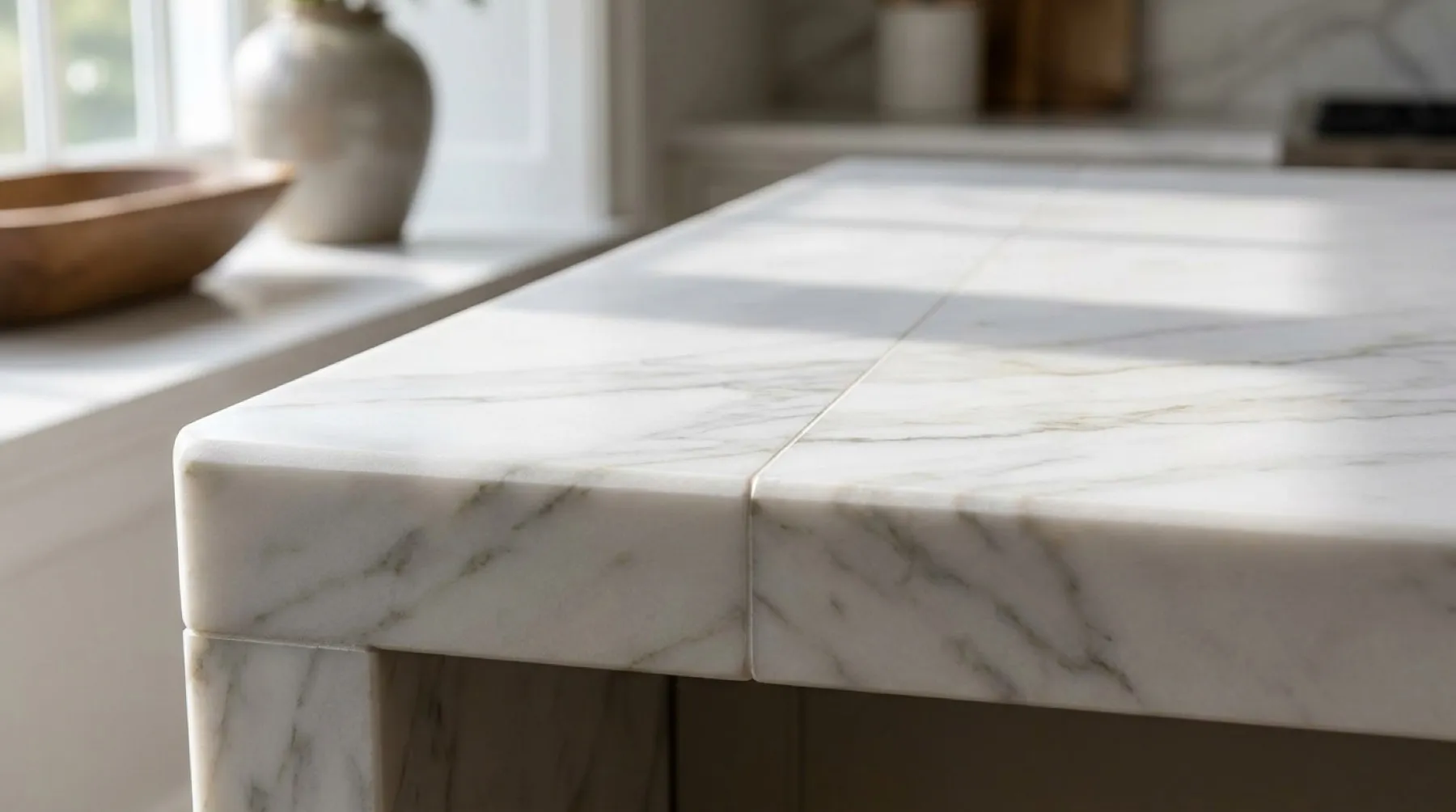
Wipe acids fast — wine, lemon, tomato etch the polish. Honed hides wear best. pH-neutral cleaner only.
Marble guide →GraniteNearly bulletproof once sealed. Hot pans fine. If water stops beading, it is time to reseal.
Granite guide →QuartziteNo etching, high scratch resistance. Treat like granite and it outlasts the cabinets.
Quartzite guide →QuartzSoap and water. The one rule: always use trivets — heat scorches the resin permanently.
Quartz guide →SoapstoneMineral oil deepens the charcoal tone. Scratches buff out with sandpaper and re-oiling. Immune to acid and heat.
Soapstone guide →PorcelainAny cleaner, any pan, full sun. Just avoid hard impacts on exposed edges.
Porcelain guide →07Etches and scratches like marble. Seal it and keep it to low-wear surfaces.
Onyx guide →Seal on installation and roughly annually. Sealing prevents staining but does nothing about etching, which is a chemical reaction rather than absorption. Wipe acidic spills promptly rather than letting them sit. Clean with pH-neutral products only — never vinegar, never bleach, never a general-purpose spray.
Light etches on honed marble can often be buffed out with a marble polishing powder. Deeper etching on polished marble needs professional re-polishing, which we do. Expect patina over time and choose marble because you like that.
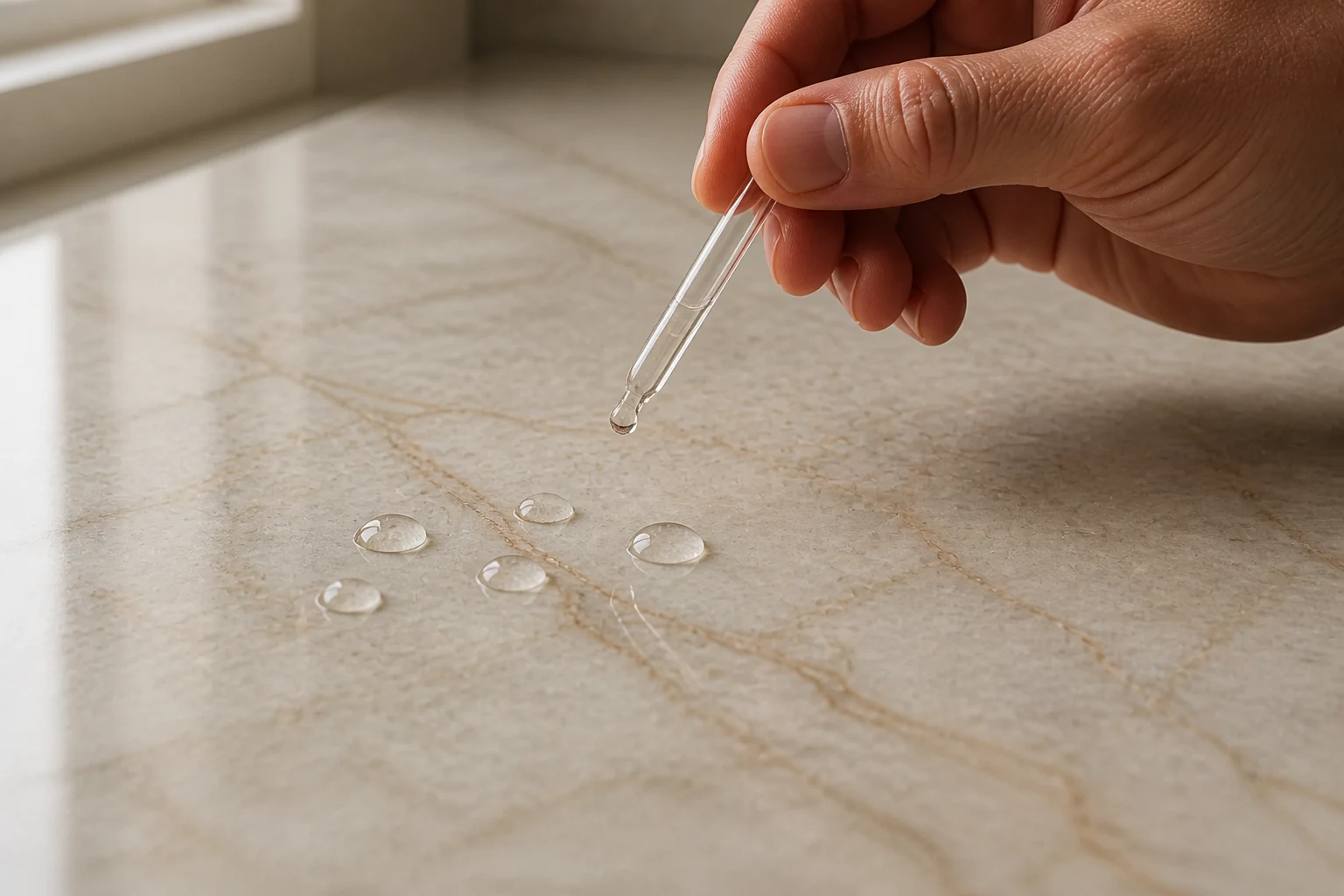
Both are porous and both need sealing on installation and periodically after. Use the water test to decide when: leave a few drops on the surface for fifteen minutes. If the stone darkens underneath, it is time to reseal. If the water beads, do nothing.
Neither etches, so acid is not a concern. Warm water and a pH-neutral cleaner is the whole routine. Both tolerate heat well, though a trivet under a cast iron pan is still sensible on a sealed surface.
Never seal it — it is non-porous and sealer will simply sit on the surface. Soap and water handles almost everything; a non-abrasive cleaner handles the rest.
The one real risk is heat. The resin binder scorches and the damage is permanent and not repairable. Always use trivets. Also keep it out of prolonged direct sun, because quartz is not UV stable and will discolour unevenly over time in a bright south-facing room.
Never needs sealing and cannot stain or etch. Clean with anything you like, including products that would ruin marble.
It will scratch and dent. Light scratches sand out with fine sandpaper, and mineral oil evens the colour back afterwards. Apply mineral oil as often as you like the look of it — monthly at first, then whenever the colour looks uneven. Or stop oiling entirely and let it darken at its own pace.
The lowest-maintenance surface available. Non-porous, stain proof, heat proof, UV stable, never needs sealing. Soap and water indefinitely.
The only vulnerability is impact. It is hard but brittle, and a sharp knock to an edge or corner can chip it. Chips cannot be sanded out the way soapstone marks can, so treat edges with a little respect.
Most onyx is calcite-based, like marble, so acids etch it, and it scratches more easily than granite or quartzite. Seal it on installation and reseal regularly, clean with pH-neutral products only, and wipe spills straight away.
That is why we use it where it is seen more than worked: backlit bar fronts, powder-room vanities, fireplace details and bookmatched wall panels. On a busy kitchen counter it will not take the daily abuse.
We reseal, repair chips and seams, and re-hone or re-polish dulled stone — including countertops we did not originally fabricate. Call 203-717-1978.