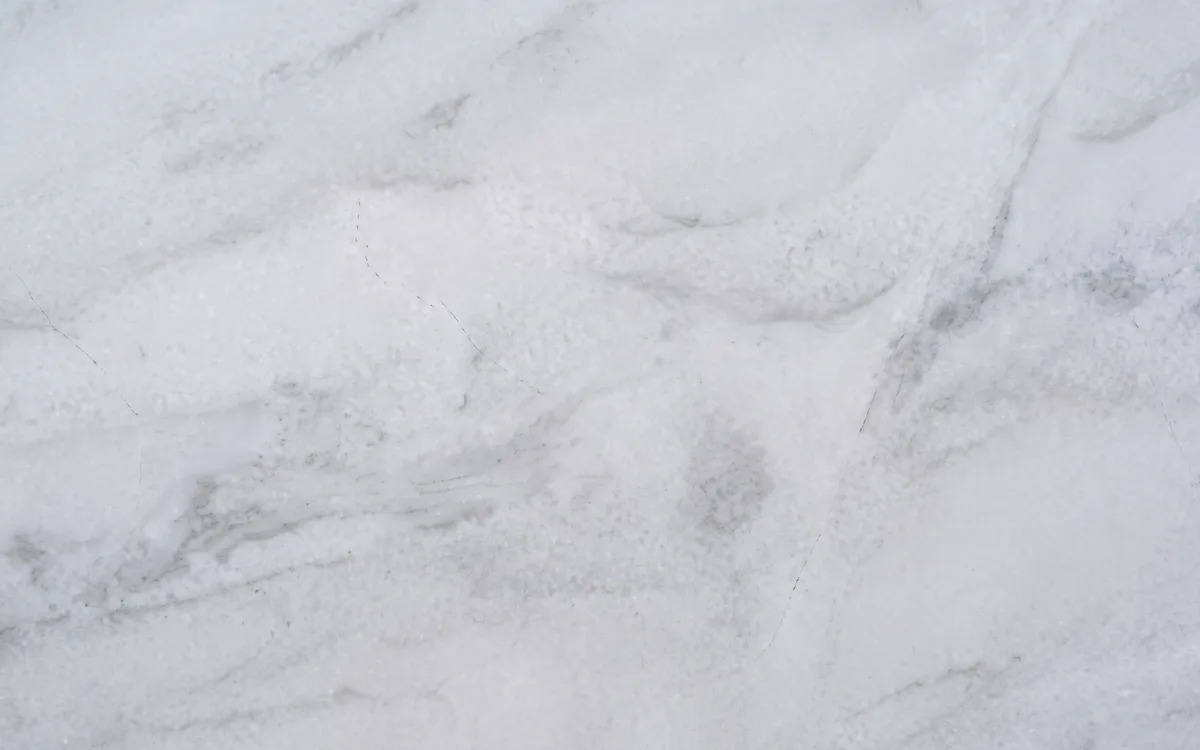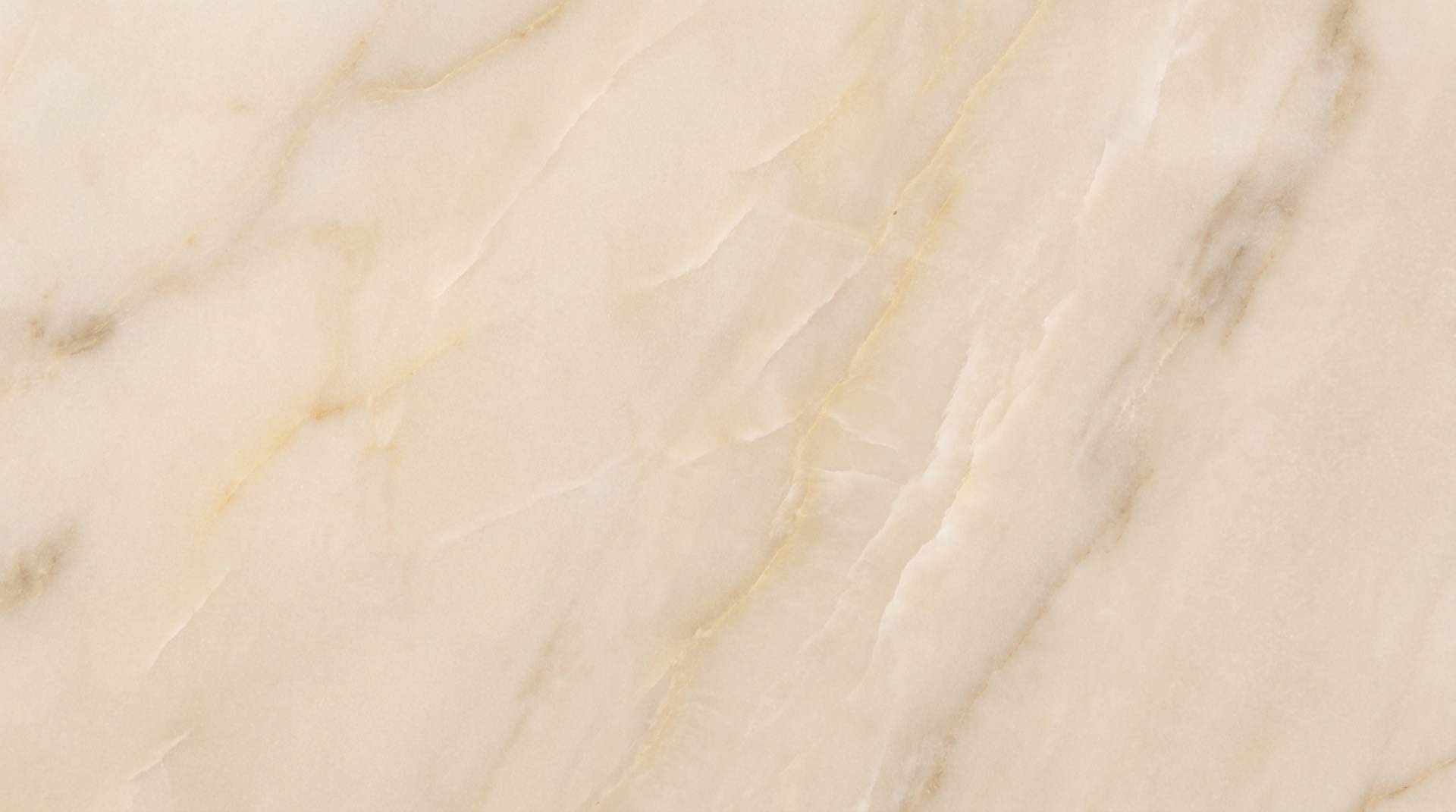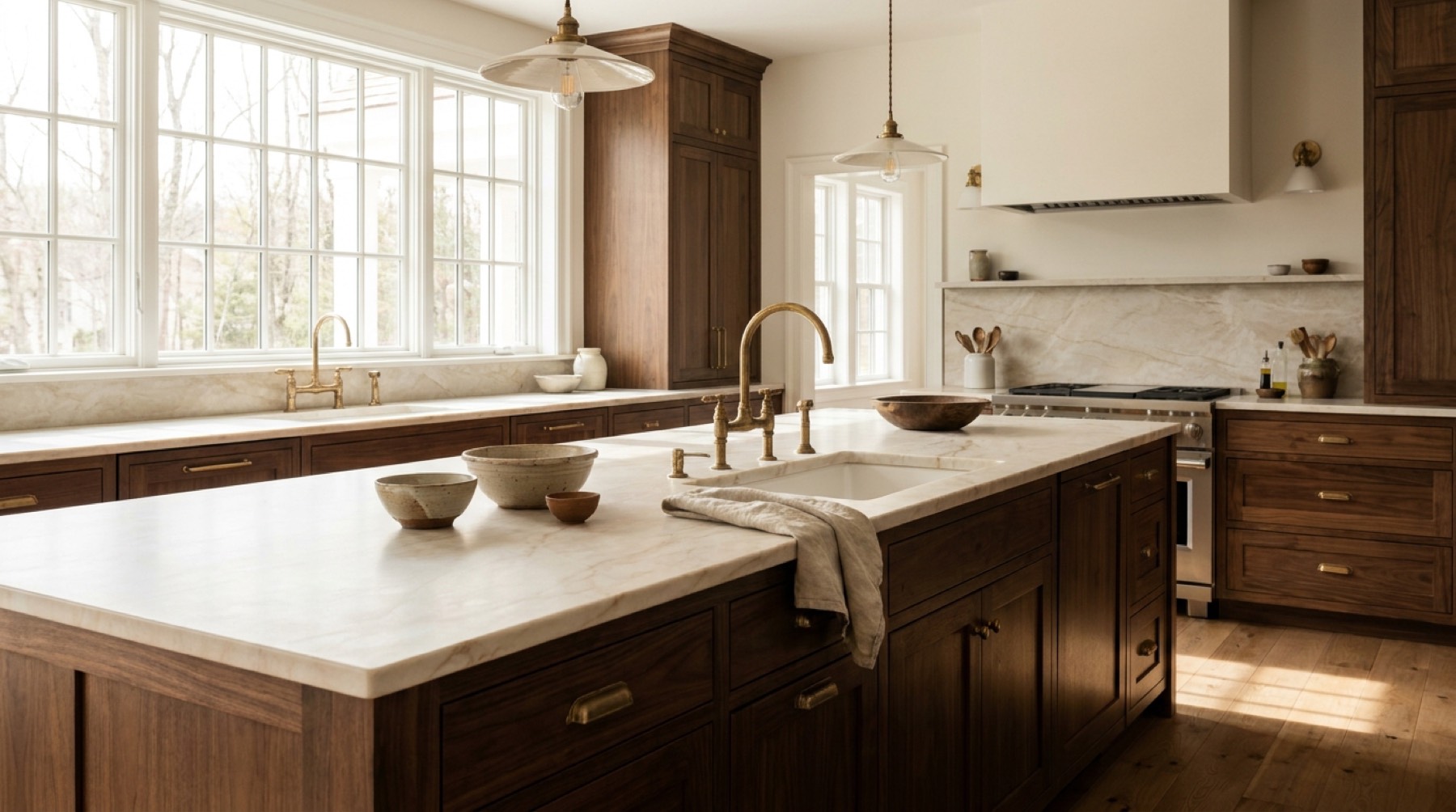
Oxblood and chocolate tones, leathered quartzite and islands built for a crowd: the fall 2026 trends worth knowing, plus a holiday spill guide by stone.
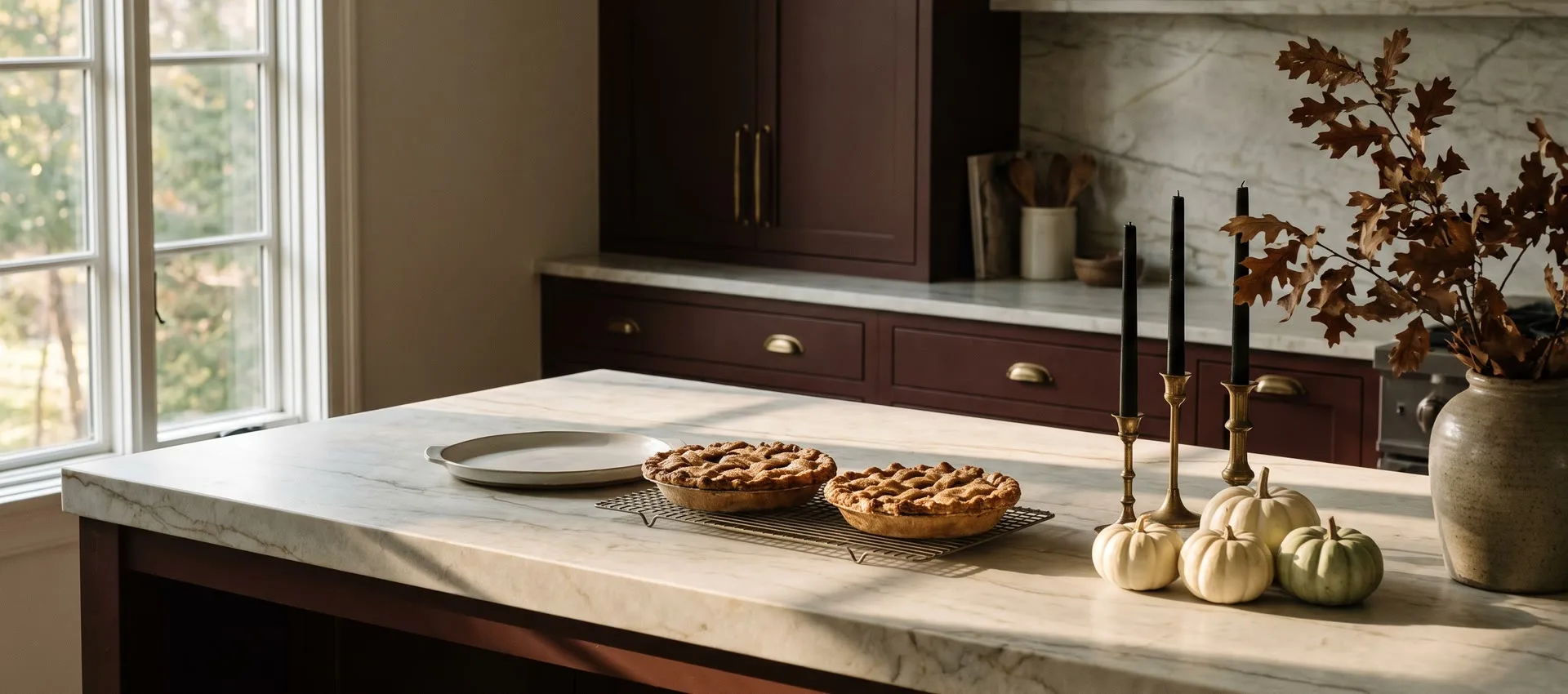
Fall is when a kitchen gets tested. Halloween fills the house with kids and candles, Thanksgiving brings the longest cooking day of the year, and December rarely slows down. It's also when clients start asking what's new. Here is what designers are pointing to this season, what each trend means in stone, and how to keep your counters looking right through the holidays.
The fall palette went deep and warm
This year's fall color reports read like a wine list. Designers interviewed for Homes & Gardens' fall 2026 color roundup named chocolate brown, maroon, oxblood, terracotta and bottle green among the shades to watch. That's a long way from the all-white kitchen, and it changes how stone gets chosen.
There are two good ways to work with it. The first is to bring the color into the stone itself. Calacatta Viola, a white marble with burgundy and violet veining, pairs naturally with oxblood and maroon, and the green marbles sit easily against bottle-green cabinetry. These are statement stones, so we usually suggest them where they can be seen in full and get lighter wear: a powder room vanity, a bar, a fireplace surround, or an island in a kitchen that's more for gathering than cooking.
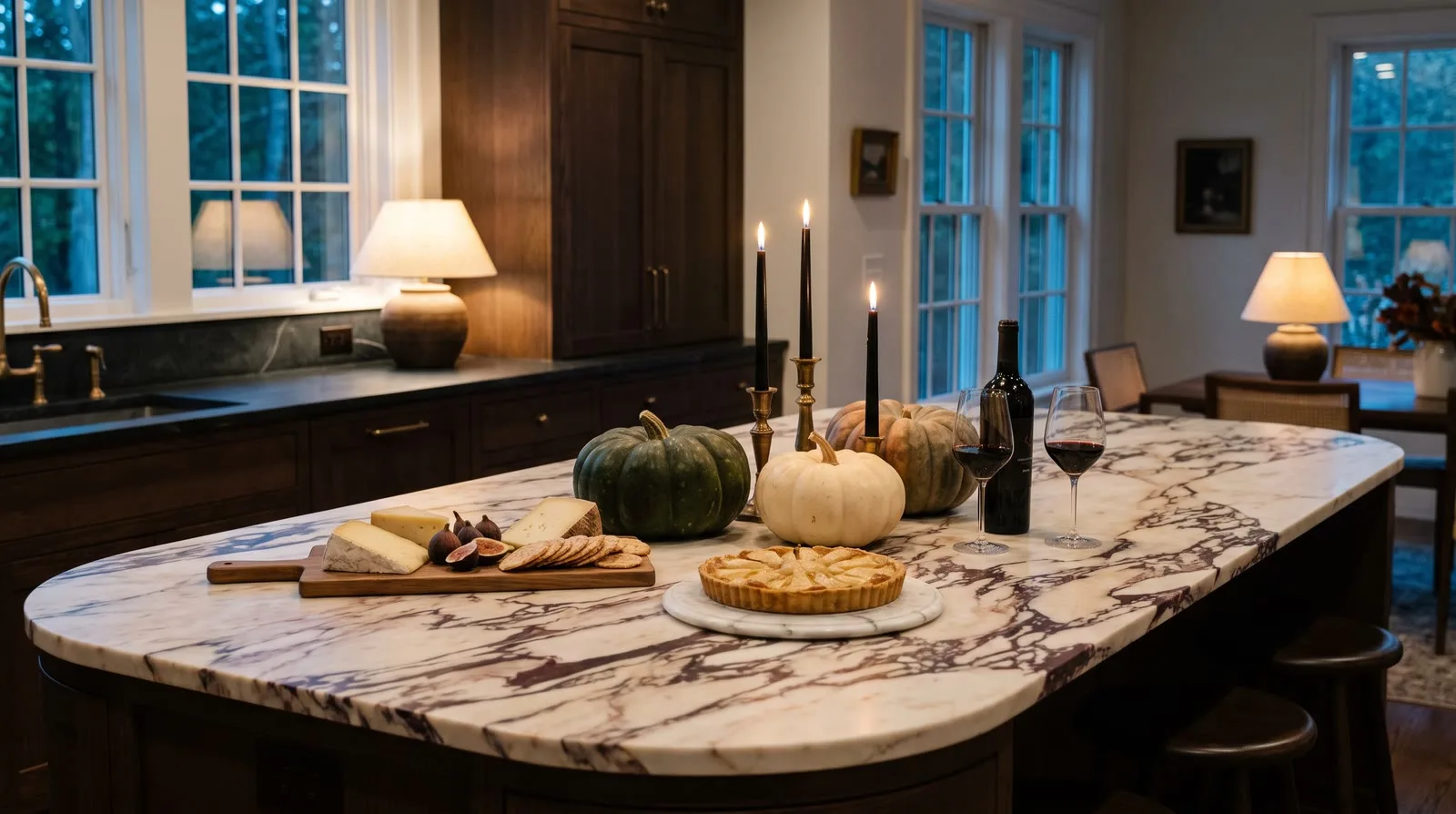
The second approach, and the one most of the kitchens we cut are taking, is to keep the stone warm and quiet and let the cabinetry carry the color. A warm white quartzite sits well against chocolate or oxblood paint without competing with it. Our guide to Taj Mahal vs. Mont Blanc explains why warm and cool whites look so different next to painted wood.
Dark and moody, without the haunted house
Halloween decorating has been moving away from bright orange for a few seasons. Designers are reaching for jewel tones and black accents instead: black taper candles, dark dried branches, deep green and plum. The same instinct shows up in permanent finishes, with deep grays and near-black surfaces back on islands and bars.
In stone, that usually means soapstone, black granite or a dark marble, and each behaves differently.
- Soapstone is our first answer for a dark kitchen you actually cook in. It doesn't stain or etch, it takes a hot pan, and mineral oil deepens it to a rich charcoal. It does scratch, but light marks sand out. See soapstone countertops.
- Black granite is the toughest of the three. A high polish on black shows every fingerprint and water spot, so we steer most clients toward a honed or leathered finish.
- Black marbles such as Nero Marquina are dramatic and best kept to bars, powder rooms and fireplace walls, because etches show clearly on a dark polished surface.
Leathered finishes keep coming up
A leathered finish is brushed instead of polished, which leaves a soft, matte surface with texture you can feel. It keeps turning up in this year's countertop trend reports, most often on quartzite, partly for the look and partly because it hides fingerprints and smudges better than a polish. It suits the warmer, more tactile direction of fall interiors, and it's practical on a busy island during hosting season.
Two things to know before choosing it. Leathering exaggerates the natural texture of the stone, so look at a leathered sample of the exact material, not a polished one. And oil and wine can settle in the low spots of a textured surface, so it needs a little more attention after spills; a pH-neutral cleaner and a soft brush handle it. Our honed vs. polished guide covers how finish affects upkeep.
Islands built for a crowd
If one part of the kitchen earns its keep between Halloween and New Year's, it's the island. Most of this year's island trends are about hosting.
- Longer islands with seating on both sides. Designers are planning face-to-face seating on islands of nine feet or more. In stone, that length often means a seam, and seating on both sides means overhangs that need hidden support. Both belong in the plan at templating; our guide to where countertop seams should go explains how.
- Two islands, one to work and one to gather. Splitting prep from serving keeps the guest side clean, and the serving island is a good place for a more decorative stone, since it won't see a cutting board every day.
- The half waterfall. Instead of running the stone all the way to the floor, the slab turns down partway and meets the cabinetry. It looks lighter than a full waterfall island and uses less stone, but the mitred corner still needs the same careful vein layout.
- Heavier edges. Built-up mitred edges, stepped profiles and ogees are back on islands. A mitred build-up makes a standard slab look like a thick block without the weight of one. See our edge profiles and the guide to choosing an edge.
- Softer shapes. Curved ends, ovals and racetrack islands help people move around a crowded kitchen. We cut curves on the CNC in our Bridgeport shop, and veined stone tends to look more natural on a curve than people expect.
The marble pastry station is back
One of the more charming ideas this year is the return of the dairy table, a freestanding, table-like island with a marble top, borrowed from old English kitchens. Marble stays cool, which is why bakers have rolled pastry on it for centuries. If pie season is your season, you don't need an all-marble kitchen to get the benefit. A short run of marble beside the range, or a marble-topped baking table, gives you a cool, smooth work surface while the main counters stay in a tougher stone.
It's also one of our favorite uses for a remnant. A piece left over from a larger job is often the right size for a baking station, and it costs less than opening a full slab. There are more ideas in using stone remnants for vanities, bars and hearths.
A holiday spill guide, stone by stone
Thanksgiving puts every counter through the same test: cranberry sauce, red wine, gravy, roasting pans straight from the oven and candles burning for hours. Here is what matters for each material we fabricate.
- Marble: cranberry, citrus, wine and vinaigrette are acidic and will etch it. Wipe them when you notice them, and keep a trivet under hot dishes. Honed marble hides the marks best. See living with marble countertops.
- Quartz: spills wipe up easily, but heat is the real risk. A roasting pan or casserole set straight on quartz can scorch the resin permanently, so use a trivet every time.
- Quartzite and granite: acid isn't a concern and hot pans are tolerated, but both are porous. Gravy and red wine can darken a surface that's overdue for sealing, so test it before the holiday.
- Soapstone: it can't stain or etch and it takes heat. Watch for scratches from heavy roasting pans, and buff them out afterward.
- Porcelain: stain proof and heat proof. Mind the edges when moving heavy pots, because a sharp knock can chip a corner.
Candle wax is the one that catches people out. Let it harden fully, then lift it with a plastic scraper or an old card. Don't scrape with metal, and don't use solvents on natural stone. Any thin film left behind usually comes off with warm water and a pH-neutral cleaner.
Before guests arrive, run the water test on natural stone: leave a few drops on the surface for fifteen minutes. If the stone darkens underneath, it's time to reseal. Our stone care guide has the full routine for each material.
Want new counters before Thanksgiving?
Thanksgiving falls on Thursday, November 26 this year. Whether new counters make it depends on the template date more than the installation date. Once cabinets are set and level and the sink and cooktop are on site, our typical window from template to installation is one to two weeks. Working backward:
- Choose your slab at our Bridgeport yard. Visits are by appointment.
- Have your cabinets installed, level and secured, with the sink and appliances on site.
- Book templating, ideally by early November, to leave room for your layout approval and the shop schedule.
- Approve the layout over a photo of your slab. Then we cut, finish and install. How templating works explains what to expect.
If your kitchen is already finished, the stone may just need a tune-up. We reseal, repair chips and seams, and re-hone or re-polish dulled stone, including countertops we didn't originally fabricate. Call us at 203-717-1978 or start your project online.
The short version
- Fall color is deep and warm: oxblood, chocolate, maroon and bottle green. Bring it in through the stone, or let a warm white quartzite sit quietly against painted cabinetry.
- Going dark: soapstone for cooking, honed or leathered black granite for toughness, black marble for bars and fireplaces.
- Leathered quartzite hides fingerprints and feels warmer, but judge it from a leathered sample.
- Islands are getting longer, softer and sometimes doubled. Plan seams, overhang support and edge build-ups at templating.
- Use trivets on quartz and marble, wipe acids off marble, and test and reseal porous stone before the holidays.