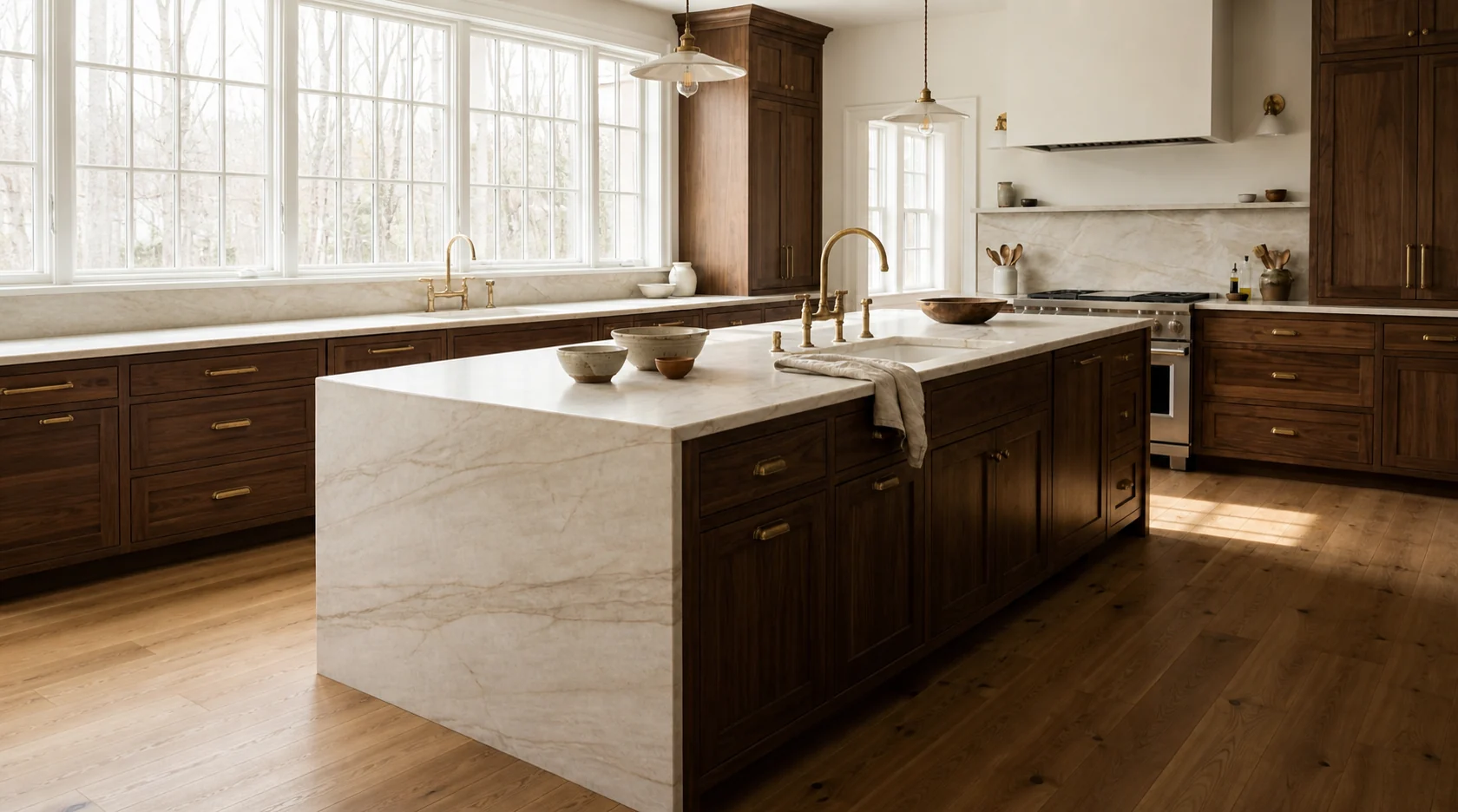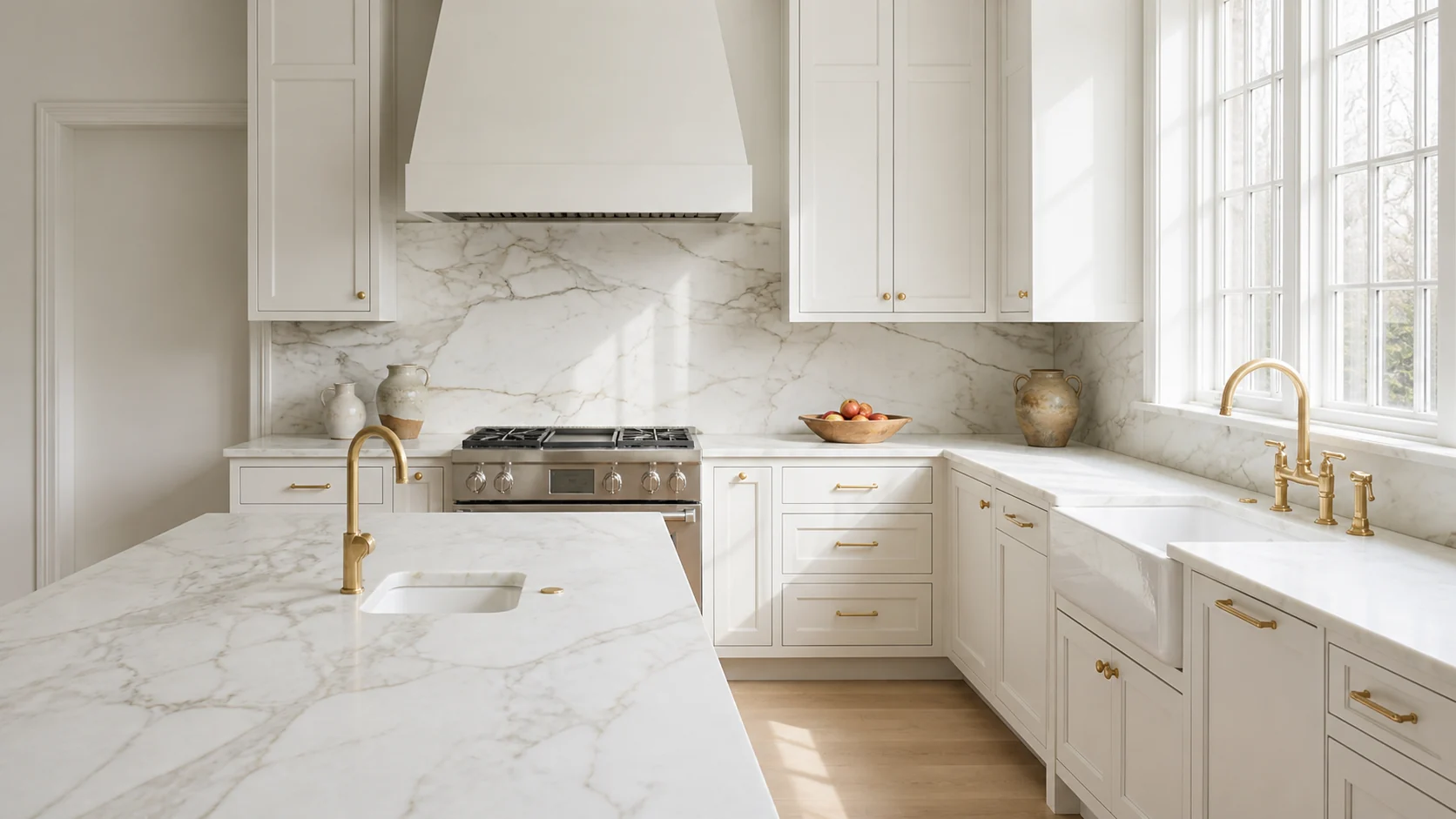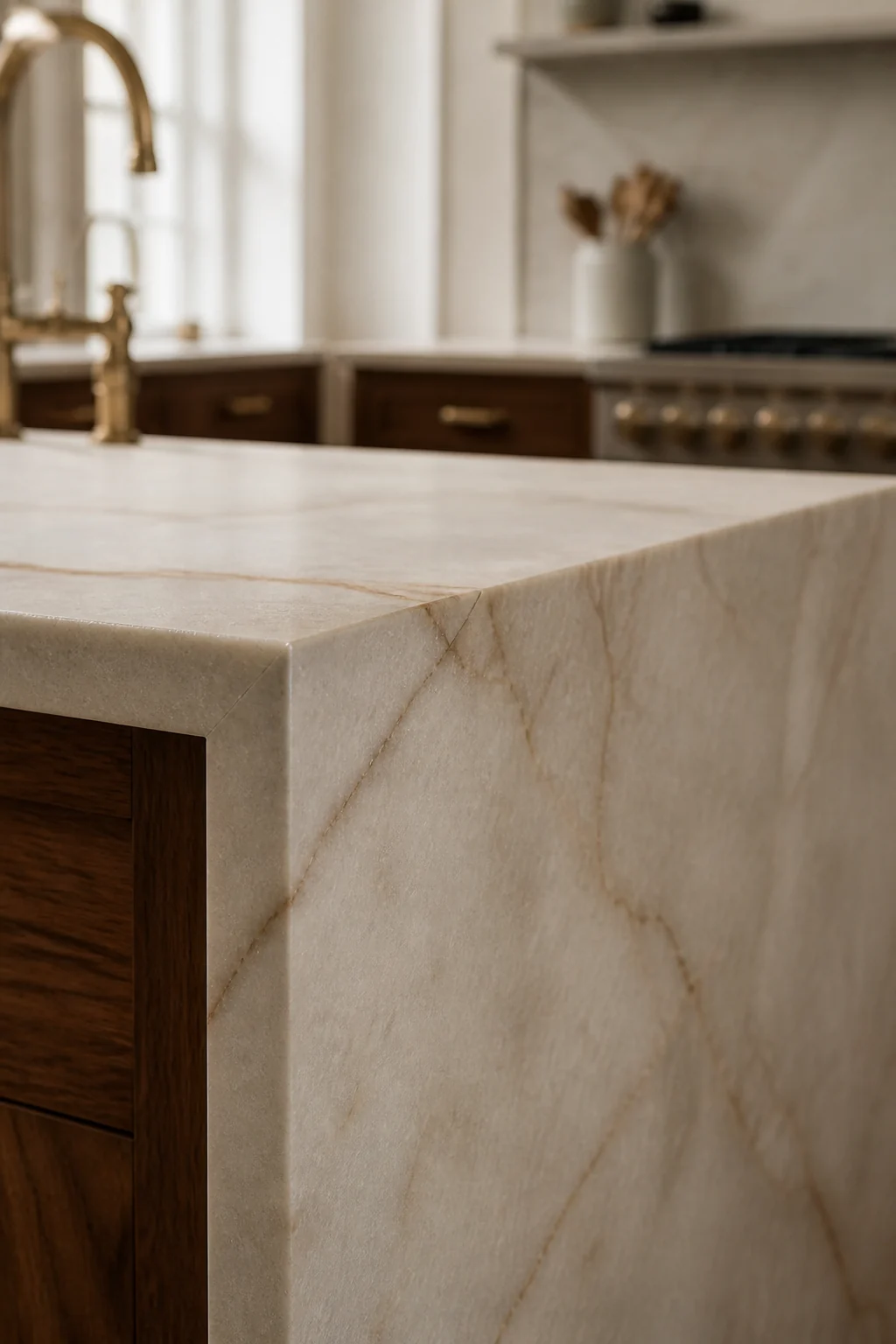
The three Italian white marbles people ask for most. How Carrara, Statuario and Calacatta differ in ground, veining, rarity and where each one belongs.

Ask for "white marble" at our yard and you'll be shown three families of Italian stone that look related from across the room and behave very differently up close: Carrara, Statuario and Calacatta. They come from the same mountains, they're all calcite marbles, and they all etch. What separates them is the color of the ground, the scale and color of the veining, how rare they are, and what that does to the price. Here is how to tell them apart and where each one belongs.
Where they come from
All three are quarried in the Apuan Alps above Carrara, in Tuscany, from quarries that have been worked since Roman times. The names describe grades and veining patterns more than exact locations, and the same block can produce slabs that get sold under different names depending on how they look once they're cut. That matters later, when we talk about choosing a slab rather than a name.
Carrara: the workhorse
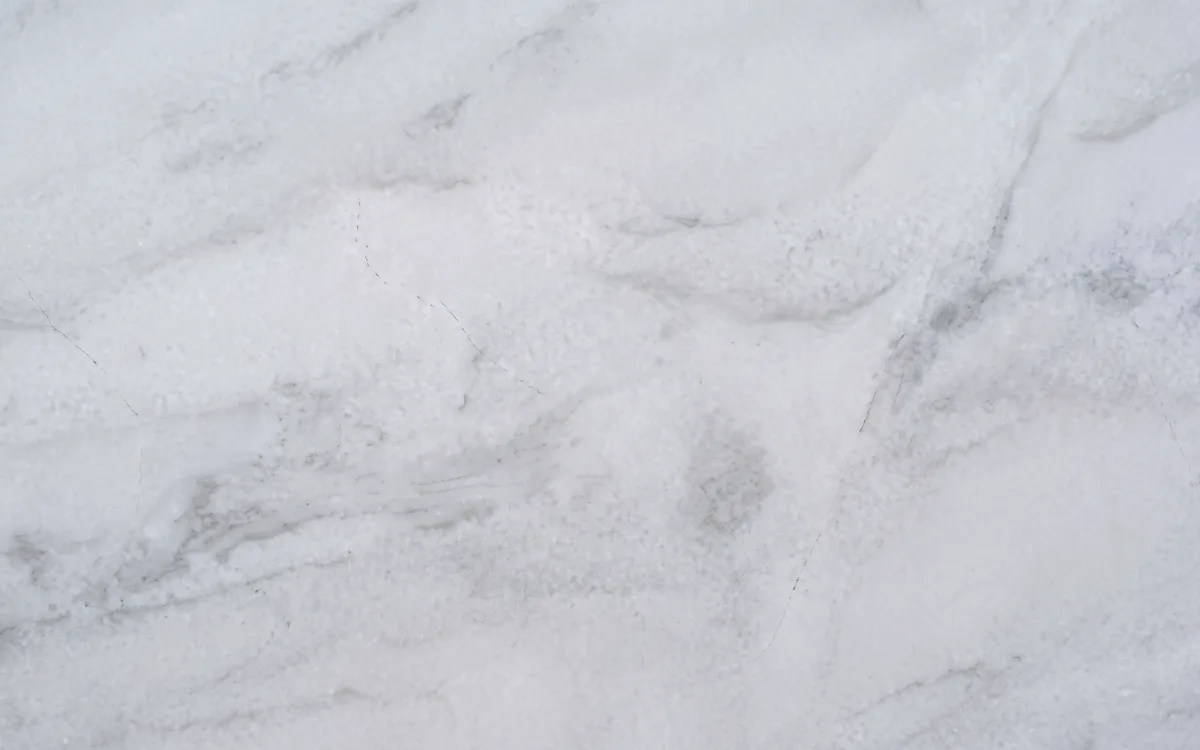
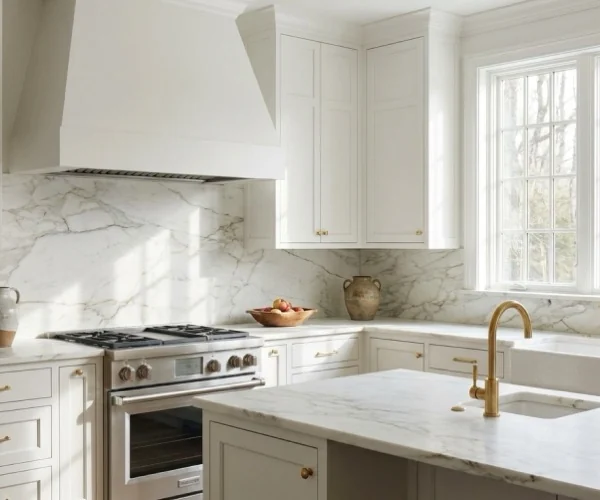
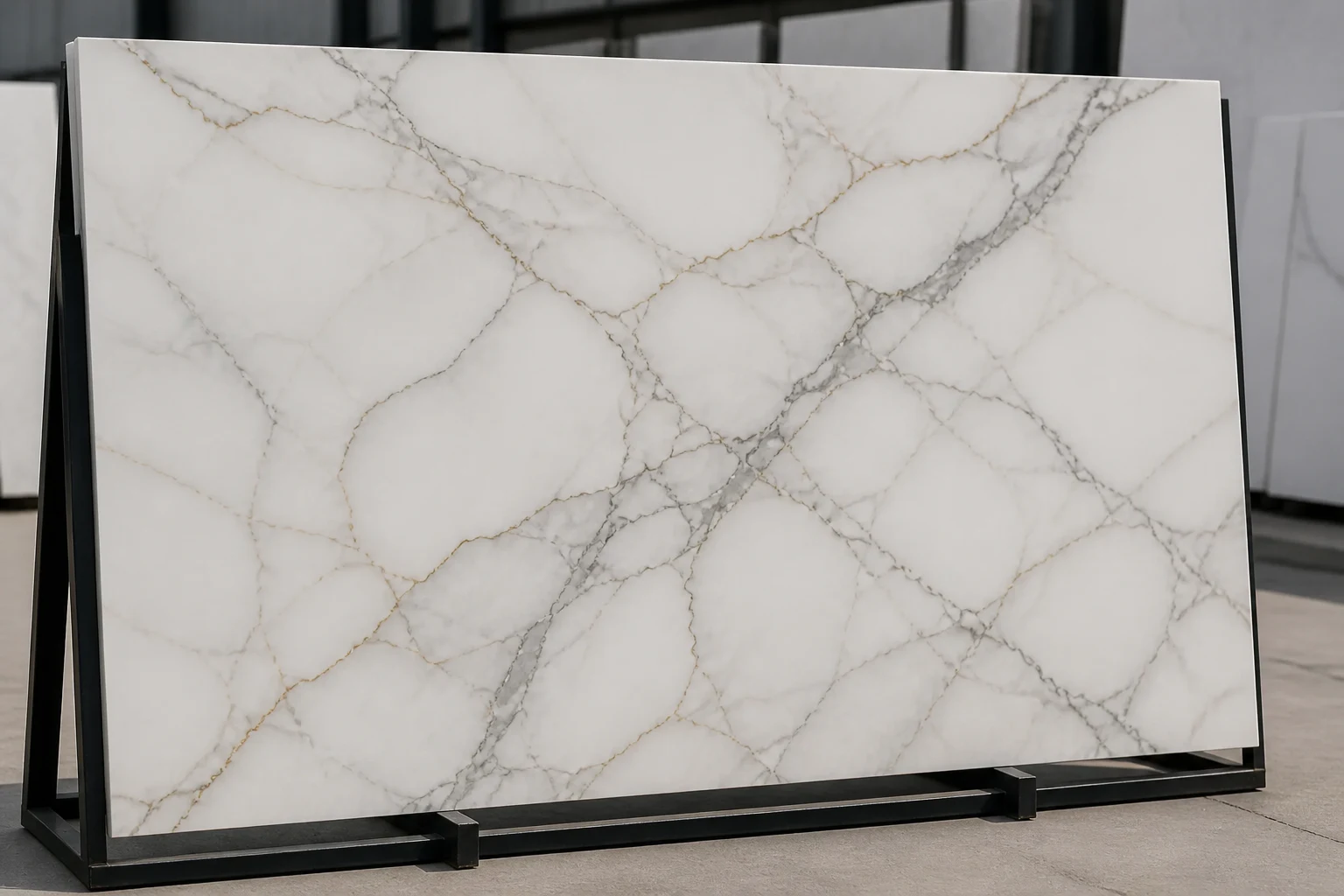
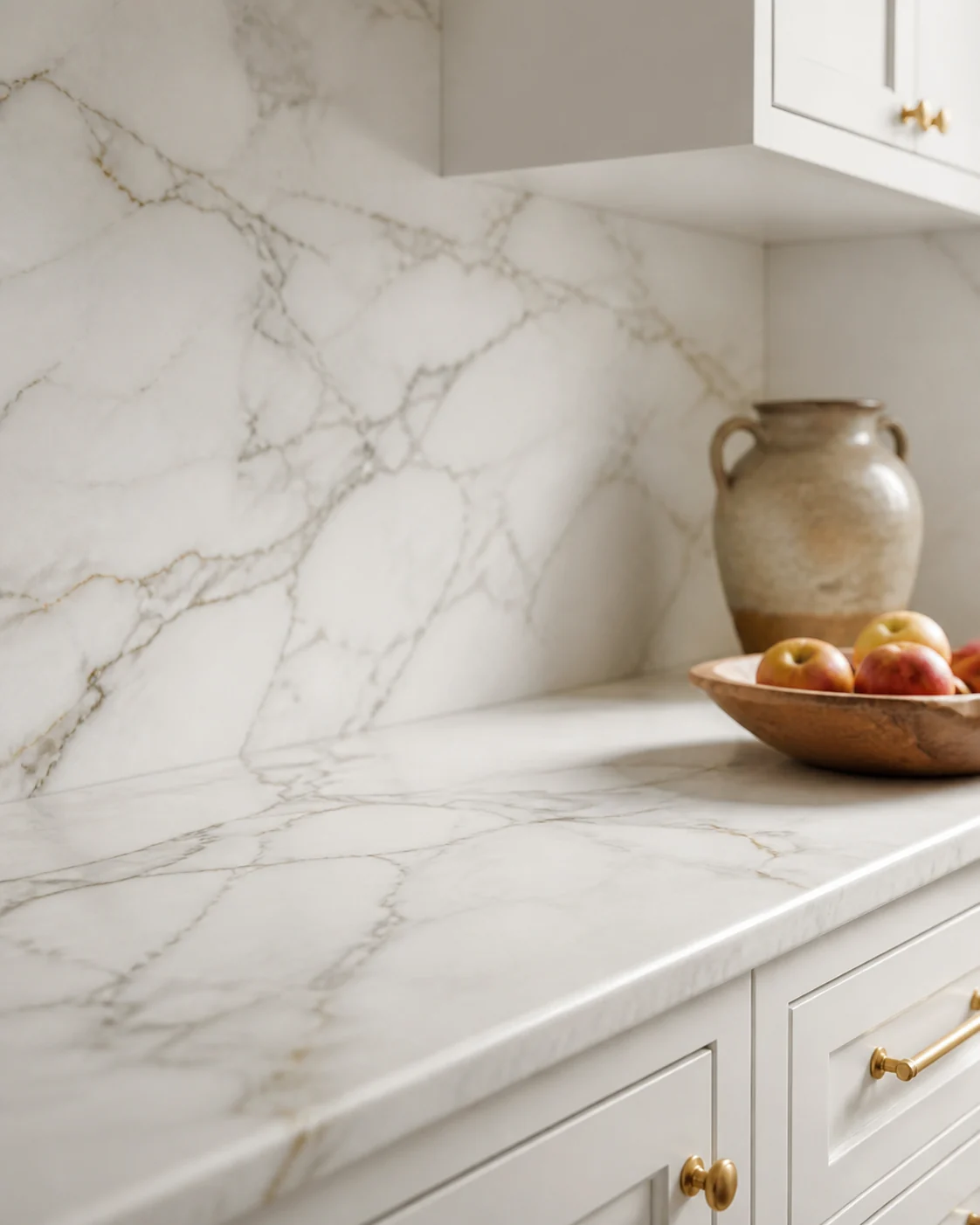
Carrara is the most abundant of the three and the one most people picture when they hear "marble." The ground is a soft white that leans gray, and the veining is fine, feathery and fairly even across the slab, often running in a loose linear direction. Because there is a lot of it, it is usually the most affordable Italian white marble, and because the pattern is busy and small, it hides everyday marks better than the bolder stones. We use it for whole kitchens, bathroom floors and walls, and vanities where the owners want the real thing without a statement.
Statuario: the sculptor's marble
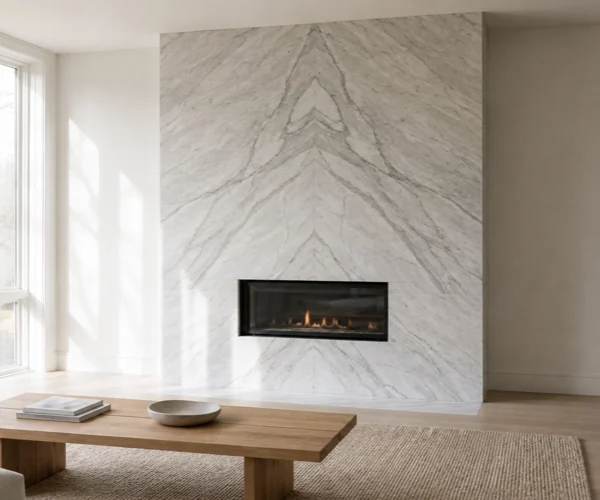
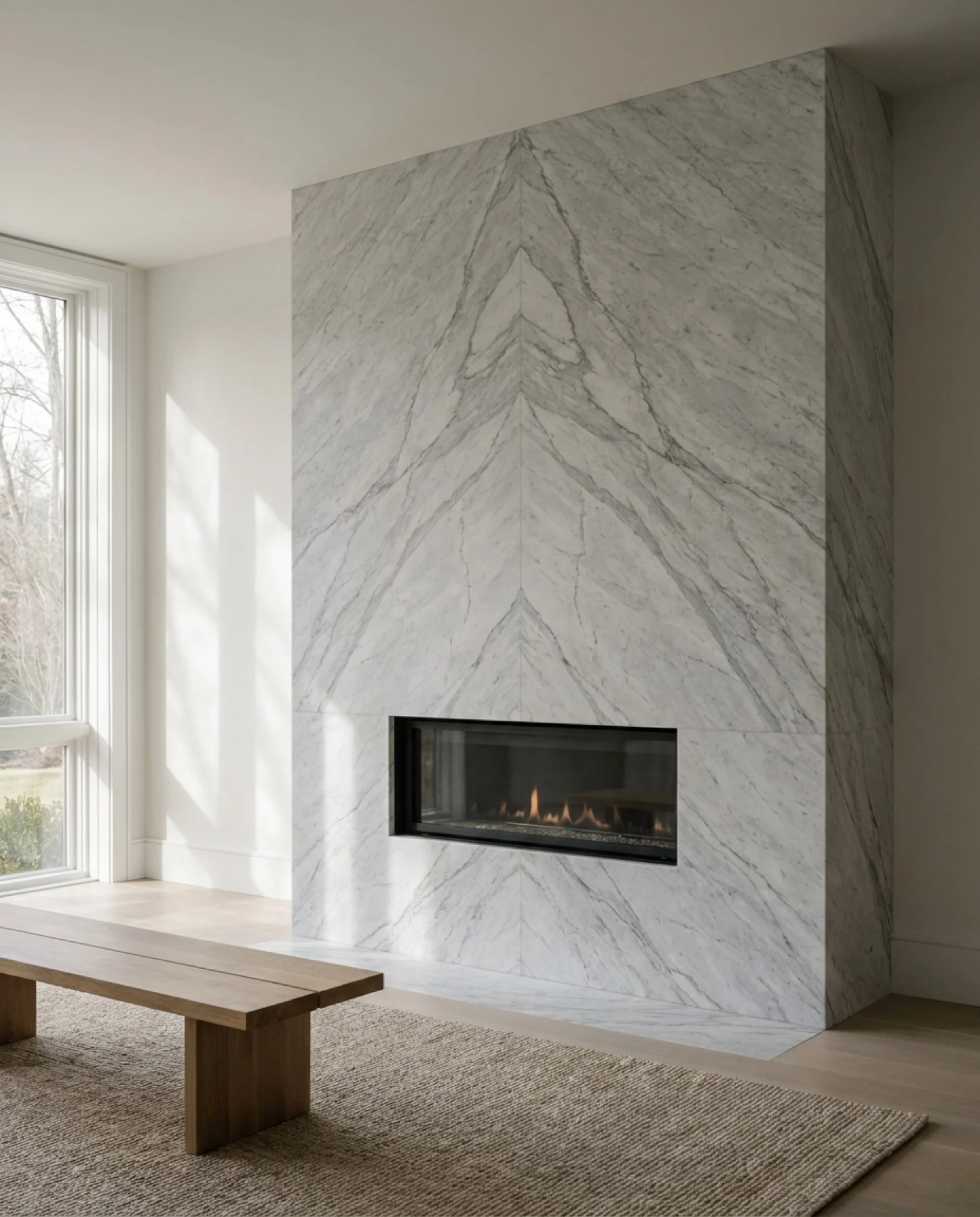
Statuario has a brighter, cleaner white ground than Carrara and far less of it is veined. The veins it does have are bold, gray to taupe, and widely spaced, which is why sculptors prized it: large areas of pure white with a few dramatic lines. It is rarer and priced accordingly. Because each slab has so much open white, it is unforgiving of layout: a vein that lands in the wrong place has nowhere to hide. Our bookmatched Statuario fireplace in Westport is the material at its best, mirrored across a center seam so the few veins become the composition.
Calacatta: the bold one
Calacatta has a white ground, usually warmer than Statuario, with thick, dramatic veining in gray, taupe and gold. The veins are larger and more open than Carrara's and more frequent than Statuario's. It is the most varied family of the three, and the names tell you which direction a slab leans:
- Calacatta Gold: warm gold and taupe veins on a creamy white ground. Our double vanity in Fairfield and the full-height backsplash in Westport are both Calacatta Gold.
- Calacatta Borghini: broad gray veins with gold tones running through them, bolder and darker than Gold. See our primary bath in Greenwich.
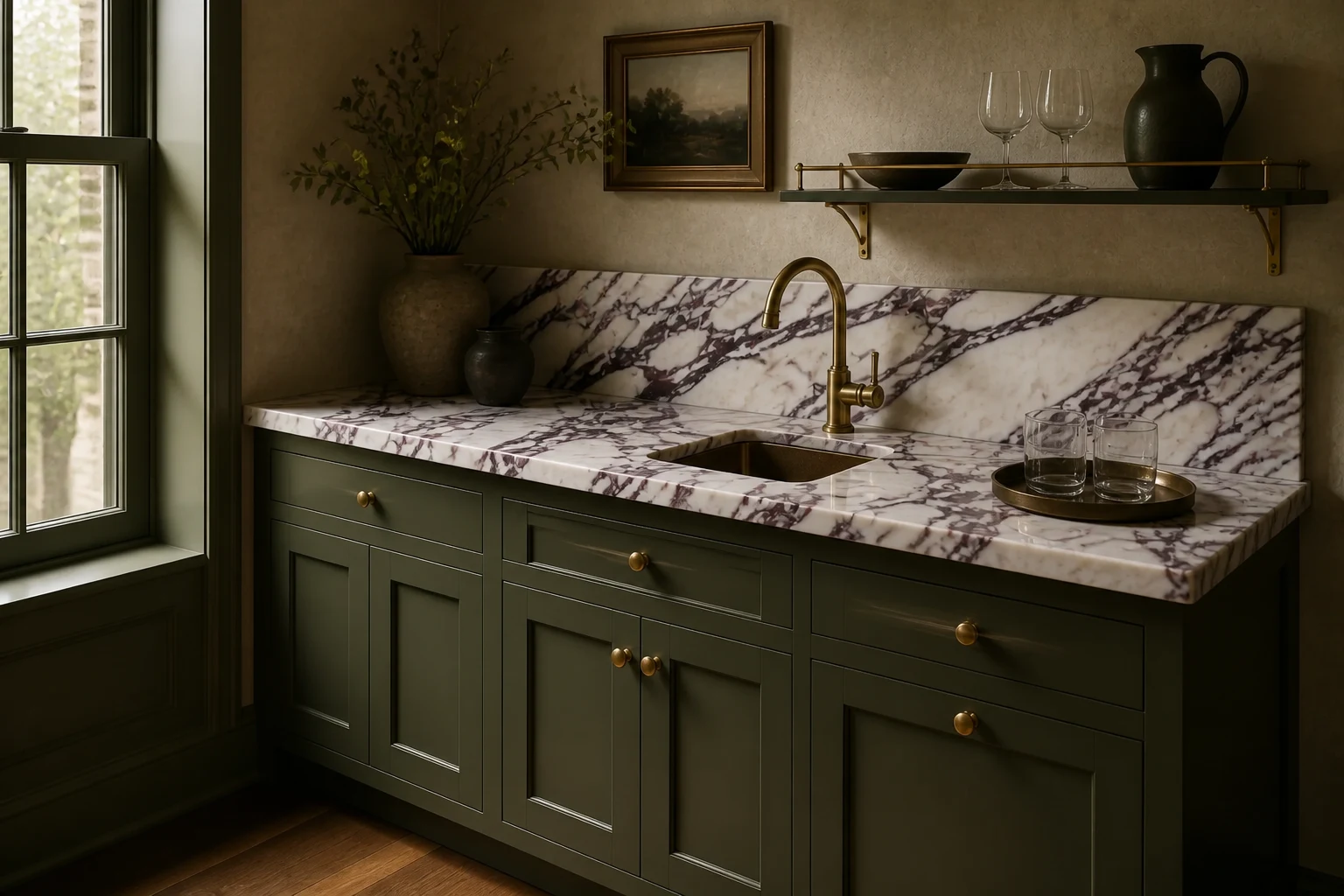
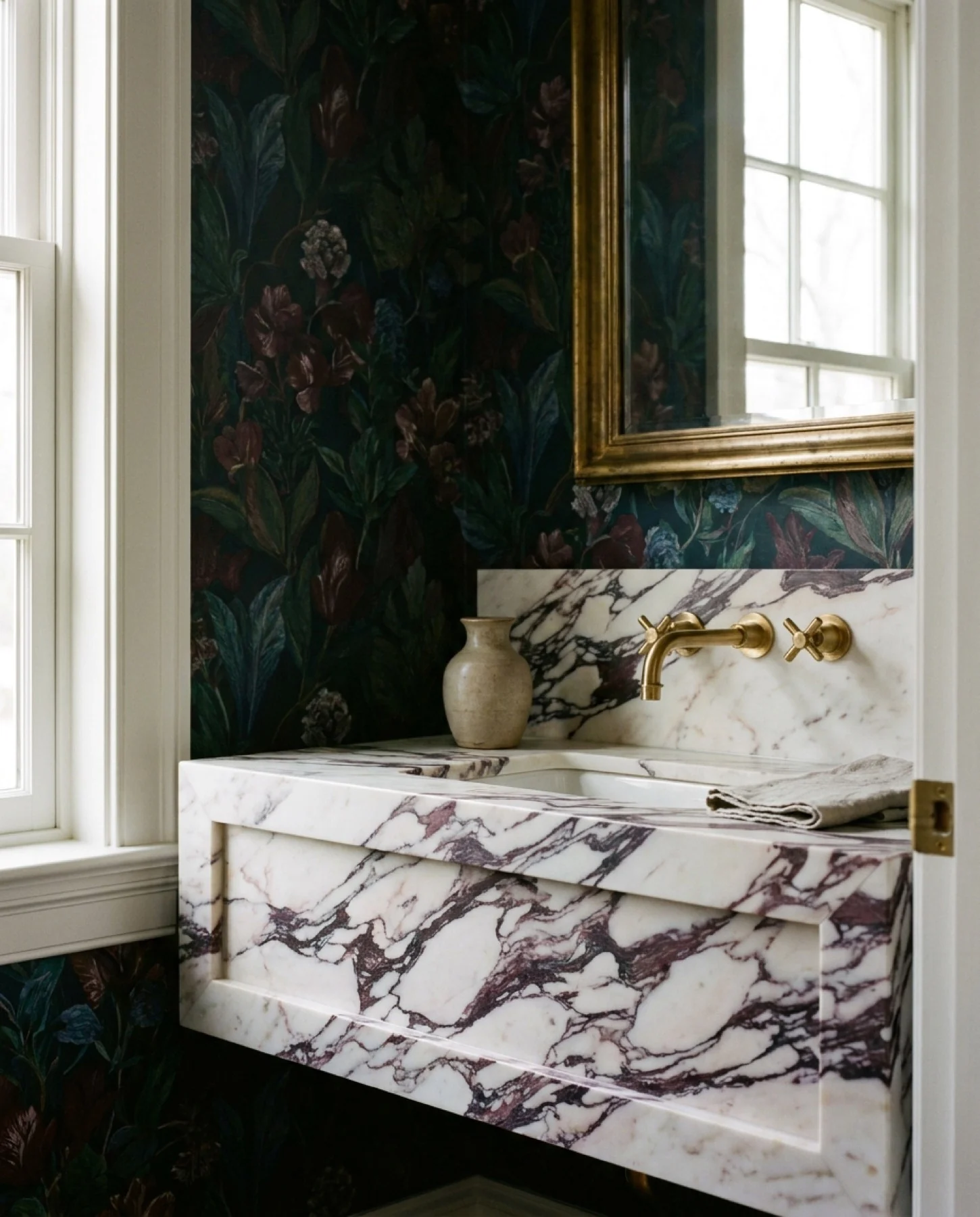
- Calacatta Viola: burgundy and violet veining on white. A statement stone for powder rooms, bars and fireplaces, as in our powder room in Monroe.
Calacatta is generally the most expensive of the three because the clean, well-veined blocks are scarce, and because so much of its value is in the layout. A Calacatta island with the vein running the wrong way costs the same and looks half as good.
Side by side
- Ground: Carrara soft gray-white; Statuario bright white; Calacatta white to warm white.
- Veining: Carrara fine, feathery and frequent; Statuario bold, sparse and gray; Calacatta thick, open and often gold.
- Rarity and price: Carrara most available and most affordable; Statuario and Calacatta rarer and priced well above it, with Calacatta usually at the top.
- Forgiveness: Carrara hides marks and seams best; Statuario and Calacatta show everything, including a good layout.
- Etching: all three. They are calcite marbles, and lemon juice, wine and vinegar will dull the surface. See living with marble countertops.
How to tell them apart at the yard
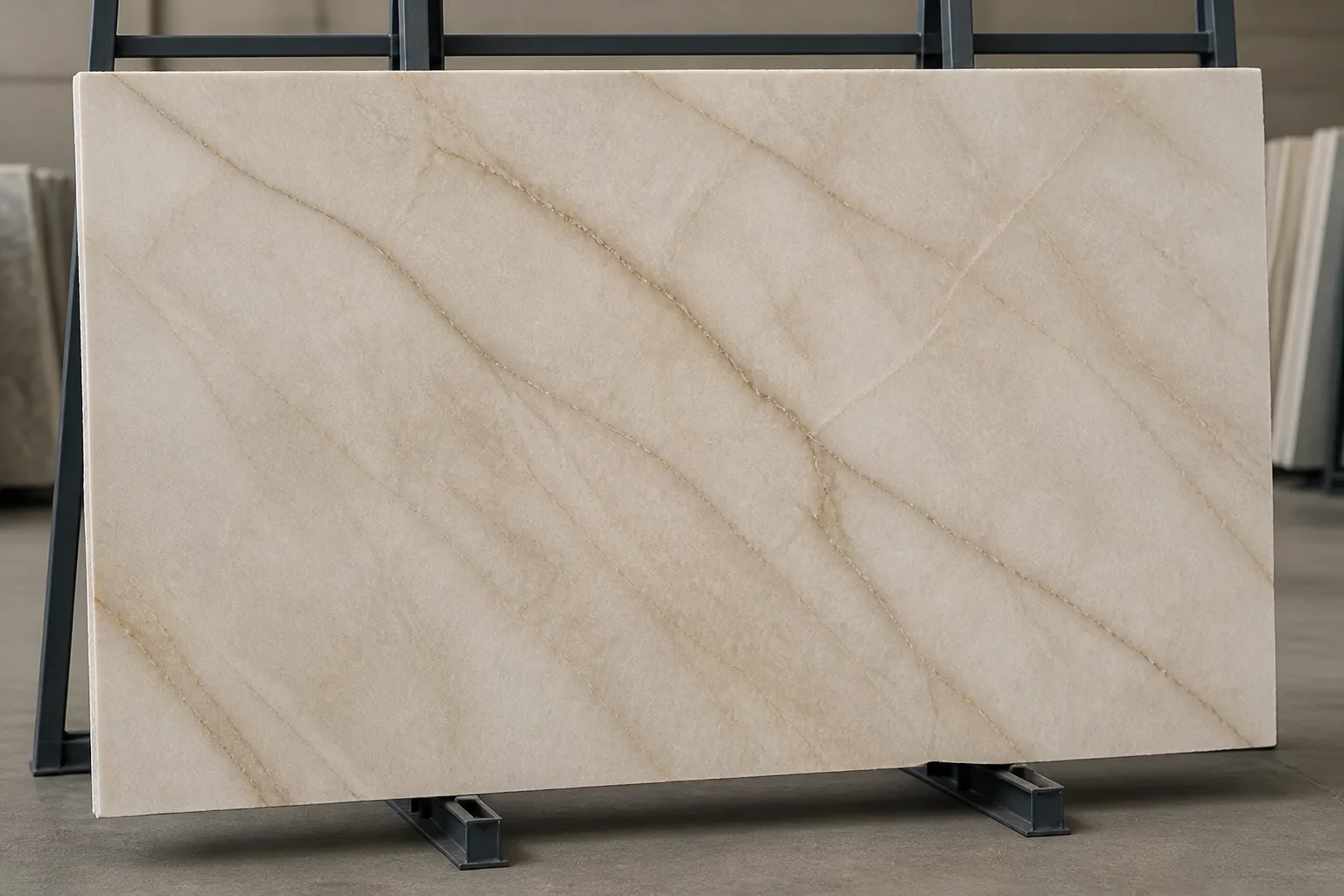
Stand back first. Carrara reads as an even, softly mottled gray-white. Statuario reads as white with a few strong lines. Calacatta reads as white with big veins that have warmth in them. Then walk up and look at a single vein: Carrara's are thin and gray, Statuario's are gray to brown and sharply defined, and Calacatta's are wide, often with a gold or taupe tone. Finally look at the two ends of the slab. A true Statuario or Calacatta slab changes a lot from one end to the other, which is why the layout matters.
The naming problem
Stone names are not regulated. A slab sold as Calacatta by one supplier might be sold as a premium Carrara by another, and marbles from outside Italy are sometimes given Italian names because they look similar. None of that makes a slab good or bad, but it means the name is a starting point and the slab in front of you is the decision. Ask where it was quarried, ask to see the sequential slabs, and choose the actual pieces your job will be cut from.
All three etch, so finish matters
Whichever you choose, the stone reacts with acid. On a kitchen counter we recommend honed, which hides etch marks and fine scratches; on a fireplace, a bath or a bar, polished brings out the depth and the wear is light enough that it keeps its look. Our guide to honed vs. polished stone covers the trade-off, and the stone care guide has the sealing routine.
Which one where
- Whole kitchen, honed: Carrara, or a quieter Calacatta if the budget allows and the layout is planned.
- Island or full-height backsplash that the room is built around: Calacatta Gold or Borghini.
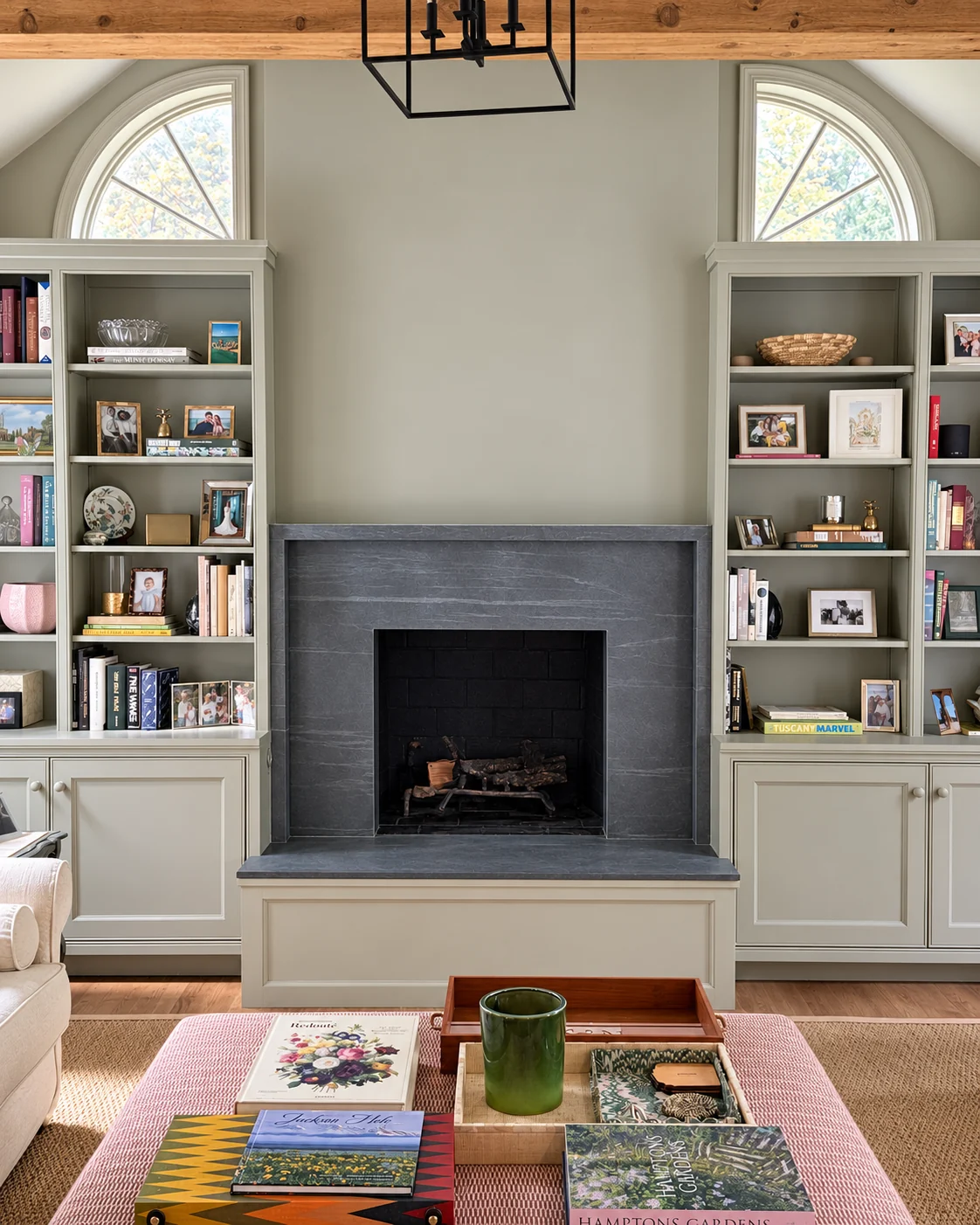
- Fireplace feature wall: Statuario bookmatched, or a bold Calacatta.
- Primary bath: any of the three; Calacatta and Statuario for a vanity that reads as one piece, Carrara for walls and floors.
- Powder room or bar: Calacatta Viola or another colored marble, where a strong stone is seen in full and used lightly. See bathroom vanity tops and fireplace surrounds.
How we lay them out
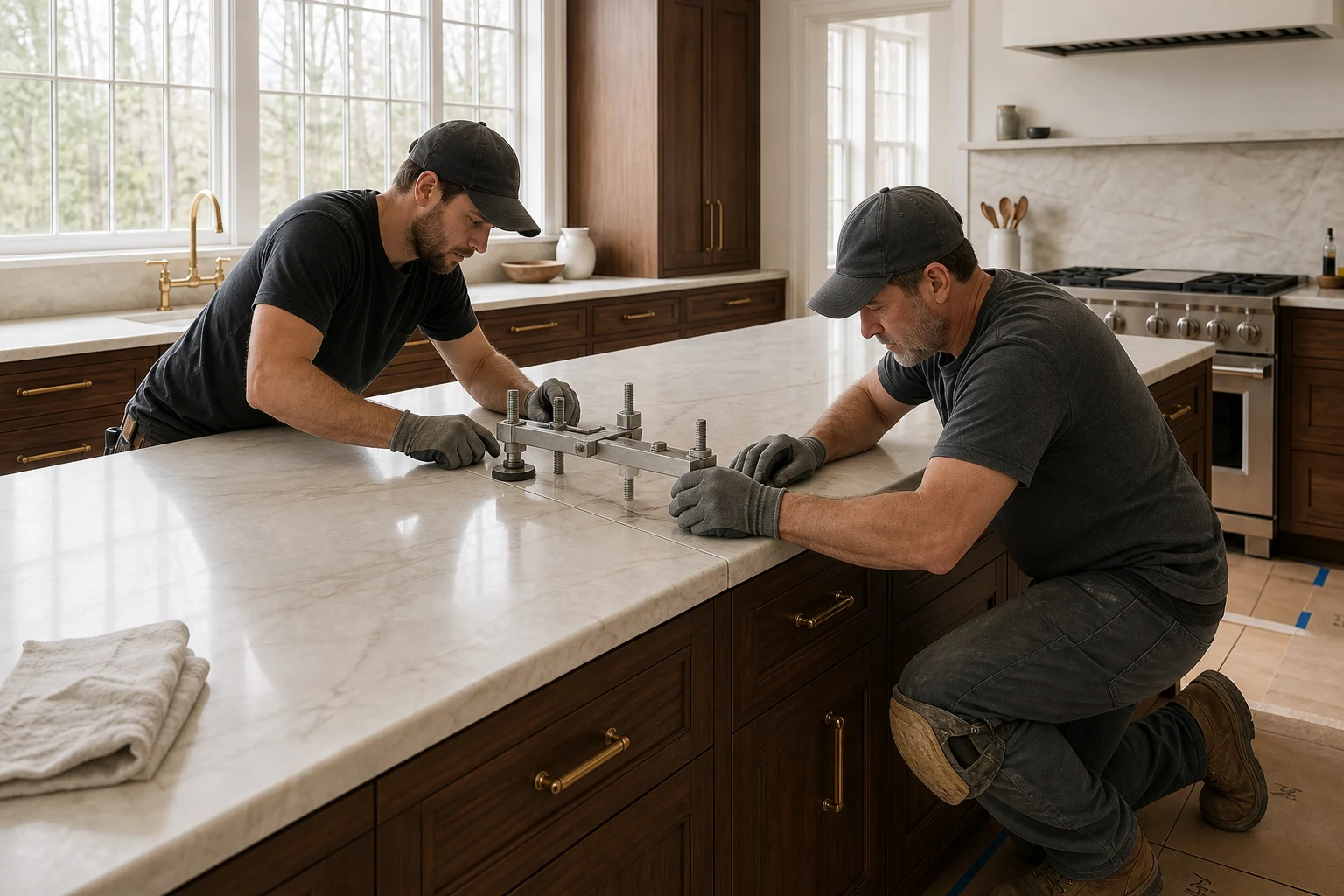
With all three, and especially with Statuario and Calacatta, we photograph your slabs and place your template over the photos. You see where the big veins land on the island, where the seam falls and how the backsplash continues from the counter before anything is cut. For a bookmatch, we show the mirrored pair together. It adds a day to the schedule, and it is the only way to know what the finished room will look like before the saw runs.
If you can't live with etching
Taj Mahal and Mont Blanc quartzite give you the look of a warm or cool white marble with no etching and far more scratch resistance; see Taj Mahal vs. Mont Blanc and quartzite vs. marble. Printed porcelain and engineered quartz also come in Calacatta and Statuario patterns. They are consistent and easy to live with, and they look like what they are from a few feet away. Our marble page lists the stones we keep in Bridgeport.
Common questions
Is Carrara lower quality than Calacatta? No. It is more common, so it costs less, and its pattern is quieter. Quality in marble is about the soundness of the slab and the layout, not the name.
Which is the whitest? Statuario, as a rule. Calacatta is white to warm white, and Carrara leans gray.
Can I use polished Calacatta in a kitchen? You can, and some clients do, but the etching will show. Honed is the practical finish for a counter you cook on; save the polish for the fireplace, the bath or the bar.
Do these marbles come from anywhere other than Italy? Similar white marbles are quarried in Greece, Turkey, Spain and elsewhere, and some are sold under Italian-sounding names. Ask about the quarry and judge the slab on its own.
The short version
- Carrara: gray-white, fine veining, most available, most forgiving.
- Statuario: bright white, few bold veins, rare, made for bookmatching.
- Calacatta: white with thick gold or gray veins; Gold, Borghini and Viola lean different ways.
- All three etch. Honed for kitchens, polished for fireplaces, baths and bars.
- Choose the slab, not the name, and approve the layout on the photo before we cut.
Call us at 203-717-1978 or book a visit to our Bridgeport slab yard, by appointment, and see the three side by side under the same light.