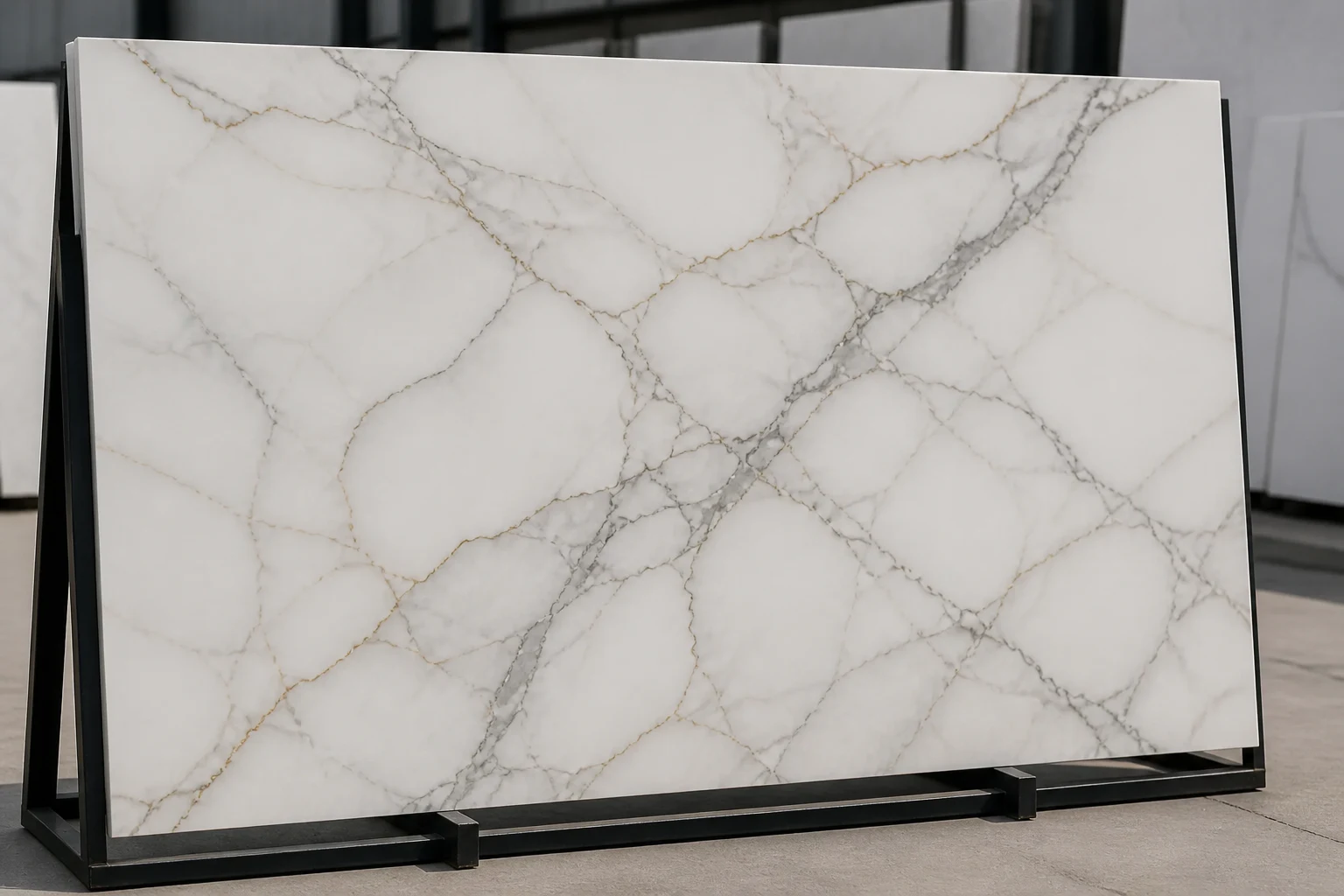
How to clean, disinfect and seal granite countertops, treat each kind of stain, and fix haze, dull spots and chips. From our Bridgeport stone shop.

Granite is the easiest natural stone we fabricate to live with, and most of the questions we get about it at the yard are about cleaning. Which spray is safe, whether dish soap is enough, how often it needs sealing and what to do about the dark ring by the sink. Granite doesn't etch the way marble does, so lemon juice and wine aren't the worry. What wears a granite counter down is the wrong cleaner slowly stripping its sealer, and a sealer left too long without a check. This guide covers the daily routine, how to disinfect safely, how to test and reseal the stone yourself, how to treat each kind of stain and when to call a fabricator.
Everyday cleaning
For most kitchens the daily routine takes a minute and needs nothing special:
- Wipe crumbs off first with a dry cloth, so grit doesn't drag across the surface.
- Wipe with warm water and a soft cloth or sponge.
- For grease, add a few drops of mild dish soap to a bowl of warm water, or use a cleaner labeled pH-neutral and safe for natural stone.
- Rinse the soap off with a damp cloth, so it doesn't leave a film.
- Dry with a microfiber towel, especially on dark and polished stone, where water spots show.
That matches the routine on our stone care page. A dedicated granite cleaner is fine to use, and some contain a little sealer that tops up protection, but warm water and a drop of soap do the same daily job.
How to disinfect granite safely
Granite doesn't need disinfecting every day, but it is worth doing after raw meat, eggs or a stomach bug in the house. The safe option is rubbing alcohol:
- Mix equal parts 70% isopropyl alcohol and water in a spray bottle. A drop of dish soap helps it lift grease.
- Spray the counter, leave it for a few minutes, then wipe it off.
- Dry the surface with a clean cloth.
Alcohol evaporates and leaves nothing behind, so it doesn't build up on the sealer the way bleach and disinfecting wipes do when they are used every day.
What to keep off granite
Harsh cleaners break down the sealer that protects granite, and the stone then starts absorbing oil and water sooner than it should. Keep these off the counter as a habit:
- Bleach and disinfecting wipes used as a daily cleaner
- Ammonia, including most glass cleaners
- Vinegar, lemon and citrus cleaners, even diluted
- General-purpose kitchen sprays with degreasers or solvents
- Scouring powders, steel wool, green scrub pads and melamine sponges such as Magic Eraser
An occasional disinfecting wipe won't ruin anything. Follow it with a wipe of plain water. Making it the daily habit is what wears the sealer out.
Is your granite really granite?
A few stones sold as granite behave like marble, because they contain calcite. The best known is Fantasy Brown, which is a dolomitic marble often sold as granite or quartzite. If an acidic spill leaves a dull, rough spot on your counter rather than a dark one, the stone is etching, and it needs the care routine for marble instead. Ask your fabricator what the stone is if you're not sure. Our quartzite vs. marble guide explains the difference, and the granite countertops page lists the true granites we work with.
How to tell if your granite needs sealing
Use the water and oil test. Pick two of the busiest spots on the counter, usually beside the sink and beside the range, plus one spot at the back corner that sees little use.
- Put a few drops of water on each spot, and a few drops of cooking oil a few inches away.
- Leave them for fifteen minutes, then wipe them up.
- If the water beaded and the stone underneath looks the same, the sealer is working. Do nothing.
- If the stone darkened under the water or the oil, it is absorbing and it's time to reseal. Water marks fade as they dry; an oil mark that stays tells you the same thing more clearly.
Run the test about once a year, and any time spills start leaving dark marks that fade slowly. If the back corner passes and the sink area fails, you only need to reseal the busy areas, or the whole counter if you want the finish to look even.

How often granite needs resealing
There is no single calendar, because granites differ in how much they absorb. As a guide:
- Dense, dark granites such as Absolute Black absorb very little and may pass the test for years. Our Trumbull island is one of these.
- Lighter and more open granites, especially in a honed or leathered finish, usually need resealing every year or two in a kitchen.
- Polished granite that is cleaned with the right products often goes three years or more.
- Granite away from water and cooking, such as a fireplace surround or a guest bath vanity, may rarely need it at all.

Choosing a sealer
Use a penetrating (also called impregnating) sealer made for natural stone. It soaks into the stone and slows absorption without changing the surface. Avoid topical coatings and waxes, which sit on top, wear unevenly and can look cloudy. Within penetrating sealers:
- Water-based sealers have less odor and are easier to use indoors.
- Solvent-based sealers often penetrate dense polished granite better, and need good ventilation.
- Fluoropolymer sealers usually cost more and last longer, often several years, and resist oil as well as water. Silane and siloxane sealers are less expensive and usually need reapplying sooner.
Whatever you choose, follow its label for coverage, dwell time and cure time. They vary between products.
How to reseal granite yourself
Resealing is a short job most owners do themselves. You need the sealer, clean lint-free or microfiber cloths, gloves, an open window and a day when you can leave the counter alone.
- Clear the counter and clean it with warm water and dish soap, rinse it and dry it.
- Wipe it down with isopropyl alcohol to lift any remaining oil and soap film.
- Let it dry completely. Many sealer makers suggest waiting up to a day after washing, because sealing over a damp surface traps the water in the stone.
- Test the sealer on a hidden spot first, such as the area under the coffee maker, and check that it dries clear.
- Apply the sealer evenly with a cloth or the applicator the product calls for, working one section at a time.
- Let it soak in for the time on the label, and no longer. Sealer left too long can leave a haze or a dark patch.
- Wipe off every bit of excess with a dry cloth before it dries on the surface. Apply a second coat if the label calls for one.
- Keep the counter dry and clear for the cure time on the label before cooking on it again. Some products need a day or two before wet wiping.
Run the water test again afterward. If an area still darkens, a second coat usually fixes it.
Stains: how to treat each kind
Most marks on granite are not stains at all. A dark patch that fades as the counter dries is water, and it will disappear on its own. A true stain is something that soaked in and stayed. The treatment depends on what caused it:
- Cooking oil, butter, cosmetics: a poultice of baking soda and water. Acetone dabbed on with a cloth also works on dark granite.
- Coffee, tea, wine, juice and food: a poultice of baking soda and hydrogen peroxide. Drugstore peroxide is 3%; stronger 12% peroxide from a beauty supply works faster on old stains. Test it first on dark stone, where it can lighten the color.
- Ink and marker: rubbing alcohol on light granite, acetone on dark granite.
- Rust from a can or pan: a rust remover labeled safe for natural stone. Household rust removers are usually acidic.
- Mildew around the sink and backsplash: a stone-safe mildew cleaner, then reseal that area once it's dry.
To make and use a poultice:
- Mix the powder and liquid into a paste about as thick as peanut butter.
- Spread it over the stain about a quarter inch thick, reaching a little past the edges.
- Cover it with plastic wrap, tape the edges and poke a few small holes in the wrap.
- Leave it for a day so it can dry and pull the stain up into the paste.
- Scrape it off with a plastic scraper, rinse and dry. Repeat if the stain has faded but not gone; old stains can take a few rounds.
- Reseal the spot once the stone is completely dry.

If a stain doesn't move after a few tries, or you don't know what caused it, call us before reaching for a harsher product.
Honed and leathered granite
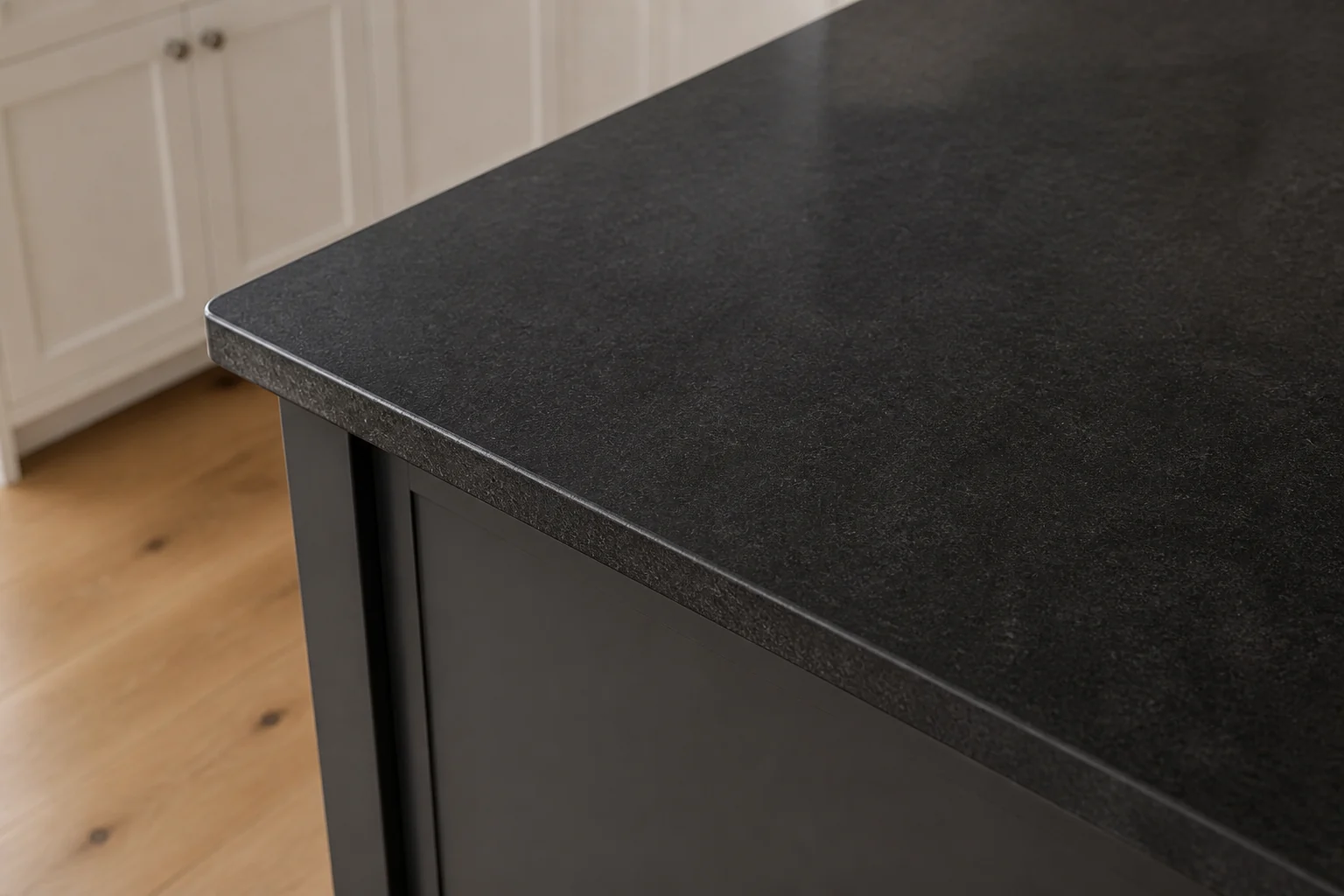
Honed and leathered finishes clean the same way as polished, with two habits that help. Fingerprints and cooking oil show more on a matte dark surface, so wipe the whole counter evenly rather than spot-cleaning one patch, which can leave it blotchy until it dries. On leathered granite, spills settle in the texture, so wipe them up rather than leaving them, and dry with a cloth that can reach into the surface. Matte finishes are also a little more open than polished ones, so run the water test more often. Some owners of honed black granite use a color-enhancing sealer to deepen the tone; it darkens the stone permanently, so try it on a hidden spot first. Our guide to honed vs. polished stone explains how each finish wears.
Hazy film, streaks and dull spots
A cloudy film over the whole counter is usually soap or cleaner residue, or sealer that dried on the surface after a reseal. Soap film comes off with a wipe of isopropyl alcohol and water, then a dry buff. Dried sealer usually comes off by applying a little fresh sealer to soften it and wiping it away right after; check the sealer's label for the maker's method. Streaks on polished granite are almost always cleaner left to dry, and a final pass with a dry microfiber cloth stops them.
A dull spot on polished granite that doesn't wipe away is wear in the polish, most often where a heavy pot slides on and off a burner. A fabricator can restore the shine with polishing pads and compound on site.
Hard water and the sink edge
The area around the faucet takes the most water, and in towns with hard water a white mineral film can build up on the stone. Don't use vinegar or a lime-scale remover on it; they are acidic and they strip the sealer. Wipe the sink rim dry after the dishes, use a stone-safe cleaner on the film with a soft-bristle brush, and lift any crust gently with a plastic scraper. A dark ring that stays around the faucet base usually means water has been sitting there, and that spot is the first place to run the water test.
Chips, cracks and seams
Granite is hard, but a heavy pan or a dropped bottle can chip an edge, most often near the sink or on a sharp square edge. Keep the chip if you find it. Small chips can be filled with a color-matched resin and polished, and a fabricator can usually make the repair close to invisible. Seams are filled with a tinted adhesive at install; clean them like the rest of the counter and keep harsh solvents away from them. Our guide to where countertop seams should go explains how they're placed, and edge profiles shows which edges resist chipping best in a busy kitchen.
Habits that prevent most problems
- Blot spills rather than wiping them across the counter, and clean up oil and wine the same day.
- Use coasters under bottles and glasses, and a tray under oils and soaps by the range and sink.
- Use a cutting board, for your knives as much as the stone.
- Put a trivet under very hot pans and slow cookers. Granite handles heat well, but a sudden hot spot can still crack any stone.
- Don't sit or stand on overhangs and bar tops; they are supported for weight on top, not people.
Granite outdoors
Granite handles Connecticut weather well: it stands up to freeze and thaw, and ice-melt products don't harm it. Rinse an outdoor counter with a hose or warm soapy water, keep the grill area degreased with a stone-safe cleaner and run the water test before the season starts. If you pressure-wash a patio or outdoor kitchen, stone suppliers recommend keeping it under about 1,200 PSI, using a wide fan nozzle and holding it at least six inches away. Our guide to outdoor kitchen countertops in Connecticut covers which stones hold up outside, and the outdoor kitchens page shows our work.
Common questions
Can I use Clorox wipes or Lysol on granite? Occasionally, yes. They won't damage the stone, but used every day they wear down the sealer. For regular disinfecting, a half-and-half spray of rubbing alcohol and water is safer.
Is Windex safe on granite? Most glass cleaners contain ammonia, which dulls the sealer over time. A damp microfiber cloth followed by a dry one gives polished granite the same streak-free finish.
Can I use vinegar if I dilute it? No. Diluted vinegar is still acidic. It won't etch true granite, but it breaks down the sealer, and it will etch a stone that contains calcite.
How often does granite need sealing? Run the water test once a year and reseal when the stone darkens. Dense dark granites can go years without it; lighter granites in a kitchen may need it every year or two.
How long after sealing can I use the counter? Check the sealer's label. Most allow light use within a few hours and full use, including wet cleaning, within one to two days.
Do I need a special granite cleaner? No. Warm water and a drop of mild dish soap, rinsed and dried, is enough for daily cleaning. A pH-neutral stone cleaner is fine if you prefer a spray.
Is granite the same to care for as quartz? Not quite. Quartz is engineered and nonporous, so it never needs sealing, but it tolerates less heat. Our quartz vs. quartzite guide compares the materials.
The short version
- Clean daily with warm water, a drop of dish soap and a dry cloth.
- Disinfect with a half-and-half spray of rubbing alcohol and water.
- Keep bleach, ammonia, vinegar, citrus and abrasive pads off it as a habit.
- Run the fifteen-minute water and oil test about once a year; reseal when the stone darkens.
- Reseal with a penetrating stone sealer: clean, dry, test, apply, wipe off all the excess, let it cure.
- Match the stain treatment to the stain, and call a fabricator for chips, dull spots and stains that won't move.
If you're choosing granite for a new kitchen, the granite countertops page shows the stones and finishes we work with, and you can see full slabs at our Bridgeport yard by appointment. Questions about a counter you already have are welcome too. Call 203-717-1978 or send a note through our contact page.