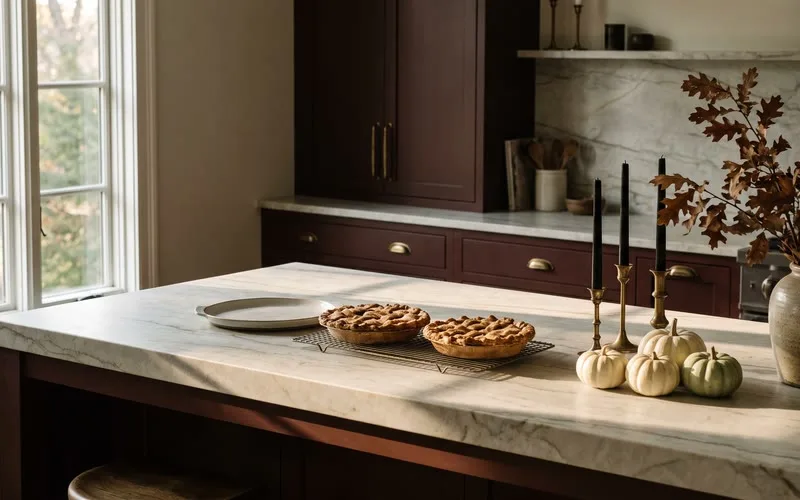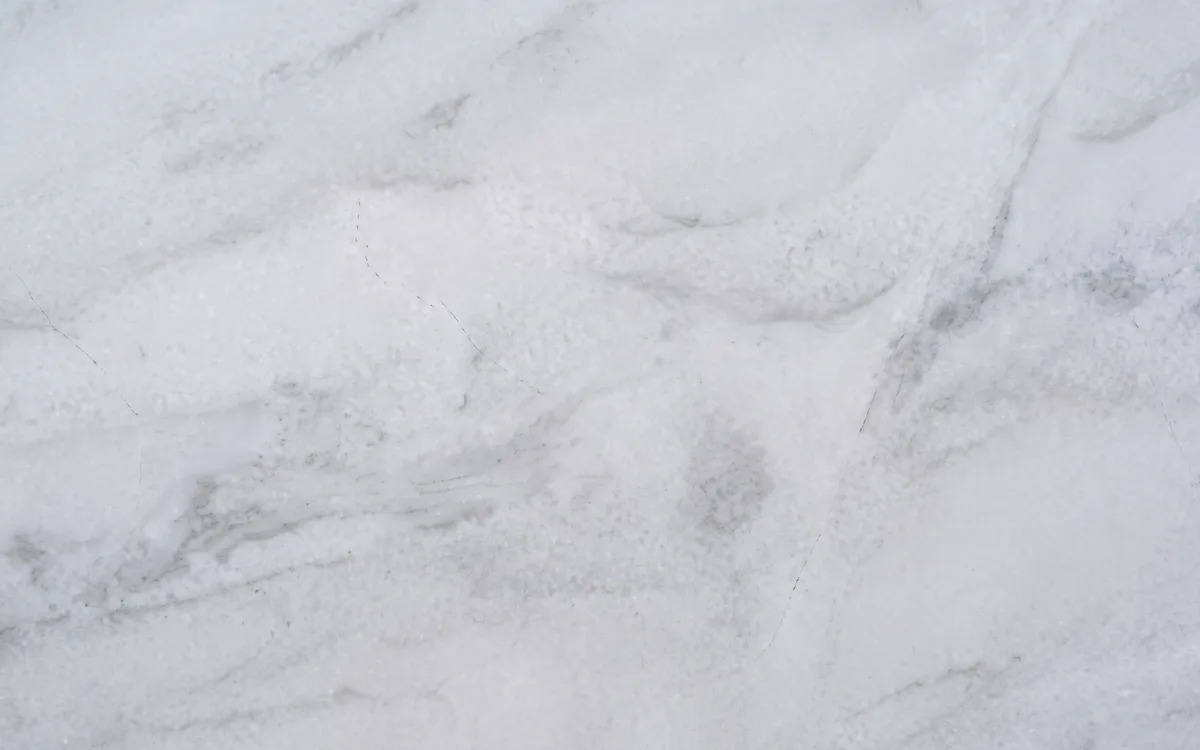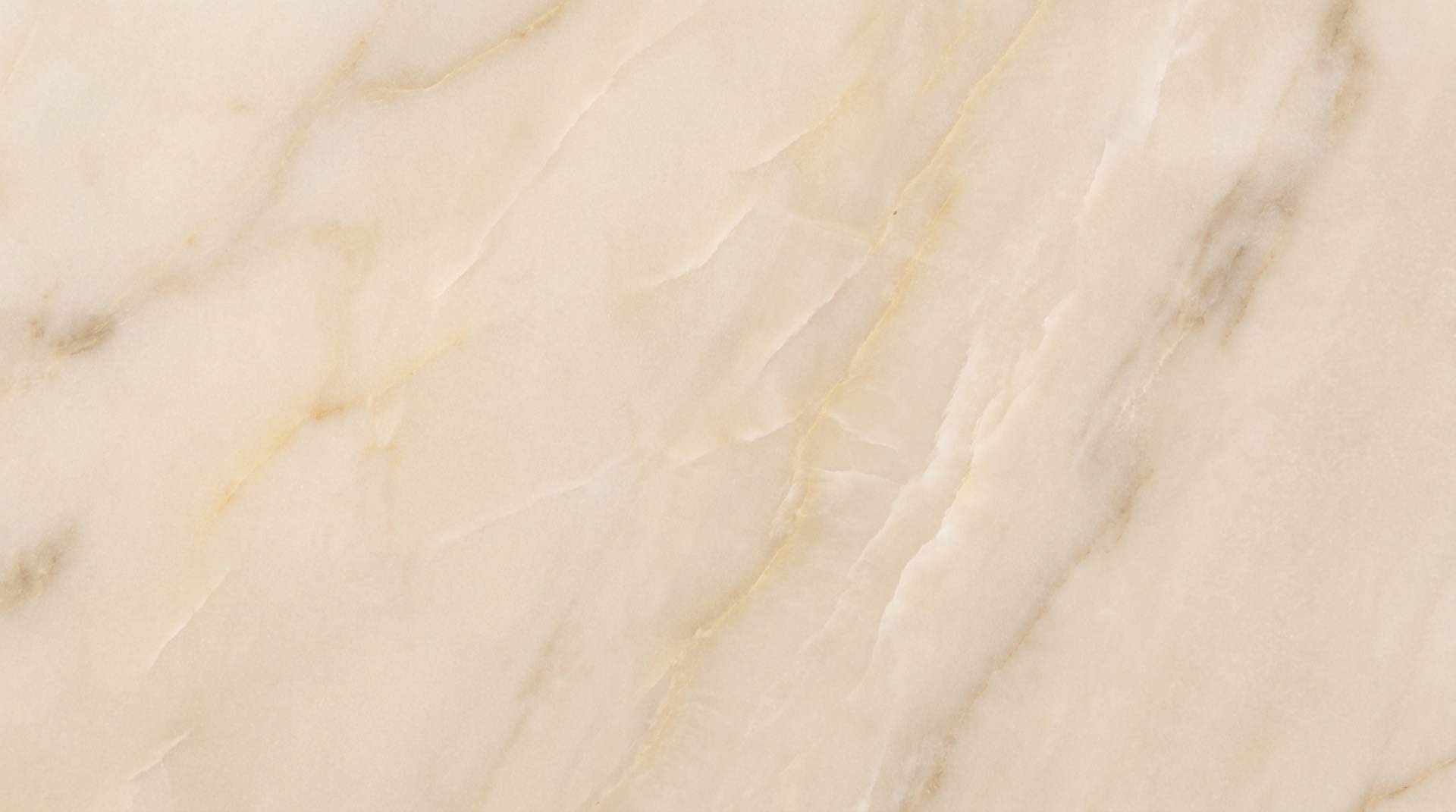
They share a name and almost nothing else. How the two differ in hardness, heat, sealing and fabrication, and how to pick between them.
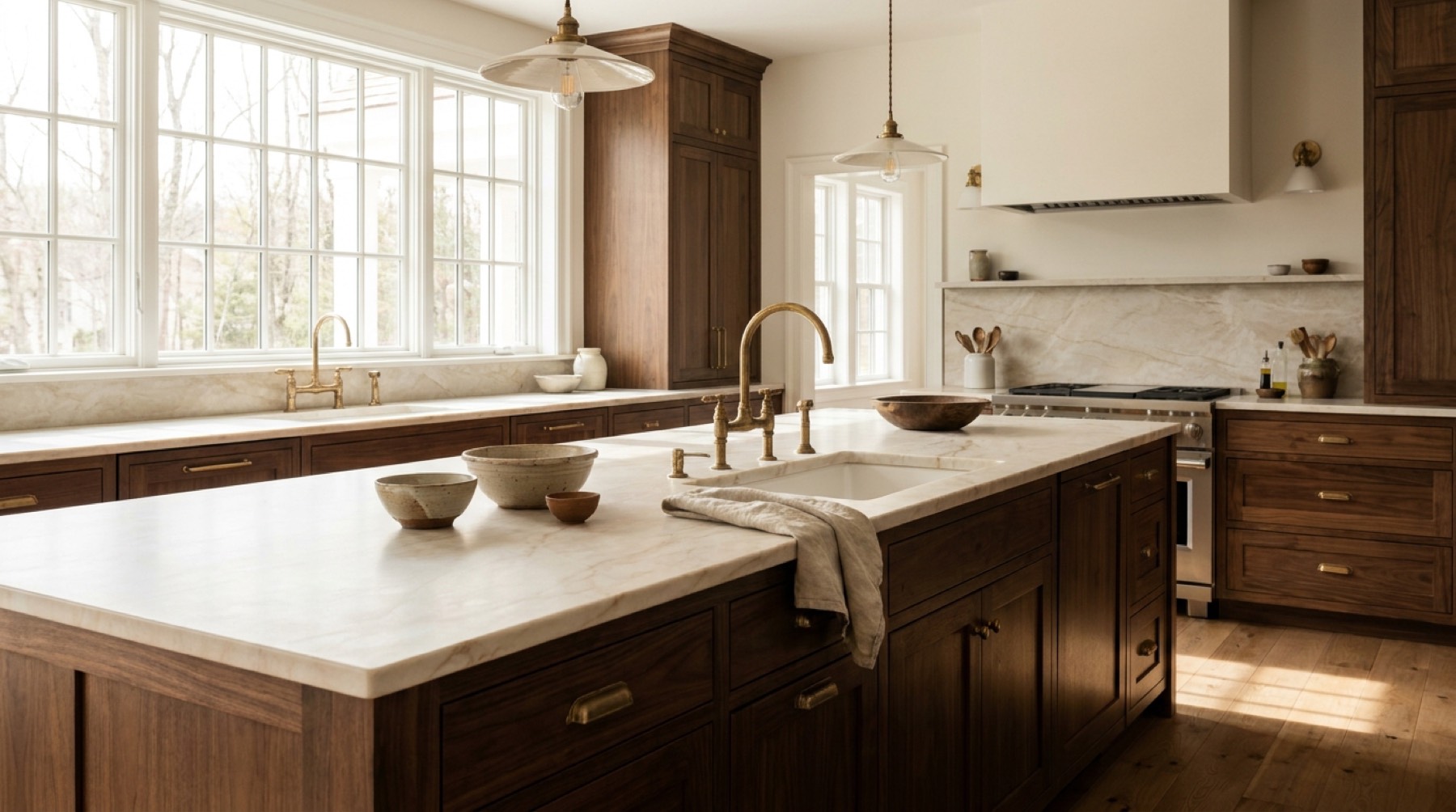
No two names cause more confusion at our yard. Quartzite is a natural stone: sandstone that was compressed and heated underground until it recrystallized into something harder than granite. Quartz is an engineered product: ground stone bound with resin and pigment and pressed into uniform slabs at a factory. Both make excellent countertops, but they're made differently and they behave differently in a kitchen.
How each one is made
Quartzite is quarried in blocks and sawn into slabs, so every slab has its own veining, color shifts and character. Two slabs from the same block can look related, but no two are identical. That's why we ask clients to come to our Bridgeport yard, by appointment, and choose the actual slabs for their job.
Engineered quartz is mostly crushed natural quartz held together with polymer resin. Because it's manufactured, color and pattern stay consistent from slab to slab and from one order to the next. Some quartz has veining printed or poured near the surface, while other lines carry the pattern through the body of the slab. That difference matters when we cut an exposed edge or a mitre.
What quartzite gives you
Quartzite suits people who love marble but cook every day. Stones like Taj Mahal and Mont Blanc have the soft veining and warm whites of marble with far greater hardness and no etching from lemon juice or vinegar. Quartzite takes hot pans without complaint, and every slab is one of a kind.
One caution: not every stone sold as quartzite is true quartzite. Some softer stones, including certain dolomitic marbles, are traded under quartzite names. They can be beautiful, but they etch like marble. If you're planning around a stone's name, test a sample before you commit. True quartzite will scratch glass and won't react to lemon juice.
What quartz gives you
Quartz is the low-maintenance choice. It's non-porous, so it never needs sealing and shrugs off wine, coffee and oil. Color and pattern are consistent from slab to slab, which helps on large jobs and on builder work where the same look repeats across several homes. The trade-off is heat: the resin that binds it can scorch or discolor under a hot pan, so trivets are a must. It also belongs indoors, because UV light discolors the resin, which is why we steer outdoor kitchens to porcelain or granite instead.
Side by side
- Heat: quartzite handles hot pans; quartz needs a trivet every time.
- Etching: neither true quartzite nor quartz etches.
- Staining: quartzite is porous to varying degrees and should be sealed; quartz never needs sealing.
- Look: quartzite is one of a kind with natural veining; quartz is consistent and predictable.
- Outdoors: quartz can't go outside. A dense, sealed quartzite can, though porcelain and granite are our usual outdoor picks.
- Near a fireplace: quartzite handles the heat; keep quartz away from the firebox.
How they differ in the shop
We cut both materials in our own shop, and they don't cut the same way. Quartzite is one of the hardest stones we work. It takes longer to saw and polish, and a mitred edge or a waterfall in quartzite takes real shop time to get right. Because every slab is different, layout matters: we lay your template over a photograph of the slab so you can see where the veining runs and where any seam will fall before we cut.
Quartz is more predictable in the shop. The pattern is consistent, so seams are easier to match. The exception is quartz with surface veining, where we check how the pattern wraps an exposed mitre or waterfall corner before committing to the layout.
Sealing and care
Quartzite should be sealed, and how often depends on the stone. A simple water test tells you: put a few drops on the surface and watch. If the stone darkens within a few minutes, it's time to reseal. Clean it with a pH-neutral stone cleaner. Quartz needs no sealer at all. Soap and water are enough, and you should avoid harsh solvents and abrasive pads that can dull the resin. Our stone care guide covers both in more detail.
Which one for which room
- A kitchen island you cook on every day: quartzite if you want natural stone, quartz if you want no upkeep.
- A family bath or kids' bath: quartz is hard to beat.
- A primary bath: either, chosen for the look.
- A waterfall island: quartzite for natural veining that turns the corner; quartz works when the pattern runs through the slab.
- Outdoors: not quartz. See our page on outdoor kitchen countertops.
How to tell them apart at the yard
Side by side, a white quartzite and a white quartz can look surprisingly similar. A few checks help:
- Look at the edge and the back. A natural slab shows crystals and grain through its thickness and saw marks on the back. Quartz looks uniform all the way through.
- Look at the pattern across the slab. Quartzite veining changes from one end of a slab to the other. Quartz patterns repeat or stay even.
- Test a sample. True quartzite scratches glass and doesn't react to lemon juice. A stone that etches under lemon is behaving like marble, whatever its trade name.
- Ask for the name and origin. For natural stone, the name and quarry region help you look up how it performs.
Three common myths
"Quartz is natural stone." It's made mostly from natural quartz, but it's an engineered product bound with resin. That's why it behaves differently with heat and sunlight.
"Quartzite never needs sealing." Quartzite is hard, but it's still porous to varying degrees. Most quartzites benefit from sealing, and the water test tells you when.
"Quartz is indestructible." It resists stains and scratches very well, but a hot pan can scorch the resin and leave a mark that won't come out. Treat it as heat-sensitive.
Questions to bring to the yard
- How hot does my cooking get, and do I want to think about trivets?
- Do I want one-of-a-kind veining, or a pattern I can predict and repeat in another room?
- Will there be a waterfall, a mitred edge or a full-height backsplash, where the pattern has to wrap a corner?
- Is any of this going outdoors or near a fireplace?
- How do I feel about sealing a counter once in a while?
Your answers usually point clearly to one or the other. If you're still torn, look at a full slab of each in the same light, next to a cabinet door, before deciding.
The short version
- Natural, one-of-a-kind stone with a marble look and granite toughness: quartzite.
- No sealing and consistent color: quartz.
- Lots of acidic cooking: either works, because true quartzite and quartz both resist etching. If you never want to seal, choose quartz.
- Outdoors: not quartz. Ask us about porcelain and granite.
Bring your cabinet colors and your cooking habits to the yard and stand in front of both. For more, see our quartzite and quartz pages, quartzite vs. marble, and Taj Mahal vs. Mont Blanc.