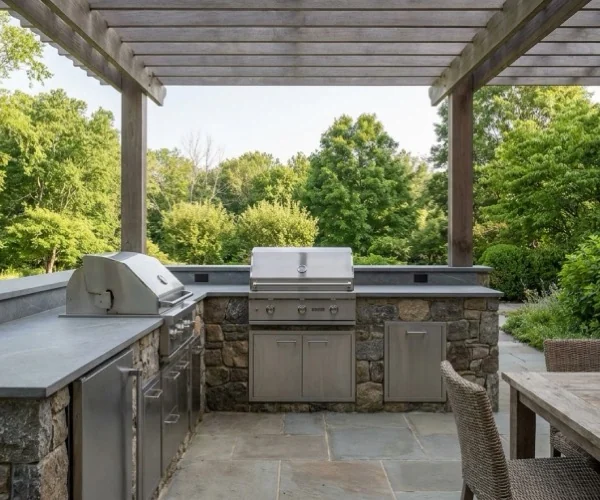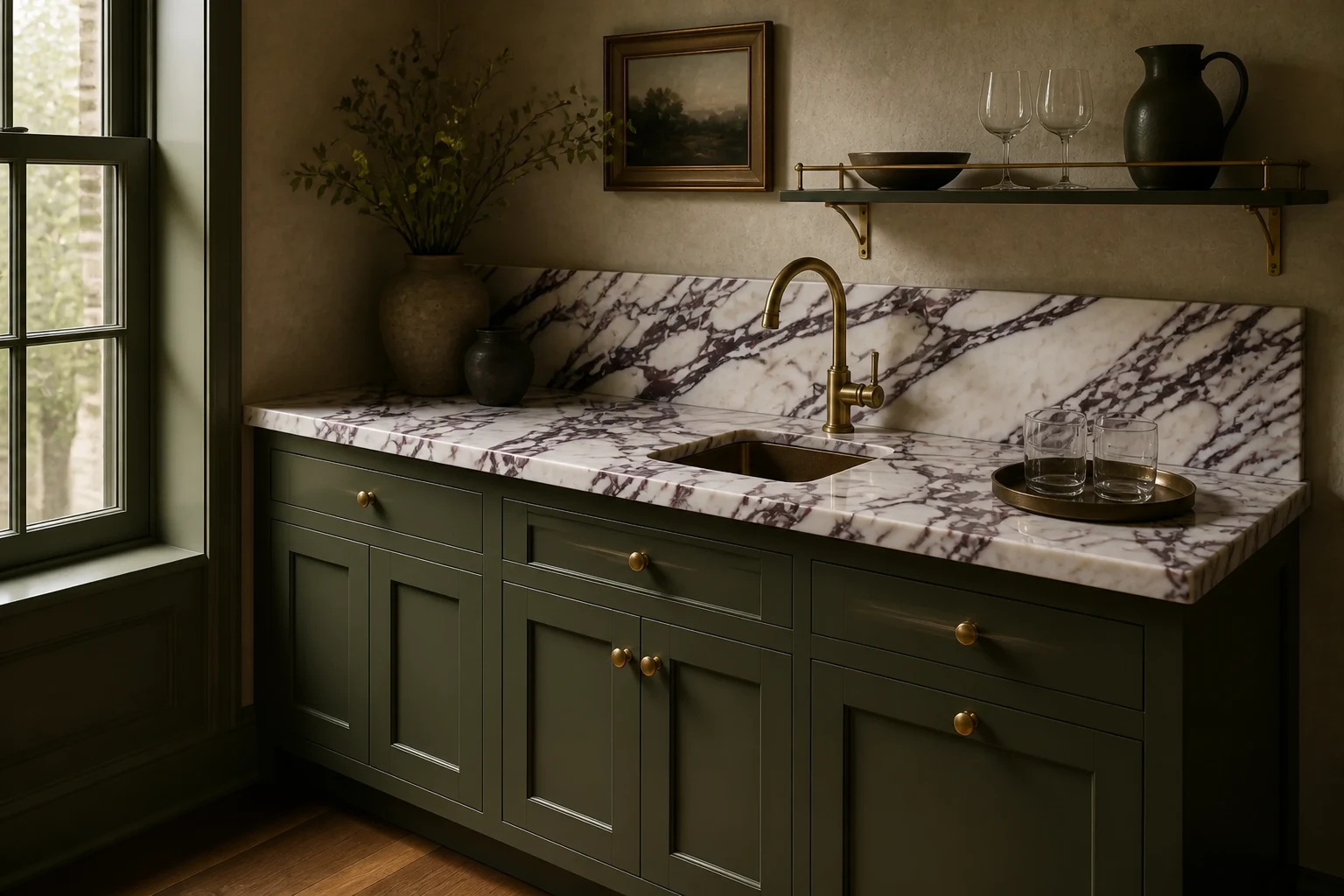
Two of the most popular white quartzites, one warm and one cool. How they differ in color, what they pair with, and what to check before you choose a slab.
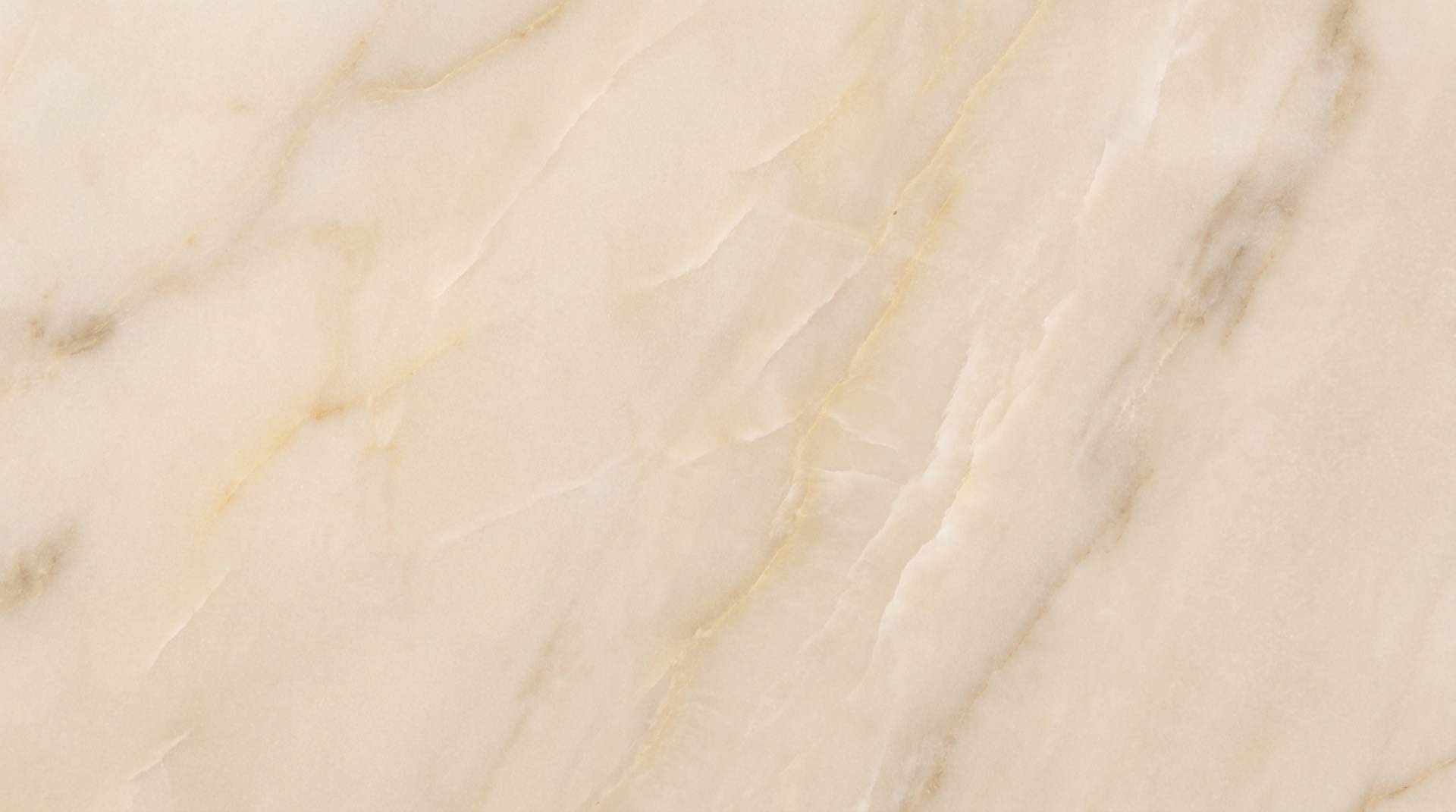
When someone wants the look of white marble without the etching, the conversation usually ends up at two Brazilian quartzites: Taj Mahal and Mont Blanc. Both are light, both have soft veining, and both are far tougher than marble in a kitchen. The difference that matters most is temperature: one is warm and one is cool.
Taj Mahal: the warm white
Taj Mahal has a creamy, ivory ground with soft veining in beige, taupe and gold. From across a room it reads like a warm marble. It is at its best next to wood cabinetry, brass or bronze hardware, and warm paint colors, and it softens a kitchen full of white or cream doors without looking stark.
Mont Blanc: the cool white
Mont Blanc has a white to pale-grey ground with grey veining, closer to the look of an Italian white marble. It suits white and grey cabinetry, polished nickel and chrome, and kitchens where the brief is crisp and cool. Next to warm wood it can look grey; next to cool whites it looks clean.
How to choose between them
- Look at your cabinetry and hardware first. Warm woods and brass lean Taj Mahal. Cool whites, greys and nickel lean Mont Blanc.
- Look at your light. North-facing rooms and daylight bulbs push both stones cooler; warm bulbs push both warmer. If you can, look at a sample in your own kitchen at different times of day.
- Bring samples to the yard. A cabinet door and a paint chip held against a full slab settles most decisions in minutes.
- Choose the slab, not the name. Each block is different. Two slabs sold under the same name can vary a lot in color and veining, so pick the actual slabs your counters will be cut from.
Durability and care
Both are quartzites, so they are harder than granite, resist scratching, and handle heat well (trivets are still a good habit). Both are porous and need sealing when they are installed and periodically after; if water darkens the stone instead of beading, it is time to reseal. Our stone care guide explains how.
One thing worth checking: stone trade names are not standardized, and some white stones sold as quartzite, including some sold as Mont Blanc, contain enough calcite or dolomite to etch lightly with acid. Ask for a small offcut from your actual slab and test it with a few drops of lemon juice before you commit. A true quartzite will not dull, and it will scratch glass.
Finishes and edges
Both are commonly available polished, honed and leathered. Polished brings out the veining and depth; honed and leathered soften the look and hide fingerprints and water spots better. Because both stones are hard, they hold a crisp edge well, and both work beautifully as a mitred waterfall when the two pieces are cut in sequence from the same slab. See every option on our edge profiles page.
The short version
Warm kitchen, wood and brass: Taj Mahal. Cool kitchen, white and grey: Mont Blanc. Either way, choose the actual slab in person and test a sample if etching matters to you. Read more on our quartzite page or in our guide to quartz vs. quartzite, then book a visit to our Bridgeport slab yard, by appointment.