Marble, quartzite, soapstone, granite or porcelain for a fireplace surround: heat, bookmatching, hearths, seams and the timeline before the holidays.

A fireplace surround is the one stone surface in the house that nobody cooks on, and that changes almost every decision. Nothing acidic lands on it, no knives, no roasting pans. What it gets instead is radiant heat, a little soot, and a position in the room where everyone looks at it. Here is how we help clients choose the stone, lay it out and get it installed, including what has to be true of the wall before we can template.
Start with what the surround has to do
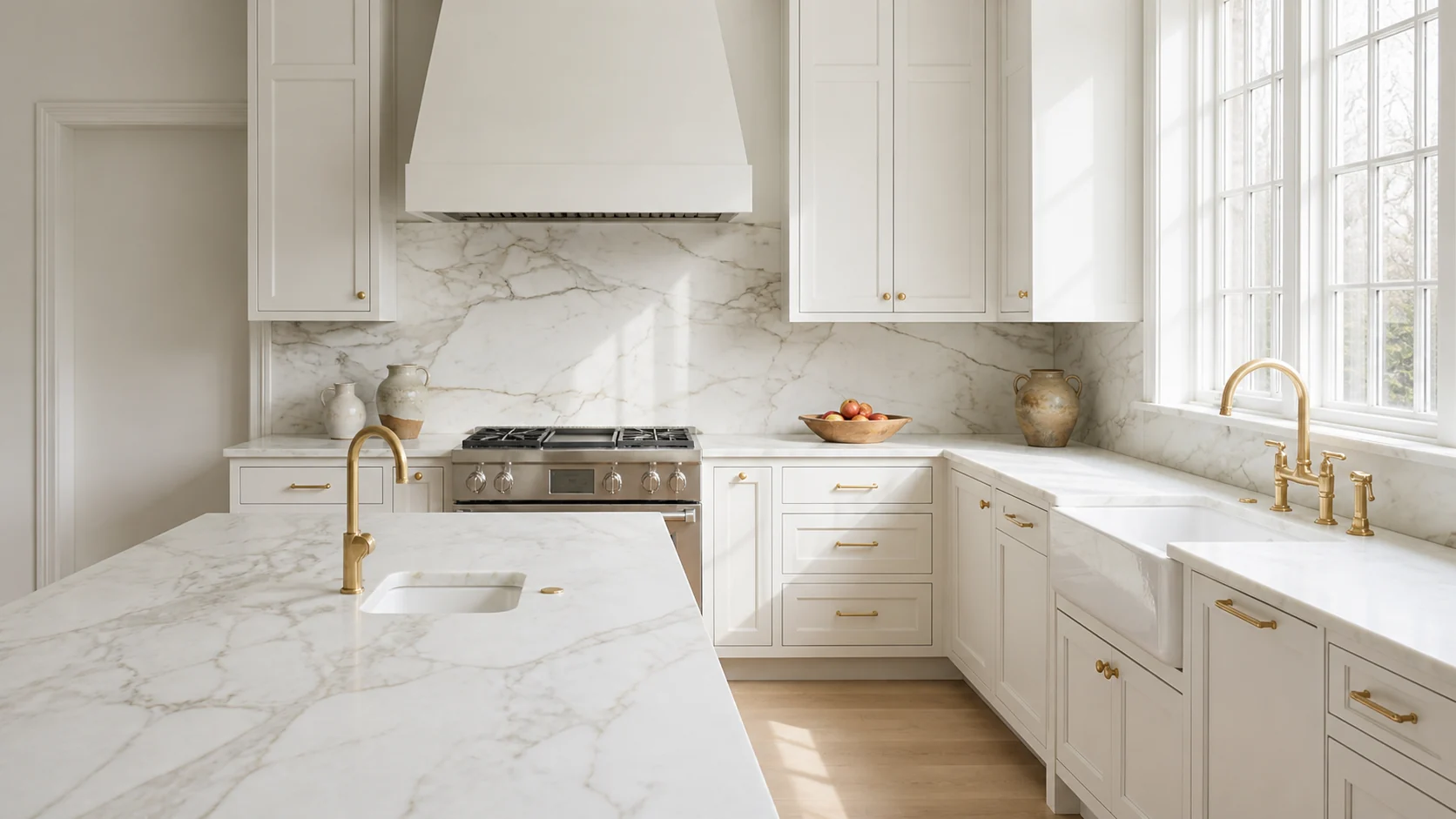
A kitchen counter is chosen for how it performs. A fireplace surround is chosen for how it reads from the sofa. That frees you to use stones we would steer you away from on an island: polished marble, bold Statuario, a dark marble like Nero Marquina, or a slab with so much movement it would overwhelm a counter. The three practical questions are whether the stone handles the heat it will see, whether the layout can be made to look planned, and whether the wall is ready for it.
Marble
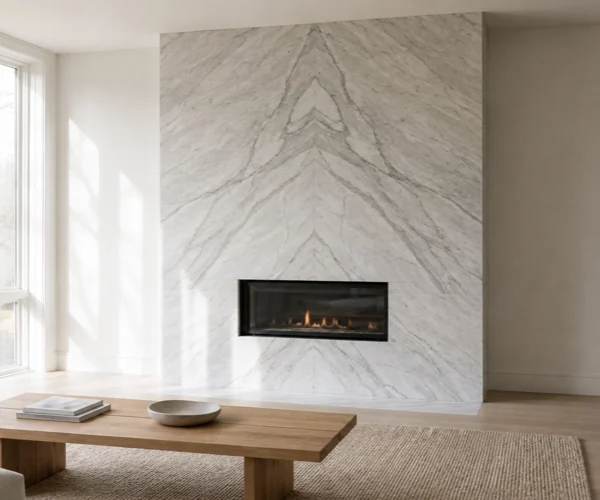
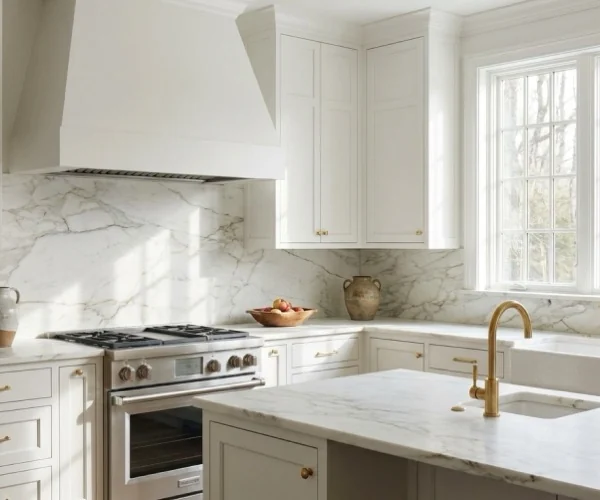
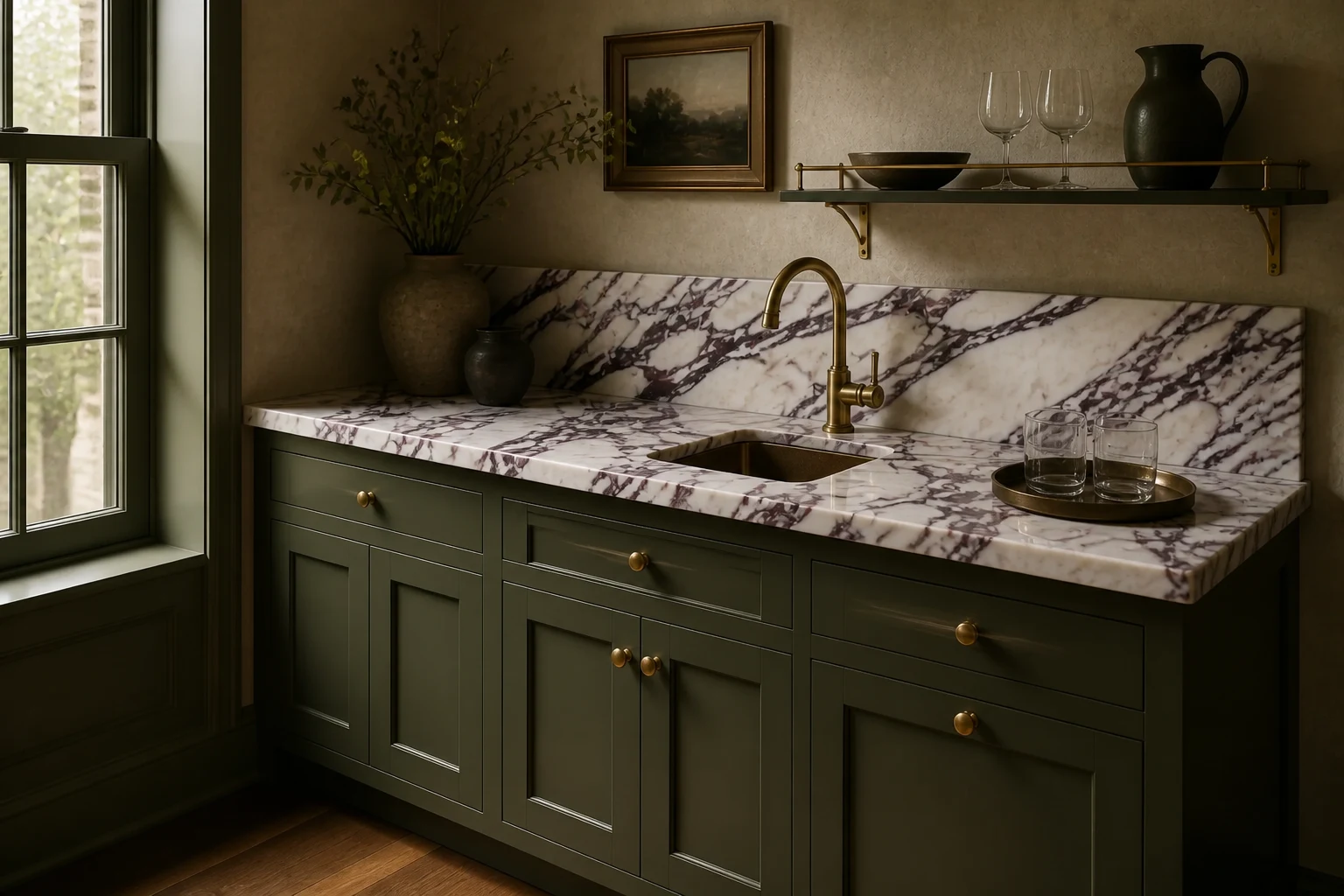
Marble is the classic choice and still the most requested. Away from the kitchen, its two weaknesses, etching and scratching, mostly stop mattering, so a polished finish is fine here and brings out the depth of the veining. Statuario and Calacatta are the usual picks for a bookmatched feature wall, and Carrara works well where you want the marble to be quieter. Our Statuario fireplace in Westport shows what a pair of sequential slabs can do on a full-height wall. The one thing to watch is cleaners: soot comes off with a pH-neutral stone cleaner, and acidic products will etch the polish. See our marble page for the stones we stock.
Quartzite
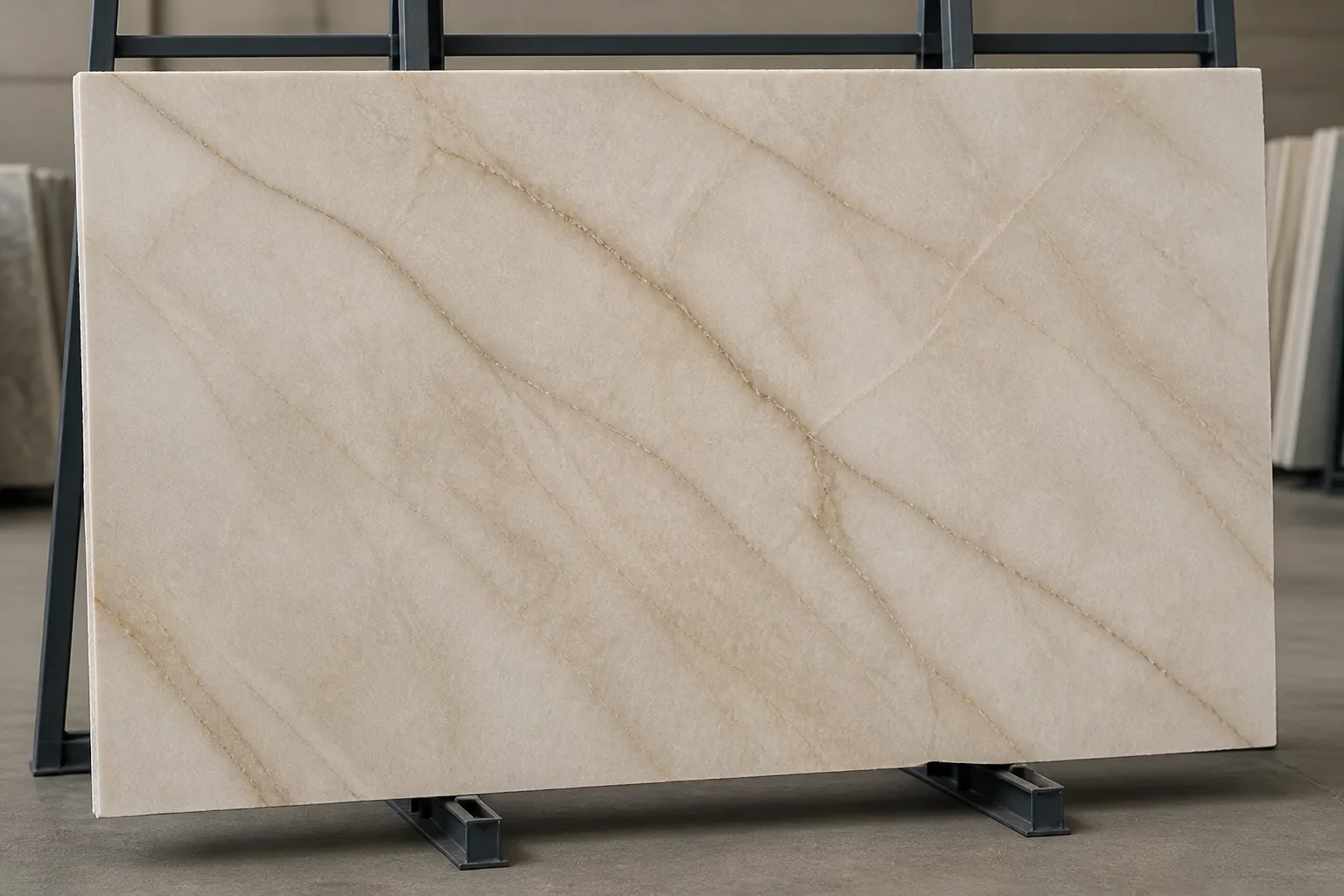
If the kitchen already has a warm white quartzite such as Taj Mahal, carrying it to the fireplace ties the open plan together, as we describe in coordinating stone across a kitchen, bath and fireplace. Quartzite takes heat well and its veining is usually softer than Calacatta's, which suits a surround that sits near a busy island. It is harder to cut and polish than marble, so returns and mitered corners take more shop time. See quartzite countertops.
Soapstone
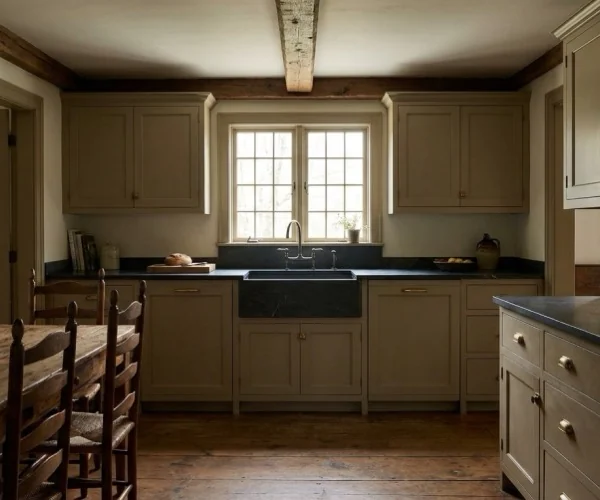
Soapstone has been used around wood stoves and fireboxes for two centuries because it absorbs heat slowly and releases it evenly. It never etches or stains, and a surround gets none of the scratches a counter does. Oiled, it goes a deep charcoal that looks right in both farmhouse and modern rooms. We often suggest it for hearths and for surrounds around wood-burning fireboxes where the stone sits close to real heat. See soapstone countertops.
Granite
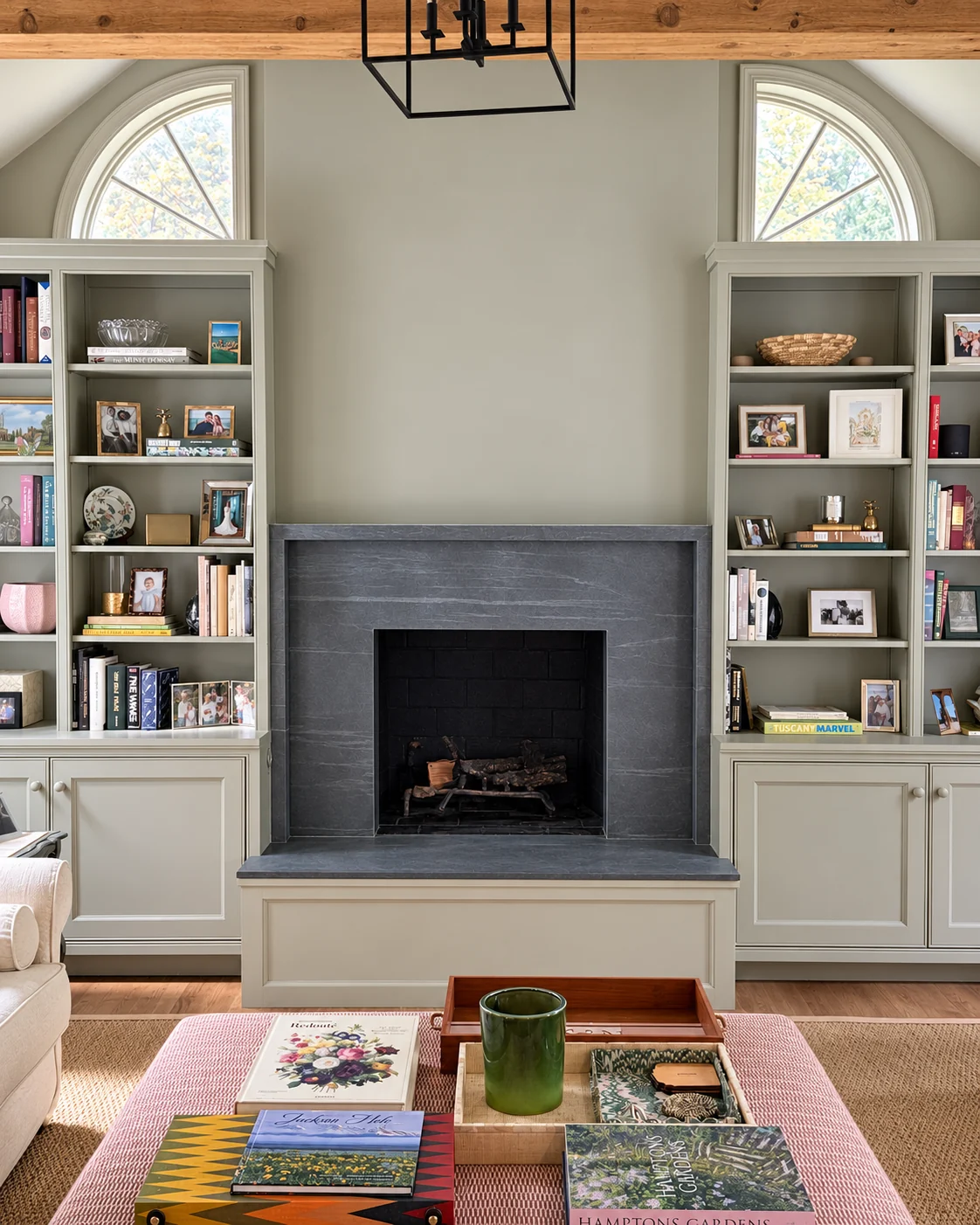
Granite is the toughest option and the traditional choice for a raised hearth that takes firewood and the occasional boot. Honed or leathered black granite reads as architectural and hides soot, and a honed gray granite with soft white veining, like the surround at the top of this guide, gives the look of soapstone with none of the scratching. Busy, speckled granites are harder to make look current on a feature wall, so if granite is the material, we usually push toward a quiet black, gray or white. See granite countertops and our honed gray granite fireplace surround.
Porcelain
Large-format porcelain slabs are thin, light, heat proof and stain proof, and they come in sizes that can cover a tall wall with very few joints. Printed bookmatch sets give a mirrored marble look without sourcing a pair of natural slabs. Because the pattern sits on the surface, every exposed edge is built up with a mitered return so the body color never shows. Porcelain is a good answer for very large walls and for rooms where the budget is going into the firebox rather than the stone. See porcelain countertops.
What to keep away from the firebox
Engineered quartz is bound with resin, and most manufacturers require a clearance between their product and a firebox or direct heat source. Check the specification for the exact product before planning quartz anywhere near the opening. In practice we steer fireplace work to natural stone or porcelain and keep quartz for the kitchen and baths.
Heat, clearances and code
Stone is noncombustible, so the stone itself is rarely the issue. What matters is the appliance. A gas insert or a factory-built firebox comes with the manufacturer's required clearances and finishing instructions, and a wood-burning fireplace has hearth-extension and clearance rules that vary by town. Your fireplace installer, mason or building official confirms those requirements, and the stone has to fit inside them. We ask for the firebox model and its installation sheet before we template, and we cut the surround to the finished opening, not to the drawing.
Three scopes: full height, mantel height or hearth only
- Full height: stone from floor to ceiling. The most dramatic and the most material. Veining and seams have to be planned over the whole wall, and a TV niche or a mantel changes the layout.
- Mantel height: stone surrounds the opening up to a wood or stone mantel, with painted wall or millwork above. Less stone, easier bookmatching, and the mantel hides the top joint.
- Hearth only, or hearth plus a simple surround: a flat or raised hearth slab and three pieces around the opening. This is often a remnant job, and a good way to put a special stone where it will be seen without buying a full slab. Our guide to using stone remnants covers hearths.
Bookmatching and layout
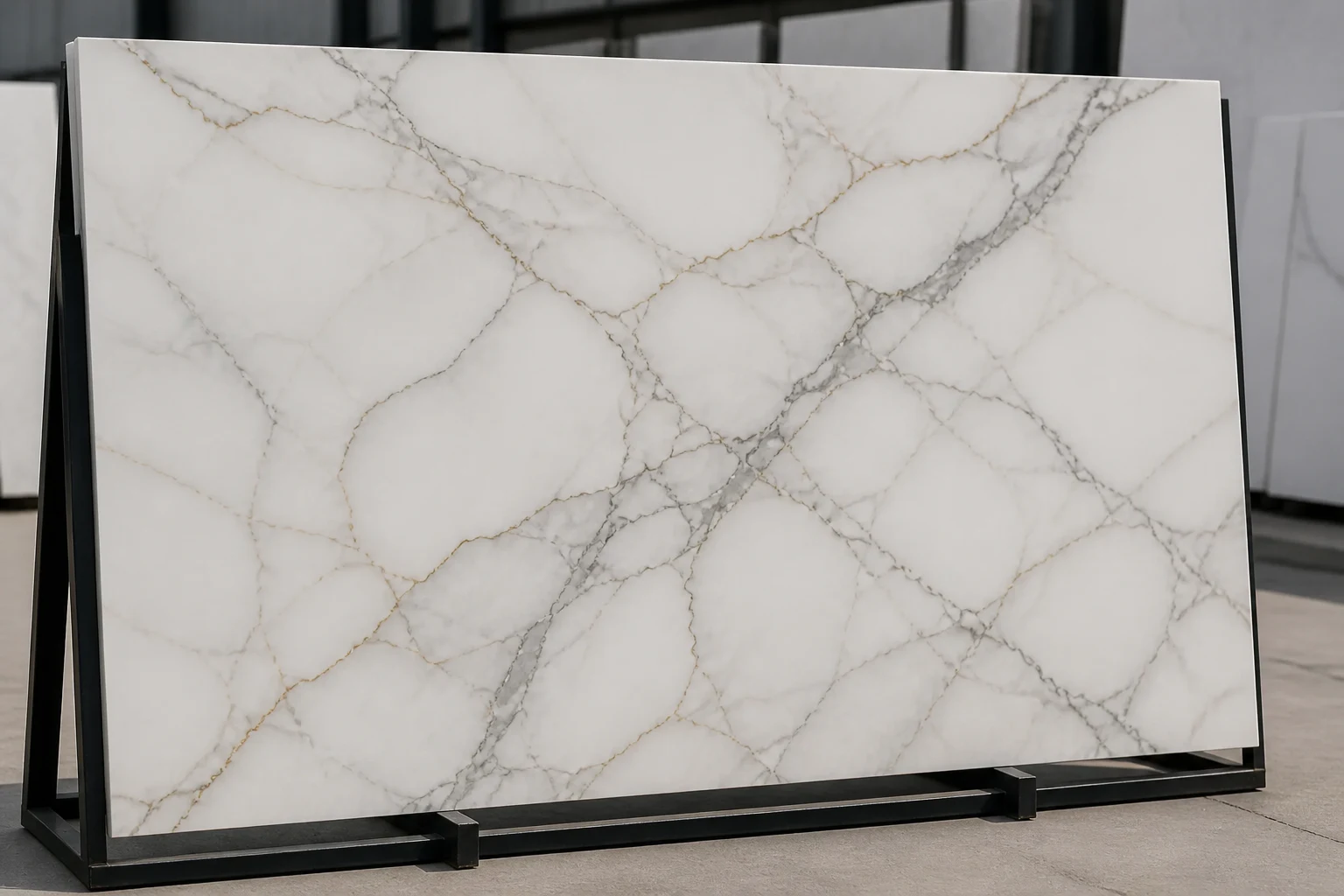
A bookmatched surround uses two sequential slabs from the same block, opened like a book so the veining mirrors across a center seam. Sourcing the pair is usually the hard part; the fabrication is careful but routine. The decision that makes or breaks it is where the center line goes. On the Westport job we set it to the firebox rather than the wall, because the mirror only works if it lines up with the fire.
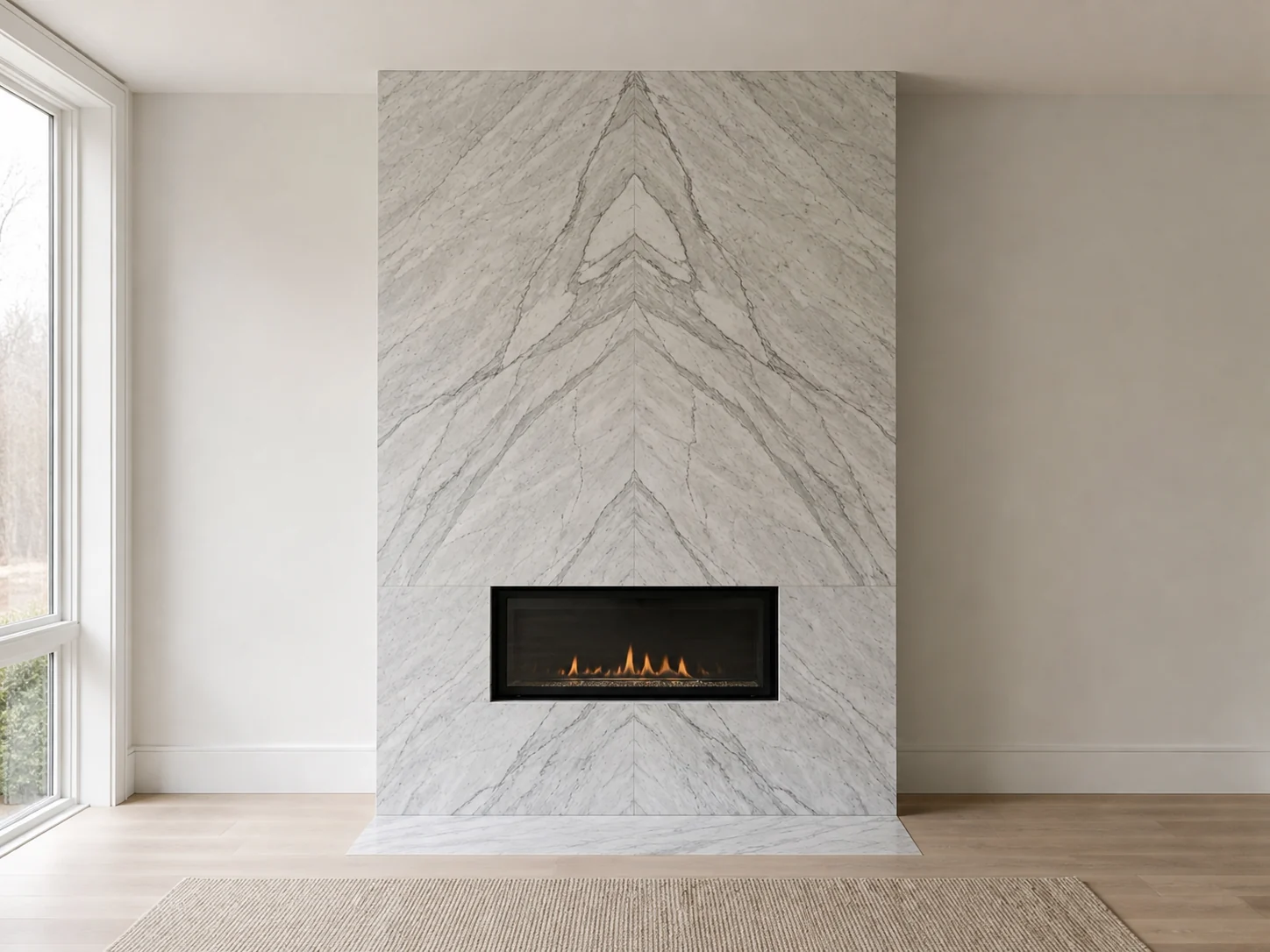
For a single-slab surround, we photograph the slab, place the pieces over it and show you where the strongest movement lands: usually above the opening, where the eye goes first, with quieter areas on the side returns. You approve that layout before we cut, the same way we handle a kitchen; see how templating works.
Where the seams go
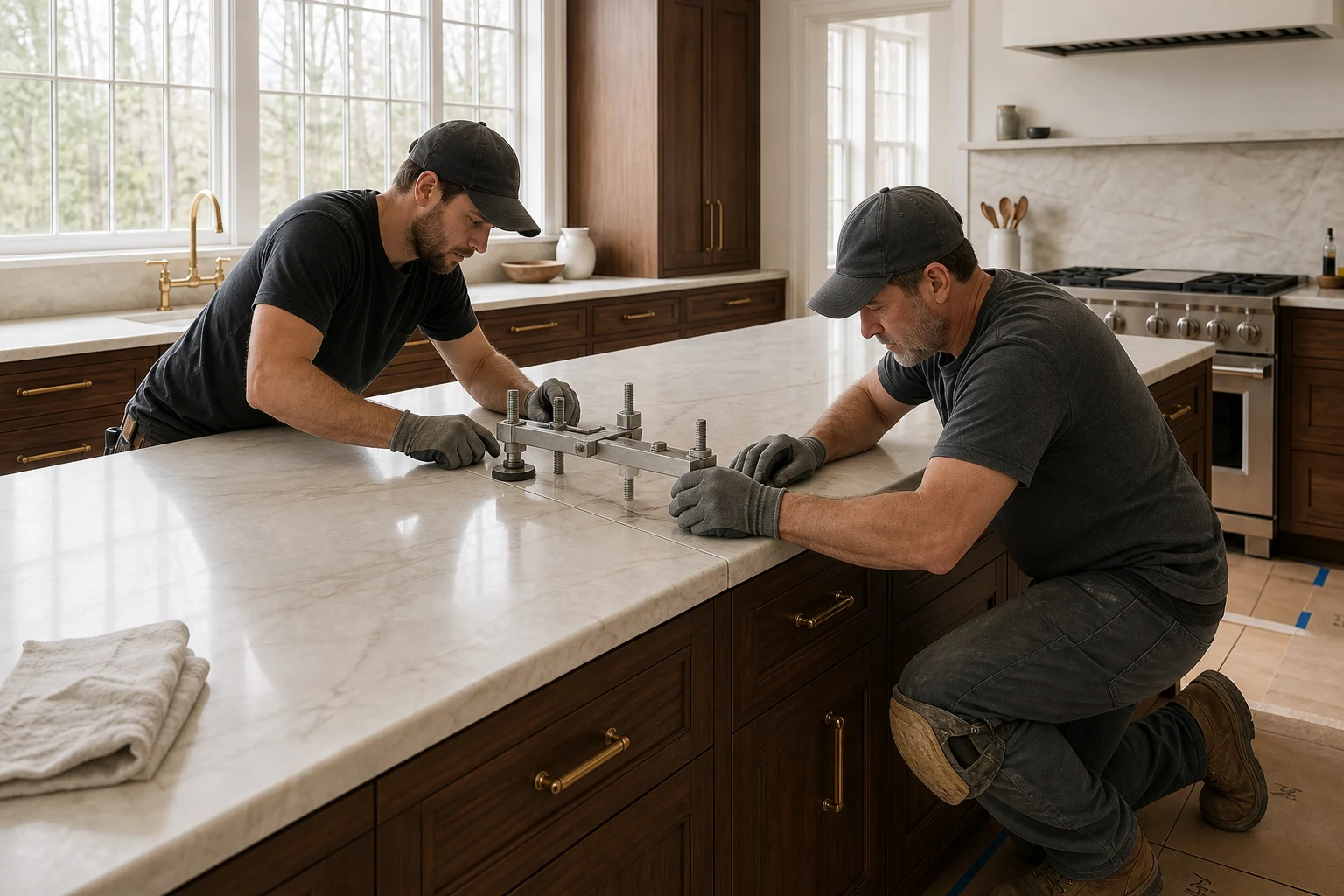
A full-height wall almost always has joints, because slabs are rarely nine feet tall. The natural places are the line of a mantel, the top of the firebox header, and the corners where side returns meet the face. On a bookmatch, the center seam is the design. Everything we wrote in where countertop seams should go applies here, with one addition: on a vertical surface, a joint that is not perfectly flush catches light from the side, so the wall behind it has to be flat.
The hearth
A hearth can be flush with the floor or raised as a bench. Flush hearths need the finished floor height before templating, because the stone has to meet wood or tile cleanly. Raised hearths need support and an edge that will take knocks; an eased or pencil-round edge is kinder than a sharp miter on a corner at shin height. Thick, solid hearth slabs look right in traditional rooms; a mitered build-up gives the same look with less weight on a modern one. Our edge profiles page shows the options.
Edges and returns
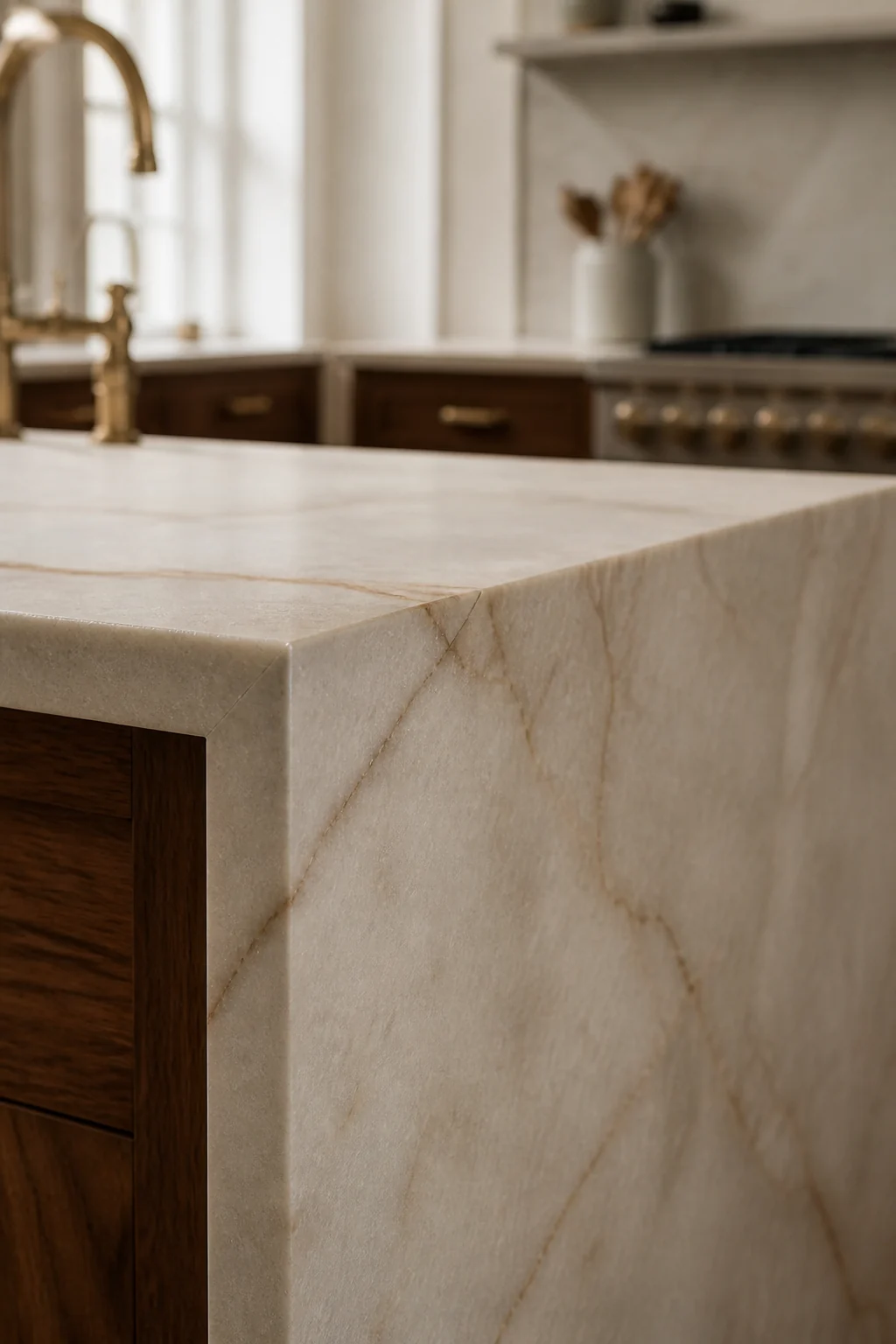
Most surrounds use an eased edge on the face and mitered returns at the sides, so the stone looks like one folded piece rather than a flat panel with a visible edge. Where the surround meets drywall, a small return or a scribed edge hides any wave in the wall. On a full-height wall that ends at an outside corner, we miter the corner the same way we would on a waterfall island.
A television above the fireplace
If a screen is going above the opening, decide that before the stone is cut. The niche, the cable channel and the mount location are all cut in the shop with finished inside edges, which looks far better than drilling finished stone on site. Check the firebox manufacturer's guidance on how far above the opening a screen can safely sit; a mantel or a projecting shelf between the two is often part of the answer.
Care
Soot and dust come off with a soft cloth and a pH-neutral cleaner. Keep acidic and abrasive products away from marble, and don't use solvents on natural stone. Seal porous stone when it goes in and test it with a few drops of water now and then. Soapstone wants an occasional wipe of mineral oil. Our stone care guide has the routine for each material.
Timing before the holidays
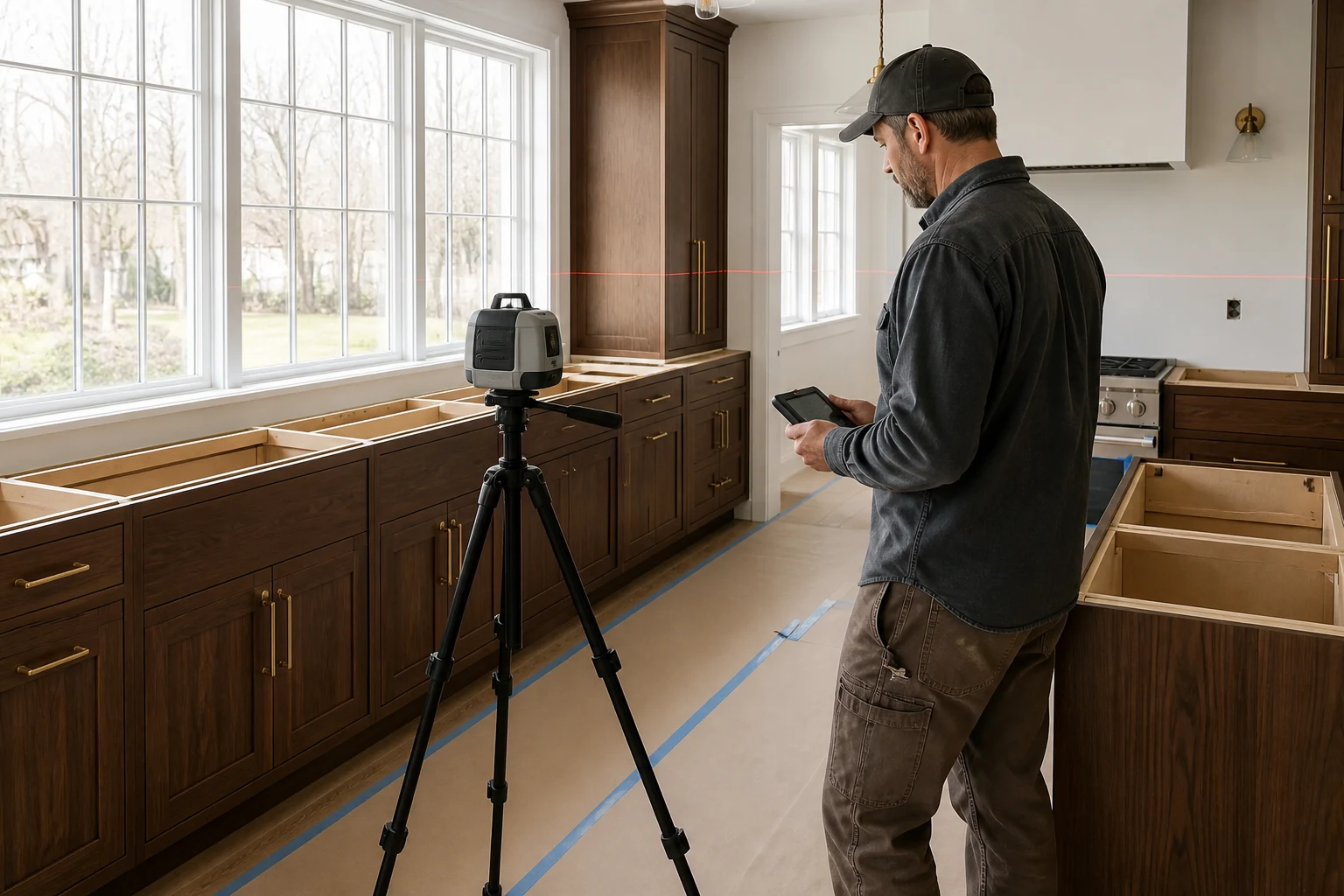
A surround can be templated once the firebox is installed, the wall is finished and flat, and the finished floor height is known. From template to installation, our typical window is one to two weeks. If you still need to choose a slab, allow four to six weeks from slab selection to installation. Visits to our Bridgeport yard are by appointment, and the full-height work usually comes out of the same sequential slabs we show on the rack. Our fireplace surrounds page shows the kinds of work we do.
Common questions
Can marble go near a wood-burning fire? Yes, as long as the firebox and hearth clearances are met. Marble has surrounded fireplaces for centuries. Keep it clean with a neutral cleaner so soot doesn't build up in the polish.
Will the stone crack from the heat? Not under normal use. Cracks come from movement in the wall or from stone spanning an unsupported gap, which is why we check the substrate before we template.
Do I need a full slab for a hearth? Usually not. A hearth and a simple surround often come from a remnant, which also lets you use a more expensive stone than a whole kitchen would allow.
Can you match the fireplace to my kitchen counters? If there is enough of your kitchen slab left, yes, and that is the cleanest way to connect the rooms. If not, a related stone in the same undertone and finish does the job.
The short version
- Choose for the room, not the kitchen: polished marble and bold veining are fine here.
- Marble for the classic look, soapstone or granite near real heat, quartzite to match a kitchen, porcelain for very large walls.
- Keep engineered quartz away from the firebox unless its manufacturer allows it.
- Set the center line to the firebox, approve the layout on the slab photo, and plan the TV niche before cutting.
- Firebox in, wall flat, floor height known: then we template, and installation follows in one to two weeks.
Call us at 203-717-1978 or start your project online, and we'll walk through the wall, the firebox and the slabs that would suit it.