Granite, porcelain, soapstone or marble outside? How each handles Connecticut sun, frost and grill heat, plus support, drainage and seasonal care.
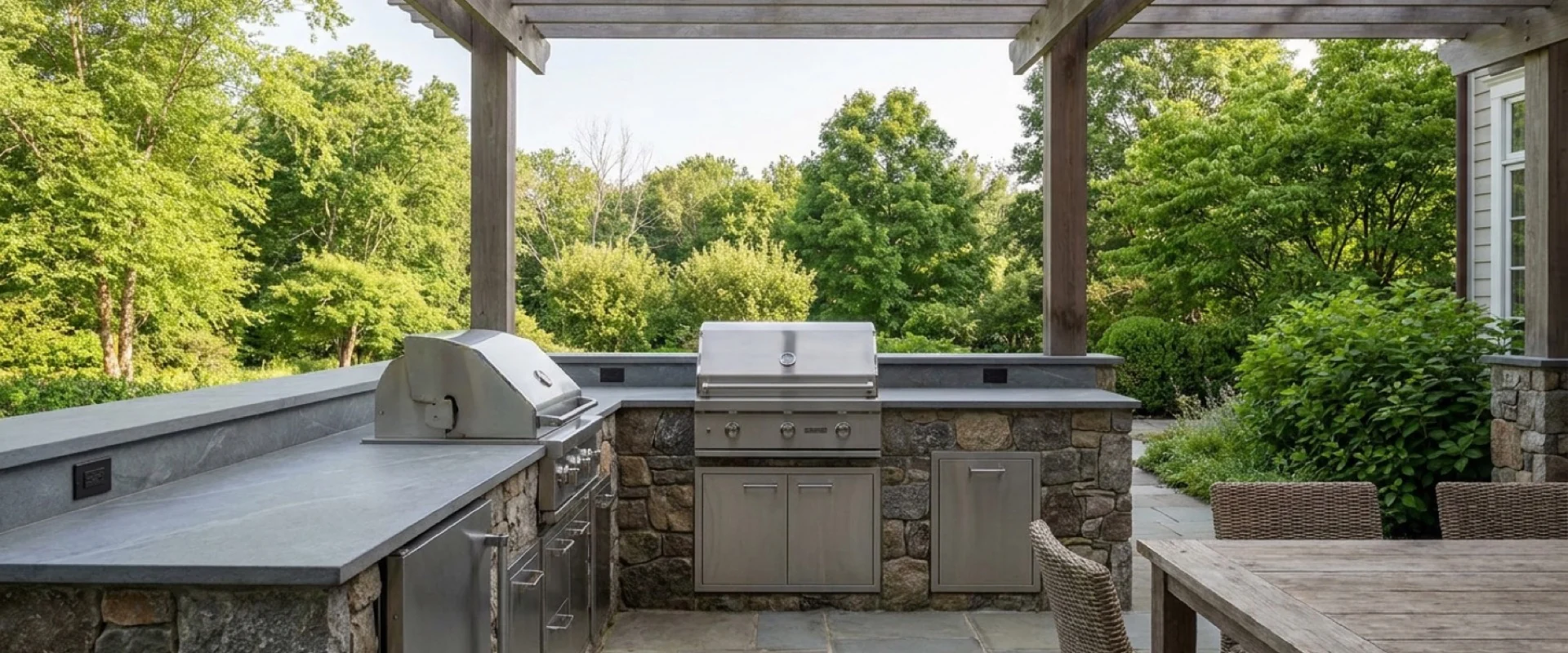
Outdoor countertops in Connecticut have to handle sun, rain, freeze-thaw cycles, grill heat and long stretches of damp. A material that works in a climate-controlled kitchen isn't automatically right outside. Granite and exterior-rated porcelain are usually the best starting points. Engineered quartz should generally stay indoors, because ultraviolet light can discolor its resin.
Start with the exposure
A covered terrace and an uncovered grill island live in different conditions. Note how many hours of direct sun the surface gets, whether snow and water can sit on it, and how quickly the area dries after a storm. Coastal sites add salt and wind-driven moisture. A shaded, wooded site may stay damp longer and collect leaves and other debris.
Choose the material for those conditions first, and the pattern and edge profile second.
Granite outdoors
Dense granite has a long track record in exterior work. It tolerates heat, ultraviolet light and cold when the slab is sound and the installation is detailed correctly. Dark granites can get hot in direct sun, and lighter colors may show leaf tannins or grill residue more readily. Some granites benefit from a penetrating sealer; how much depends on the stone's absorption.
Inspect the actual slab for fissures, filled areas and movement. A dramatic stone can work outside, but fragile zones shouldn't land at narrow appliance bridges, unsupported overhangs or corners that will take knocks.
Exterior-rated porcelain
Large-format porcelain is UV stable, stain resistant and available in consistent patterns. It's a strong option for grill surrounds and modern outdoor kitchens, especially when low absorption matters. Porcelain is thin and hard, so it needs the right tools and careful handling in fabrication. Exposed edges can be mitred and built down to look thicker, as on our porcelain outdoor kitchen in Stratford.
Not every porcelain product is rated for every exterior use. Check the manufacturer's technical data, surface finish and freeze-thaw rating. A polished surface may throw glare or get slick where water collects, while a textured finish may take more effort to clean.
Why engineered quartz belongs indoors
Engineered quartz uses resin to bind mineral particles. Sunlight can change that resin and discolor it, often unevenly where part of the counter is shaded. Heat near grills and outdoor appliances is another concern. A quartz that looks like natural stone still behaves like a resin-bound product outside.
Unless the manufacturer specifically warrants the product for exterior use, choose granite, a suitable porcelain or another material made for outdoor exposure.
Marble, limestone and soapstone
Marble and limestone can be used outside, but they weather. Acid rain, organic debris and freeze-thaw conditions soften the finish and change the surface over time. That patina may suit a garden or a traditional terrace, but choose it knowingly.
Soapstone is dense, unaffected by acids and good with heat. Its surface is softer than granite and will scratch. Outdoors it may lighten, weather or develop an uneven tone depending on exposure. Owners who like that change often find it practical and distinctive.
Cabinet and substrate requirements
Stone needs a stable, level base. Outdoor cabinet systems should resist water and give continuous support where the material needs it. Framing has to allow for appliance cutouts, sink cabinets, access panels and ventilation. Wood moves outdoors and can transfer stress to a rigid top, so use exterior-rated construction and leave proper clearances.
Long spans and bar overhangs may need steel or brackets. Install the support before templating so its position shows up in the final layout.
Drainage and water
Countertops shouldn't trap water against walls, appliance flanges or cabinet interiors. The surrounding patio, roof and backsplash details all affect drainage. Use caulks rated for exterior use and inspect the joints now and then. If there's a sink, plan the winter shutoff and drainage for the plumbing lines.
Freeze-thaw damage often starts where water gets into a joint or weak spot and can't get out, so the detailing matters as much as the slab.
Grills and heat
Built-in grills need the manufacturer's clearances, insulating jackets and ventilation, and stone doesn't replace any of them. We need the exact appliance specifications before templating and cutting. Narrow strips around a grill opening are vulnerable, so plan seam locations and support together with the appliance layout.
Hot cookware should still go on a trivet. Granite tolerates heat better than resin-bound surfaces, but there's no reason to risk thermal shock.
Edges, corners and overhangs
Simple eased edges weather well and are comfortable around seating. Sharp mitres look crisp and modern, but soften exposed corners enough for safety and durability. Thick laminated or mitred returns need drainage and adhesives suited to exterior conditions.
Size overhangs to the material thickness, the support and the way they'll be used. A bar top people lean on needs real structure underneath, whatever the proportions look like on paper.
Seams and layout
Put seams over support, away from the weakest parts of the slab, and where they can be serviced if needed. On directional granite, check how the pattern moves across the joint. Porcelain sheets can have repeating prints, so lay out adjacent pieces from the full sheets, not small samples. Our guide to countertop seams covers placement in more detail.
Maintenance through the seasons
Clean spills, grease and leaf debris promptly with a neutral cleaner. Avoid wire brushes and harsh acidic products unless the stone supplier has approved them. Reseal natural stone when a water test shows it's absorbing quickly, instead of on a fixed calendar date.
Before winter, inspect caulk, drains, plumbing and appliance covers, and don't leave standing water in sink lines or gaps where it can freeze. In spring, clean the whole surface and check the joints before heavy use starts again. Our stone care guide has the routine for each material.
Planning a Connecticut outdoor kitchen
Pick the appliances and cabinet system first, then choose a surface proven for your exposure. Have the fabricator review support, openings, access and seam locations before the cabinets are finalized. Our outdoor kitchen countertops page shows the materials we recommend.