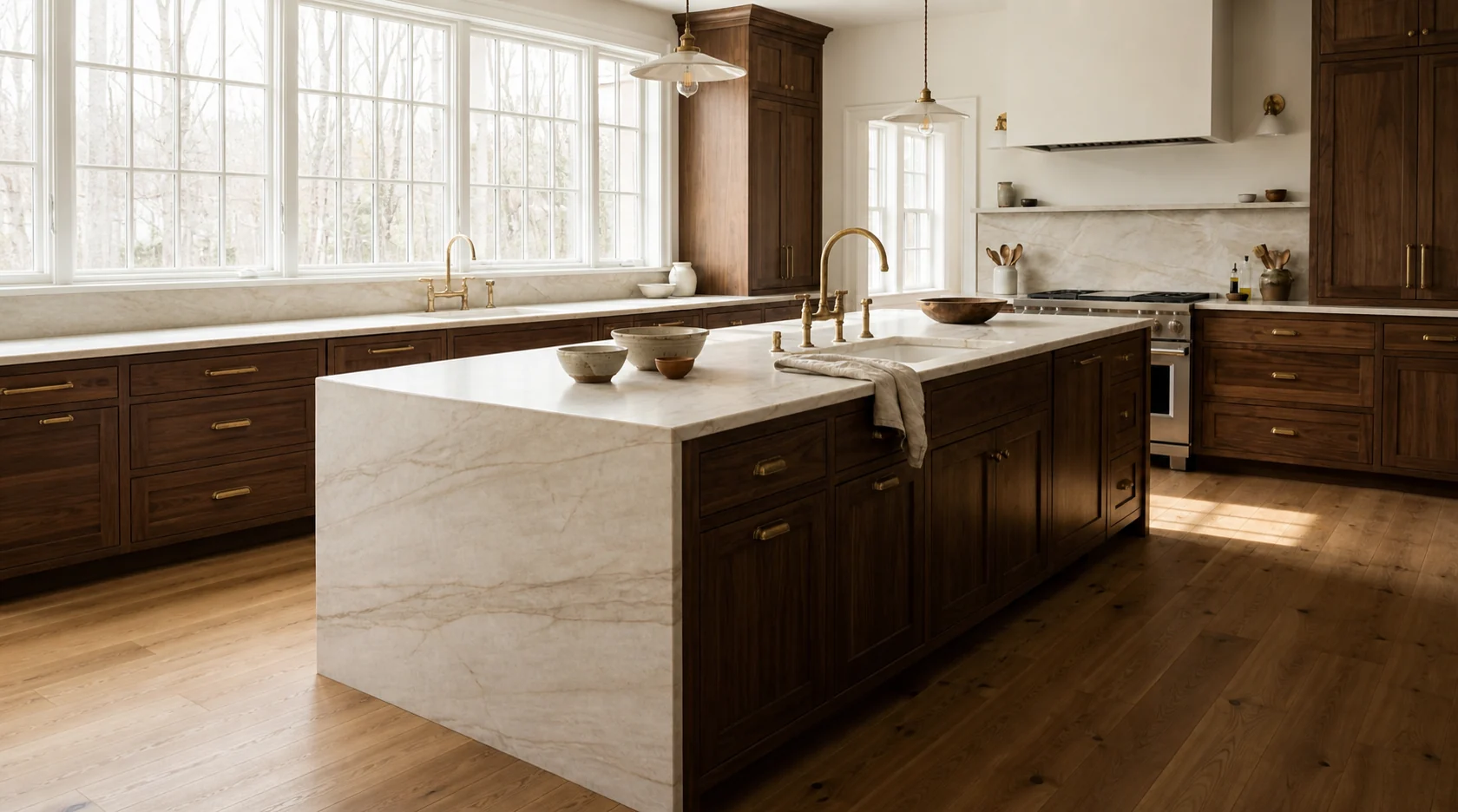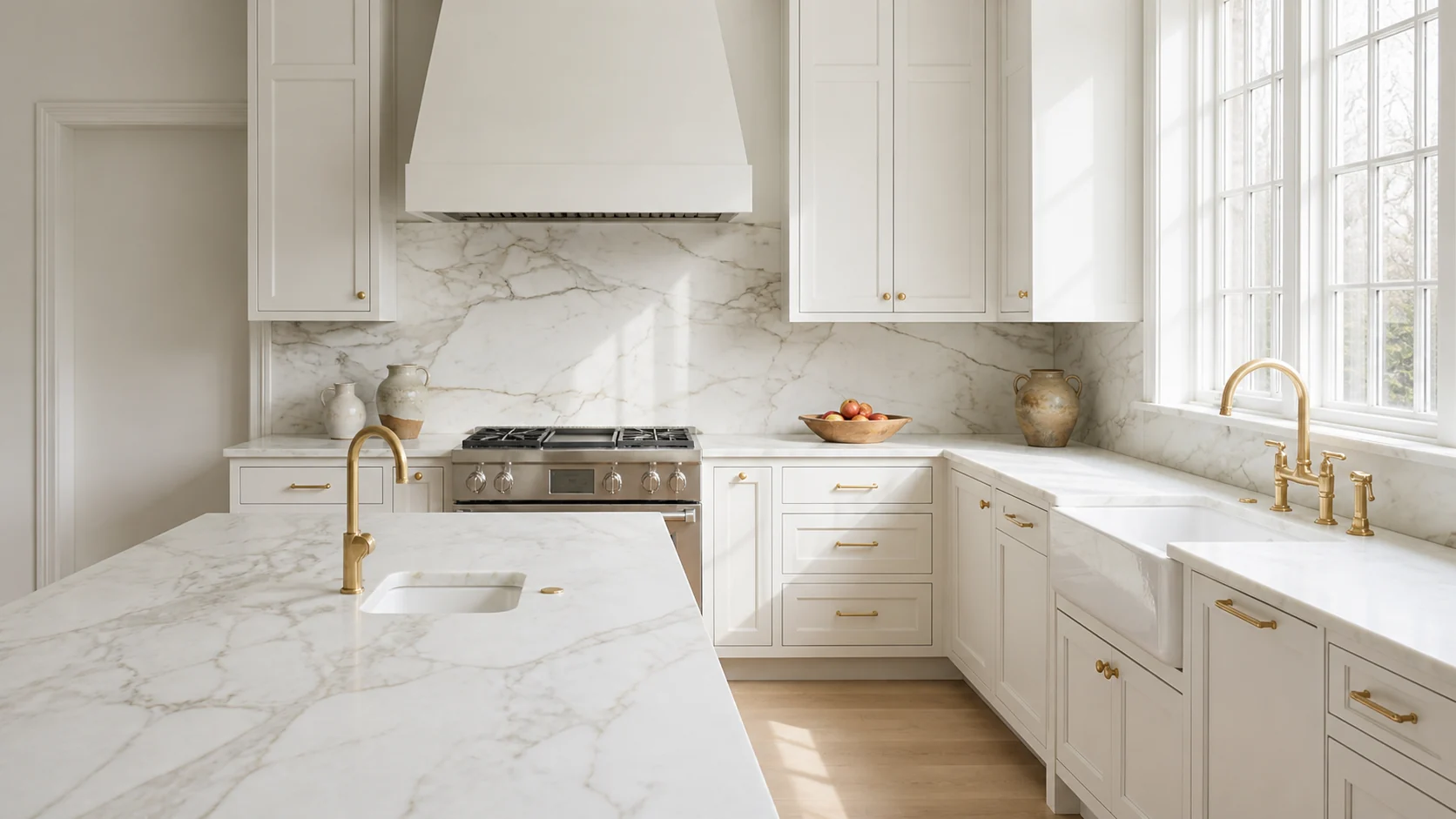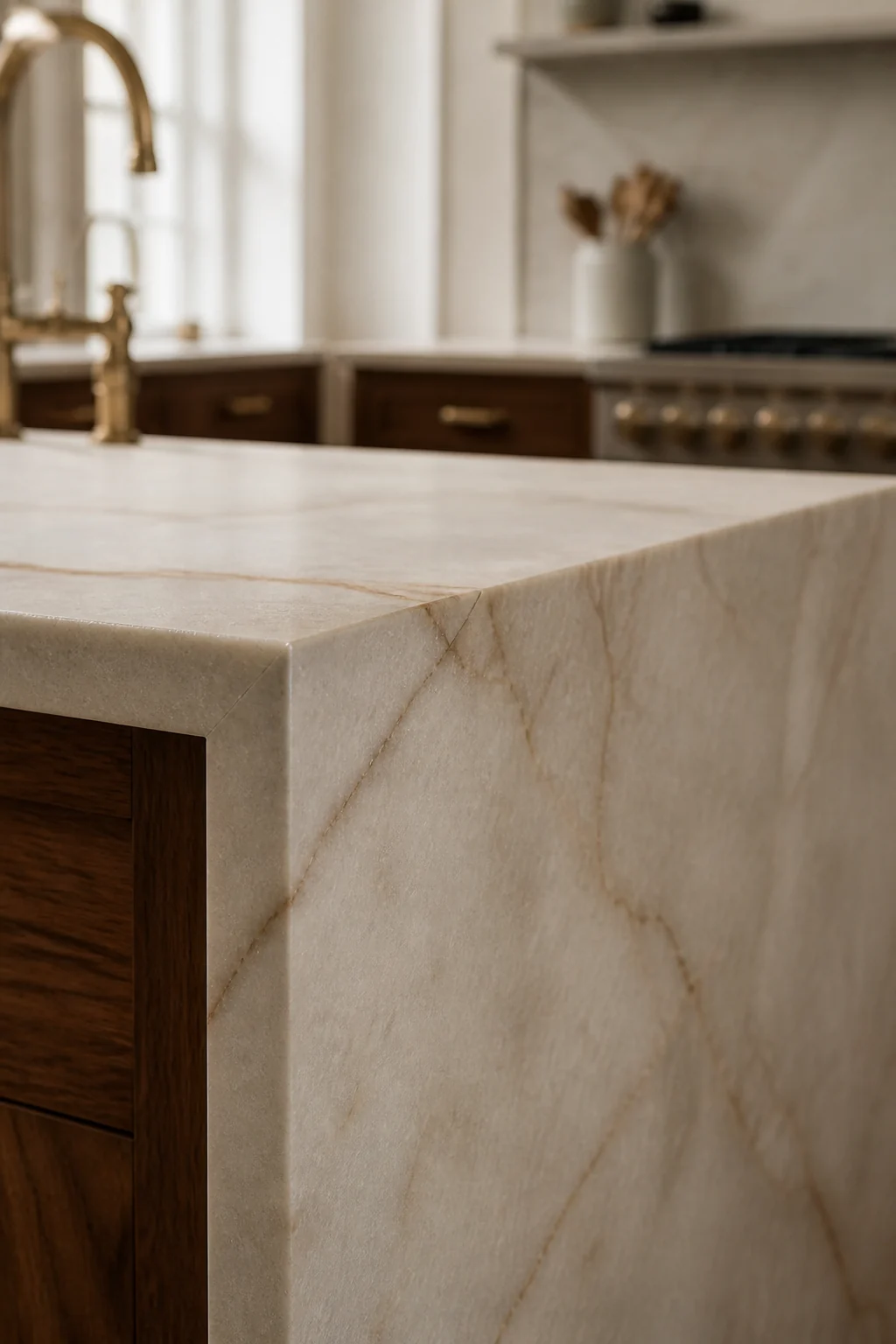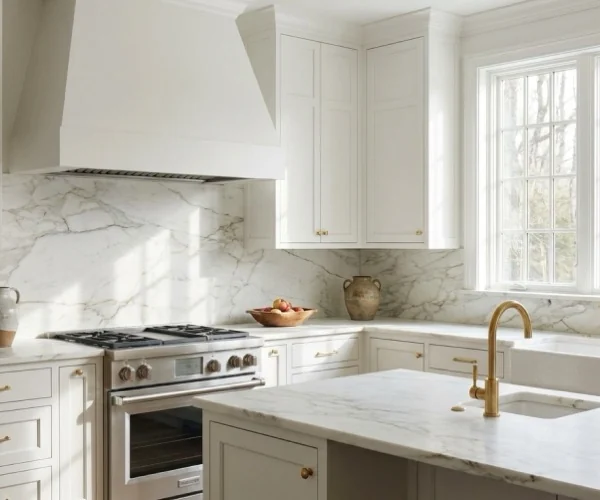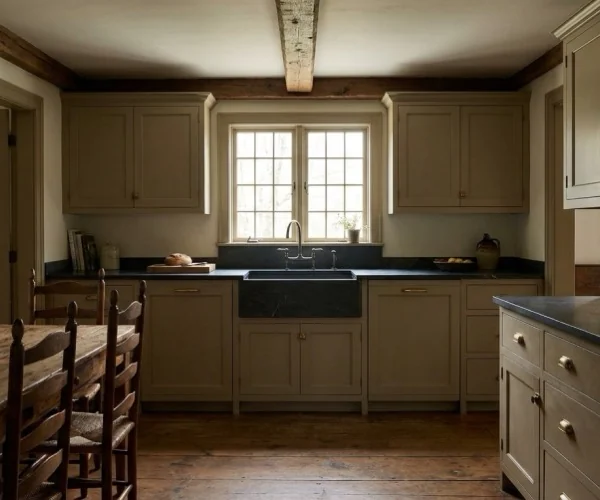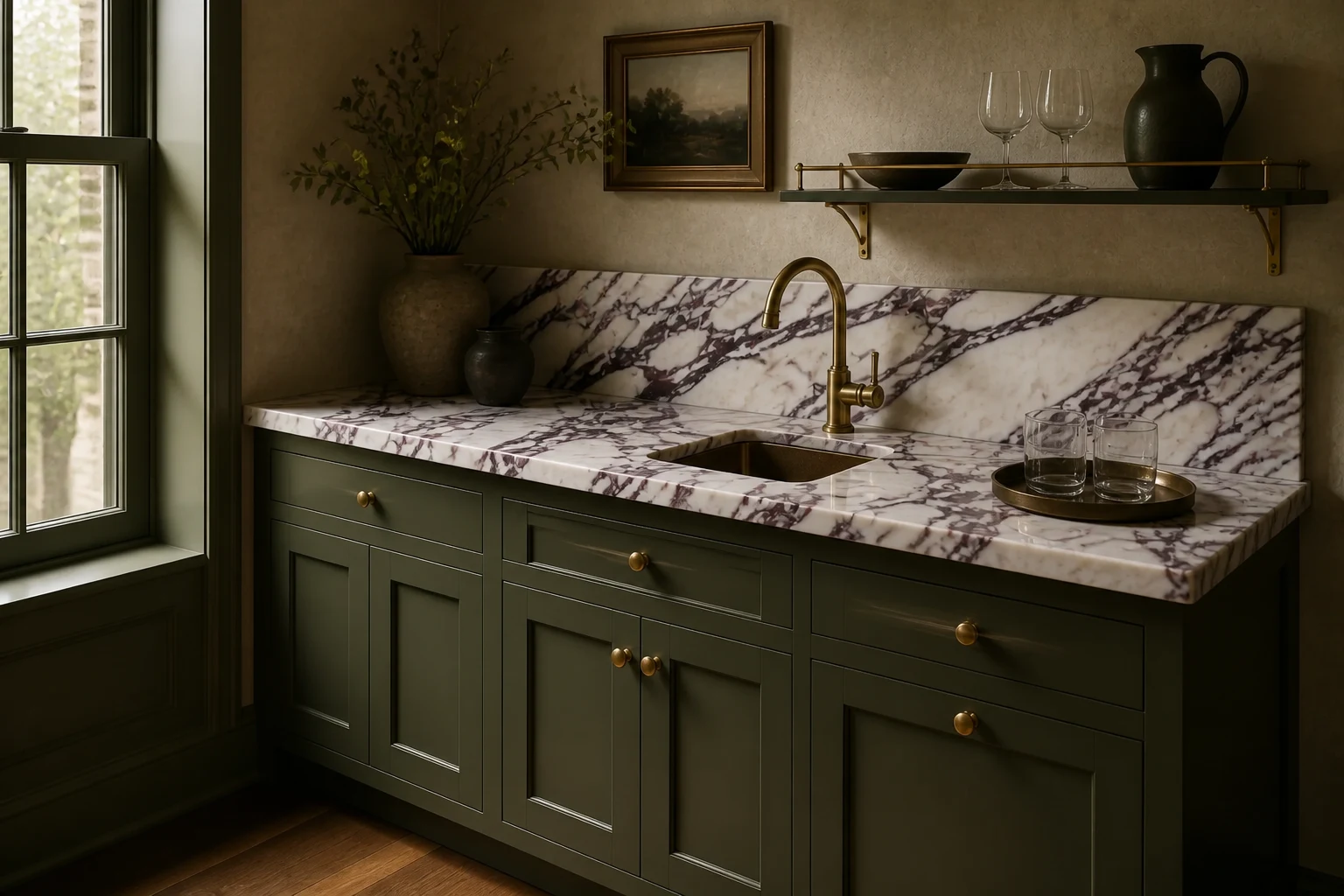
How a visit to our Bridgeport slab yard works: what to bring, how to read a full slab, how many you need, and what happens after you tag one.
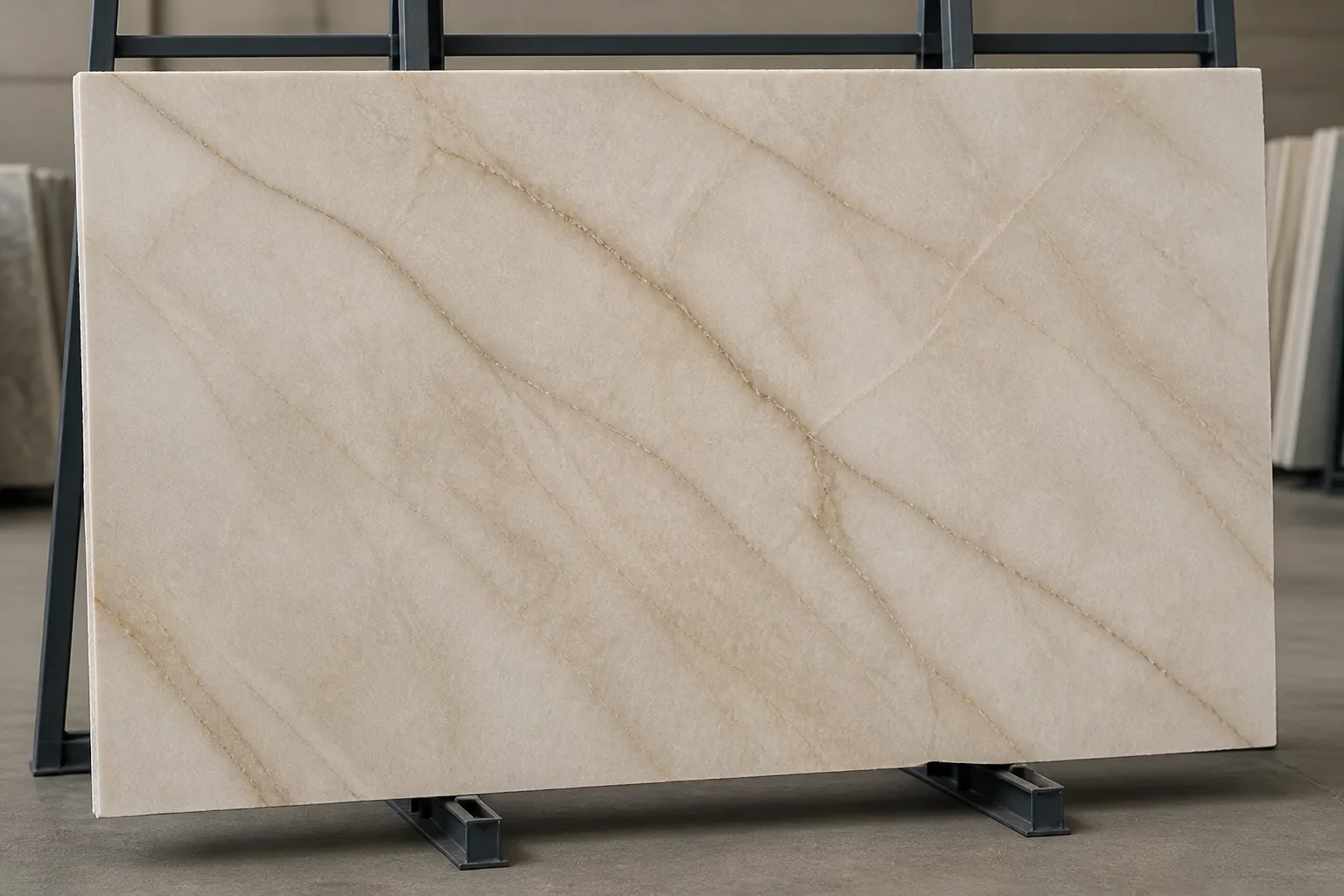
Most countertop decisions are made standing in front of a slab, not looking at a sample. A sample shows the color. It can't show the movement, the scale of the veining, where the strongest vein would land on your island, or whether there is enough clean stone for the whole job. This is what a visit to our Bridgeport slab yard involves, what to bring, and what happens between tagging a slab and seeing it installed.
Why the visit matters
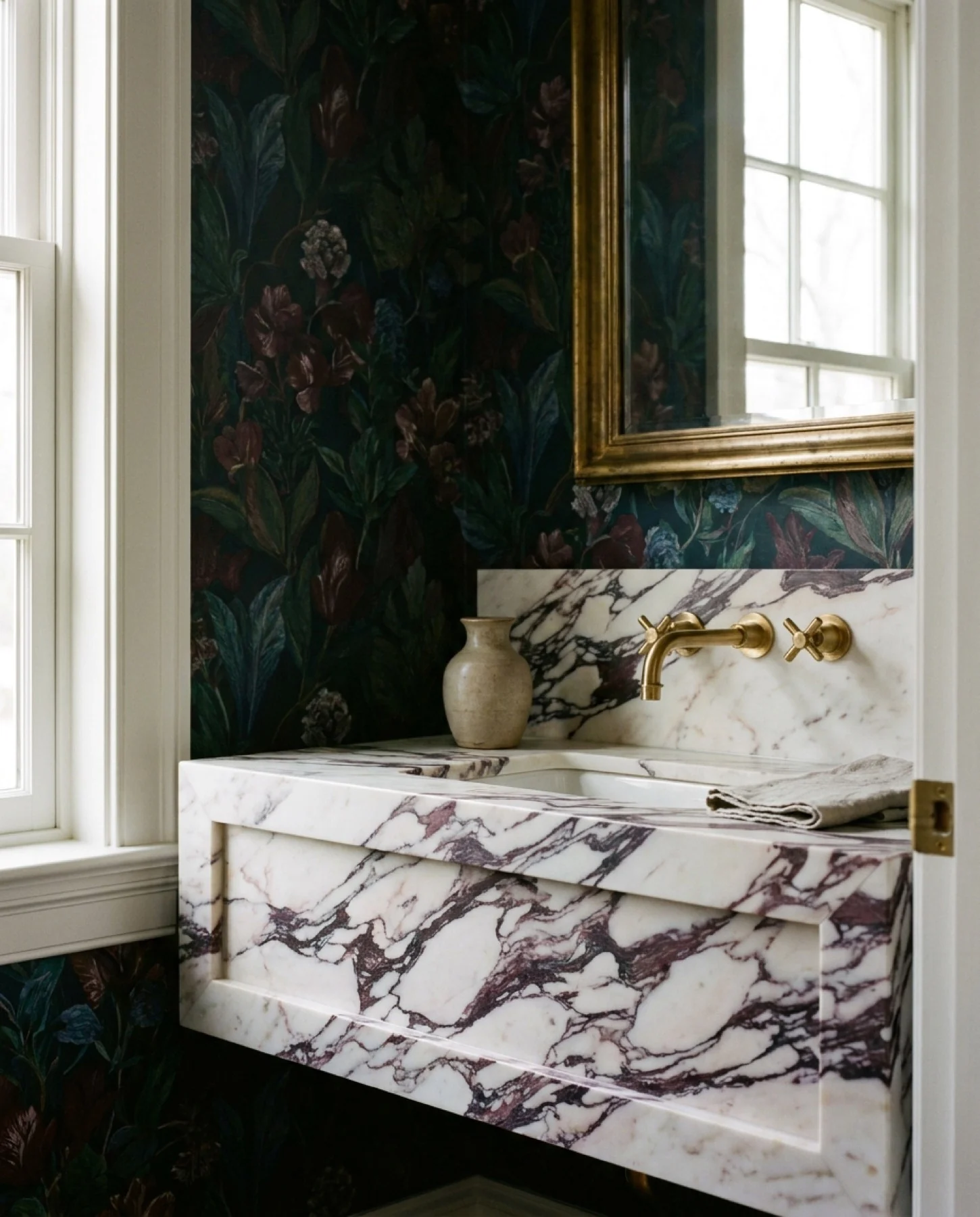
Natural stone is sold by the slab, and no two are the same. Two slabs of Taj Mahal from different blocks can be a shade apart in color and very different in veining. A quartzite that looks calm on a four-inch chip can be busy across nine feet. The yard is where you see the actual material your counters will be cut from, under the same light, next to your cabinet door. It is also where we start planning the layout, because we photograph the slabs you choose and use those photos to show you where every piece will come from.
Booking a visit
Our yard is at 46 Beatrice St, Unit 3, in Bridgeport, and visits are by appointment so someone is free to pull slabs and walk you through them. We're open Monday to Friday, 8 AM to 5 PM, and Saturday, 9 AM to 1 PM. Our Greenwich office at 180 Sound Beach Ave is also by appointment and is a good place to review drawings and samples before a yard visit. Book online or call 203-717-1978. Allow about an hour for a kitchen; a vanity or a hearth takes less.
What to bring
- A cabinet door or a sample of the cabinet finish. This settles more decisions than anything else.
- Paint chips, a floor sample and a tile sample if you have them.
- A piece of the hardware or a photo of the plumbing finish, so you can see the stone next to brass, nickel or black.
- Your kitchen drawings, or at least the cabinet dimensions, so we can count slabs.
- The sink and cooktop models, which affect how much usable stone a run needs.
- Photos of the room in daylight.
- Your designer or contractor, if they're involved. Layout decisions go faster when everyone is in front of the slab together.
What you'll see
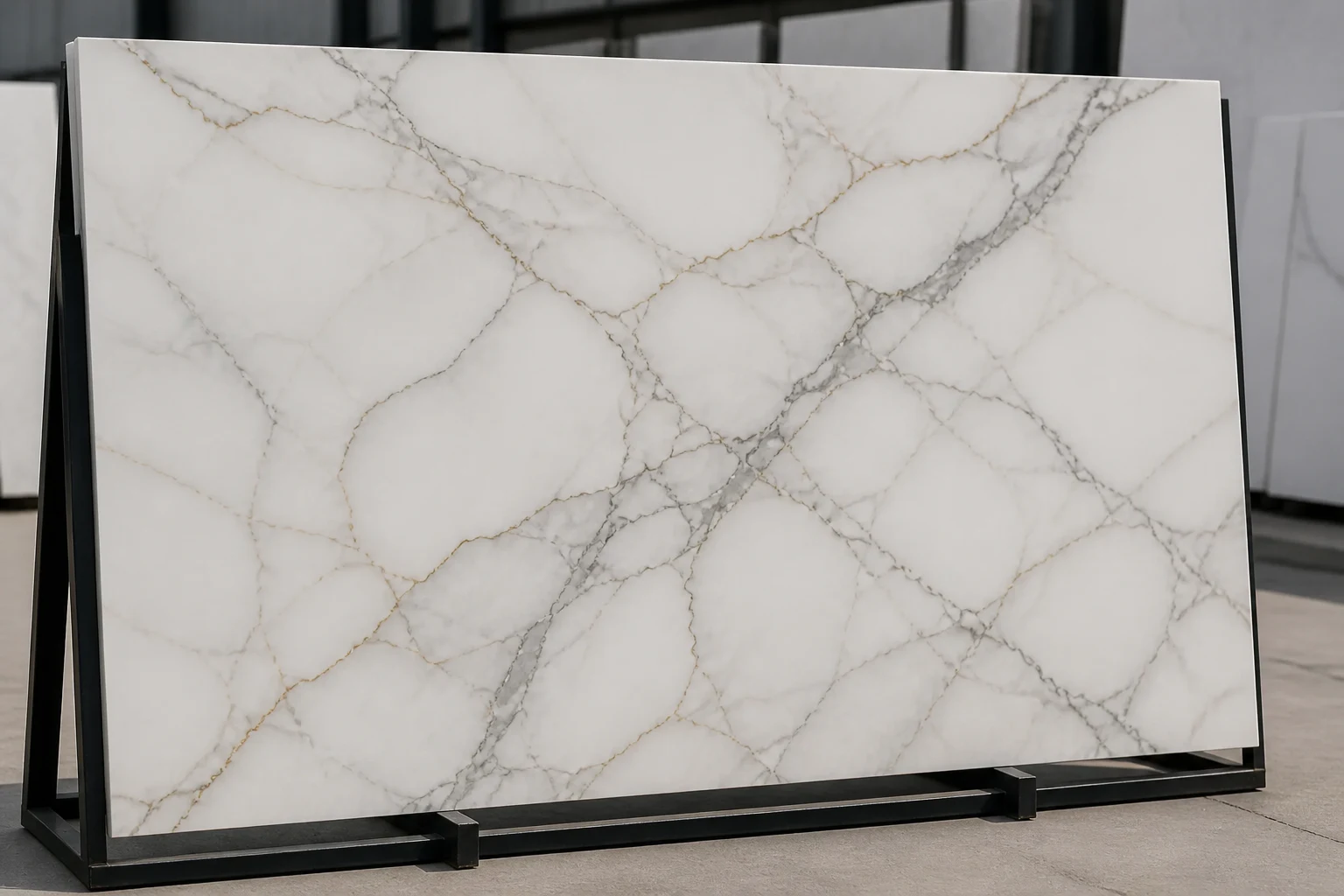
Slabs stand upright in racks, grouped by material. We'll pull the ones you're interested in so you can see the full face, and we'll stand sequential slabs from the same block next to each other so you can see how the pattern continues. There is also a remnant rack of pieces left from earlier jobs, which is the first place to look for a vanity, a bar top or a hearth; our guide to using stone remnants explains what fits. Our materials page lists what we keep in stock. If the stone you want isn't on the rack, we can source it through our suppliers and arrange for you to see it before it's bought.
How to look at a slab
Stand back first and read the whole face as a composition: where the big veins run, where the quiet areas are, which end is busier. Then come close and look for three things: hairline fissures, areas that have been filled with resin, and mesh backing on the reverse. None of these is a defect on its own. Fissures are common in quartzite and marble, fills are standard, and mesh backing stabilizes fragile stones. What matters is where they fall. A fissure that would land on a narrow strip beside the sink is a problem; the same fissure in the middle of a wide island is not. Those are the things we flag for you.
Look at the slab under the yard's light and then take a photo and look at it on your phone in the parking lot. Daylight and warm indoor light shift stone noticeably, which is why a cabinet door held against the slab is worth more than a dozen photos. Our guides to Taj Mahal vs. Mont Blanc and quartz vs. quartzite go deeper on reading color and movement.
How many slabs you need
Square footage is only the start. A kitchen that measures sixty square feet may need two or three slabs, depending on slab size, the shape of the runs, the sink and cooktop openings, overhangs, backsplash height, a waterfall end, and how the veining has to run. A full-height backsplash can double the material on that wall. We count slabs from your drawings while you're here and tell you where a third slab would come from before you commit to it. Our estimates page explains how that turns into a price.
Tagging a slab
When you've chosen, we tag the slabs for your job so they don't go to another project. Slabs move quickly, especially remnants and popular quartzites, so if you find the right ones it's worth holding them while the rest of the project catches up. We'll confirm the dimensions and note the usable area on each one.
What happens next
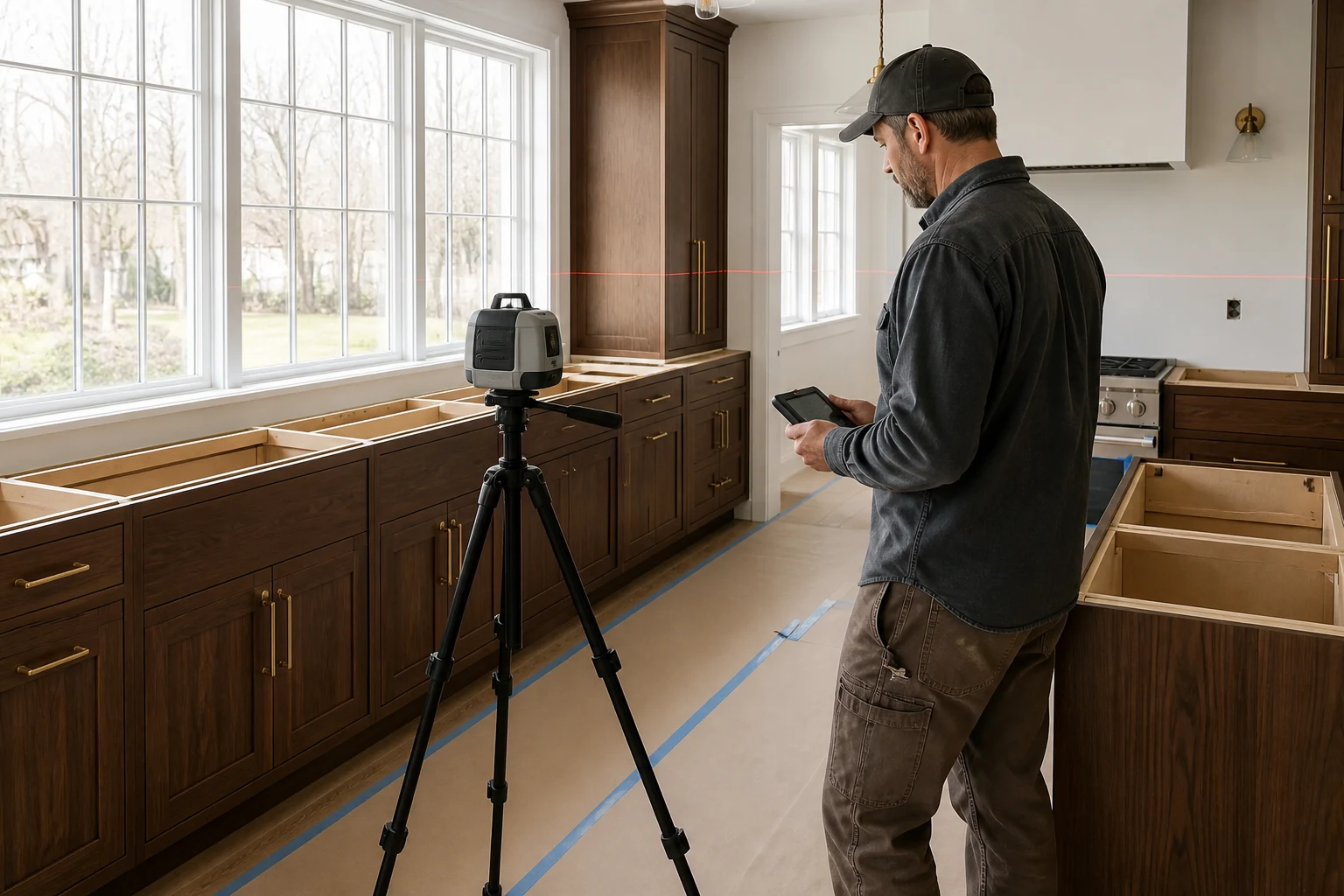
- Template. Once your cabinets are installed, level and secured, with the sink and cooktop on site, we come out and measure. See how templating works.
- Layout. We place the template over the photographs of your slabs and send you the layout. This is where you see the vein on the island, the seam locations and how a backsplash continues from the counter. You approve it before we cut. Where countertop seams should go explains what we're deciding.
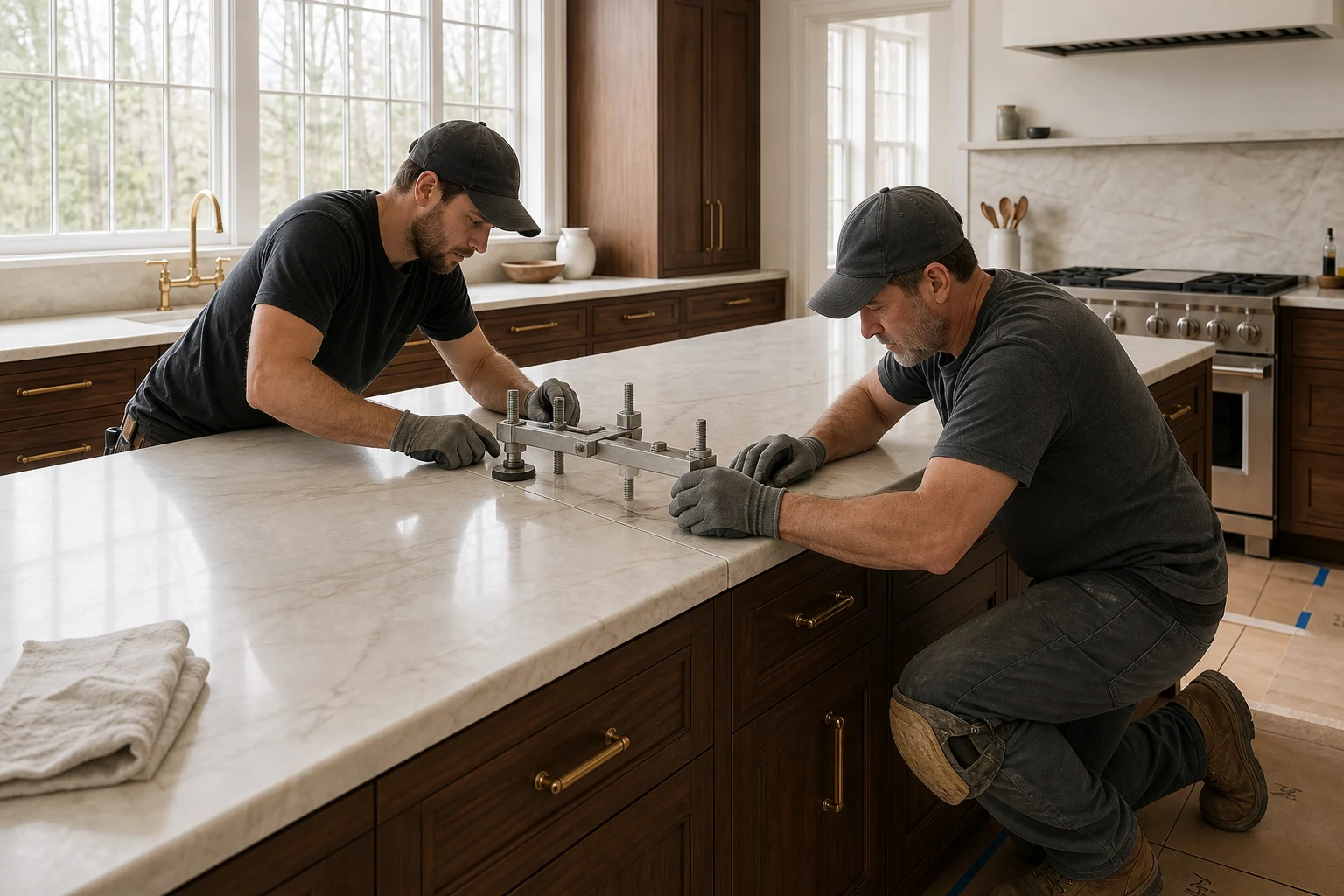
- Fabrication. We cut, miter and finish the edges by hand, and dry-fit the pieces in the shop. See how we fabricate.
- Installation. Our own crew installs. From template to installation, our typical window is one to two weeks.
From slab selection to installation, allow four to six weeks on most kitchens, because the template waits for the cabinets. Our process page lays out each step.
Common questions
Do I need an appointment? Yes. It means slabs are pulled and someone is free to go through them with you.
Can I take photos? Please do. Photograph the whole slab and the areas you like, and photograph it next to your cabinet door.
Can I see edges and finishes? Yes. We keep edge samples at the yard, and you can see honed, polished and leathered finishes on real slabs. Our edge profiles page is a good preview.
What if I don't have cabinets yet? Come anyway. Choosing the stone early lets the cabinet colors follow the slab, and we can hold your slabs while the cabinets are built.
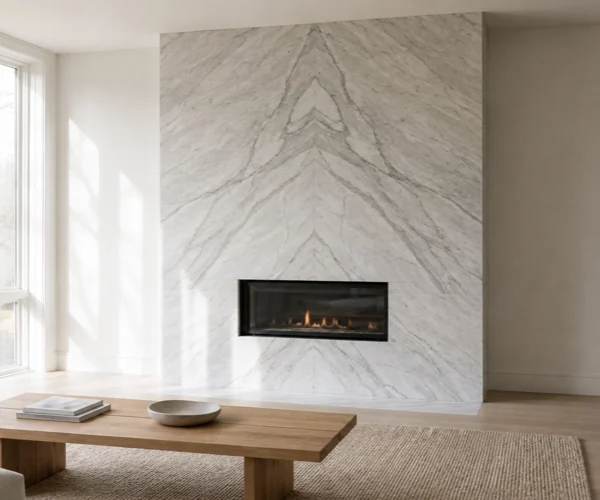
Can I look at remnants without a full kitchen project? Yes. The remnant rack is the right place for a vanity, a hearth, a bar top or a shelf, and the same visit covers it. Our remnants page explains how remnant pricing works.
The short version
- Book a visit, bring a cabinet door, paint chips and your drawings, and allow about an hour.
- Read the whole slab first, then check fissures, fills and backing with us.
- We count the slabs from your drawings and tag the ones you choose.
- Template after cabinets, approve the layout on the slab photo, then we cut and install in one to two weeks.
Call us at 203-717-1978 or book a visit. We fabricate in Bridgeport and install across Fairfield County and Westchester; see our Bridgeport page for what's nearby.