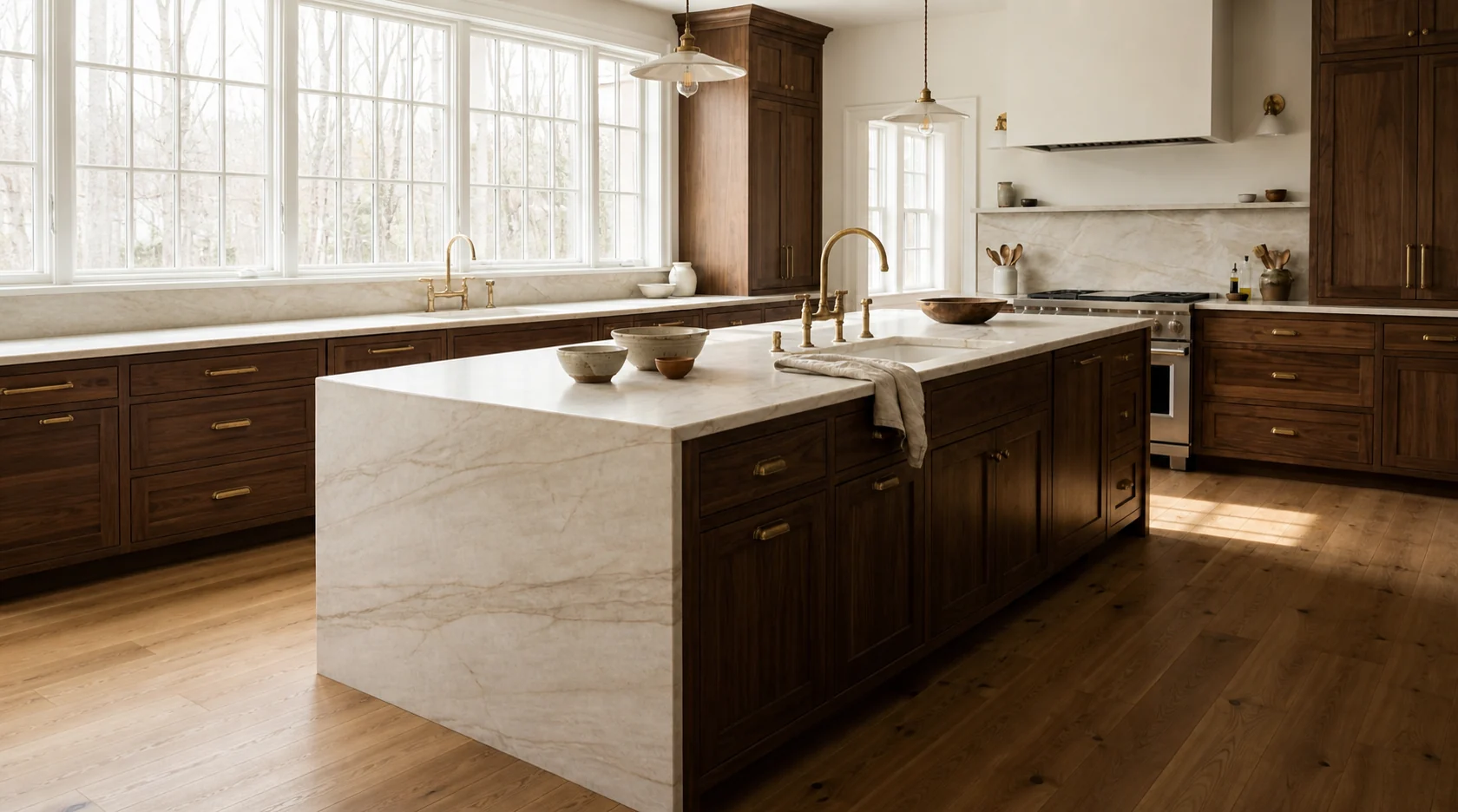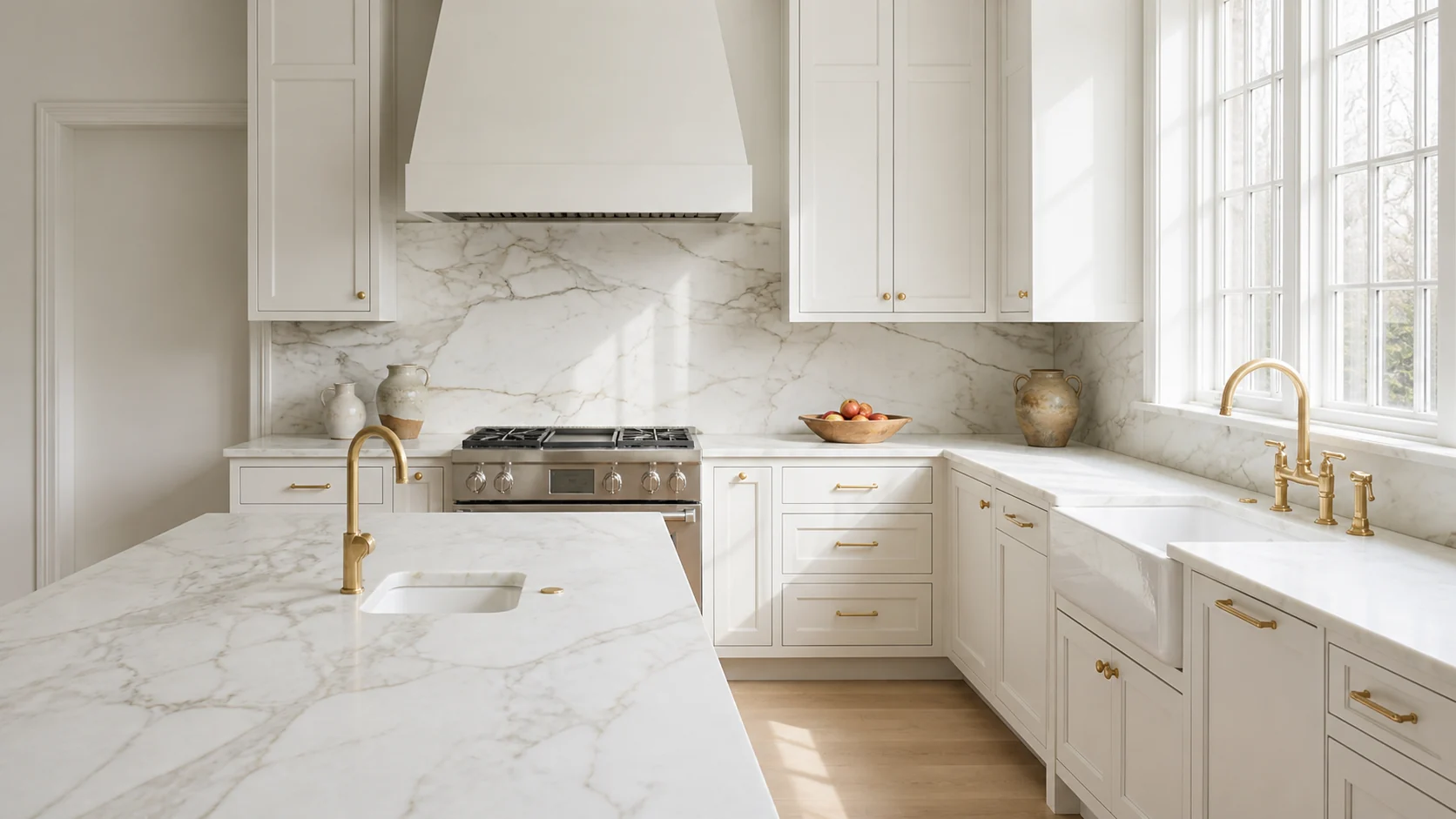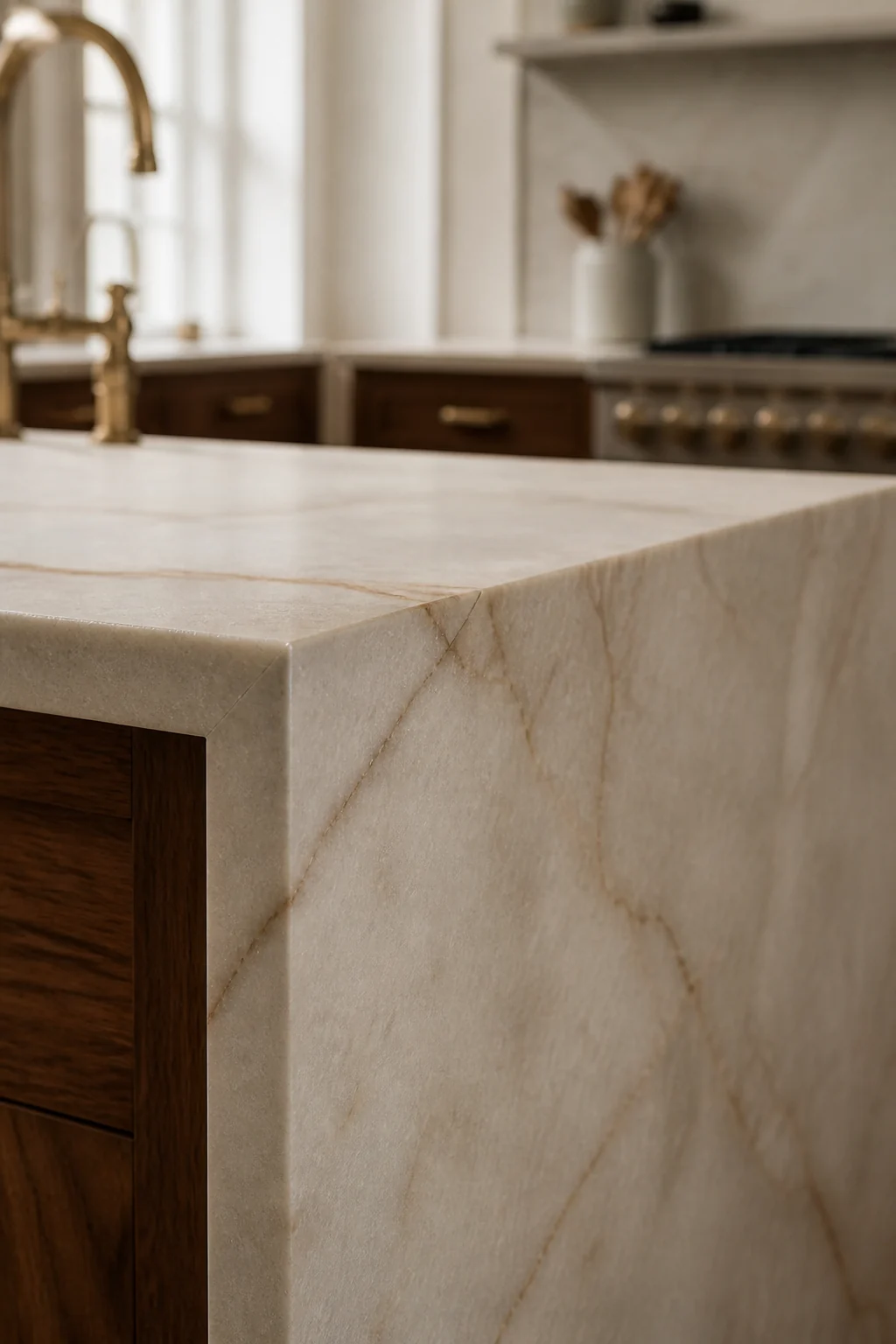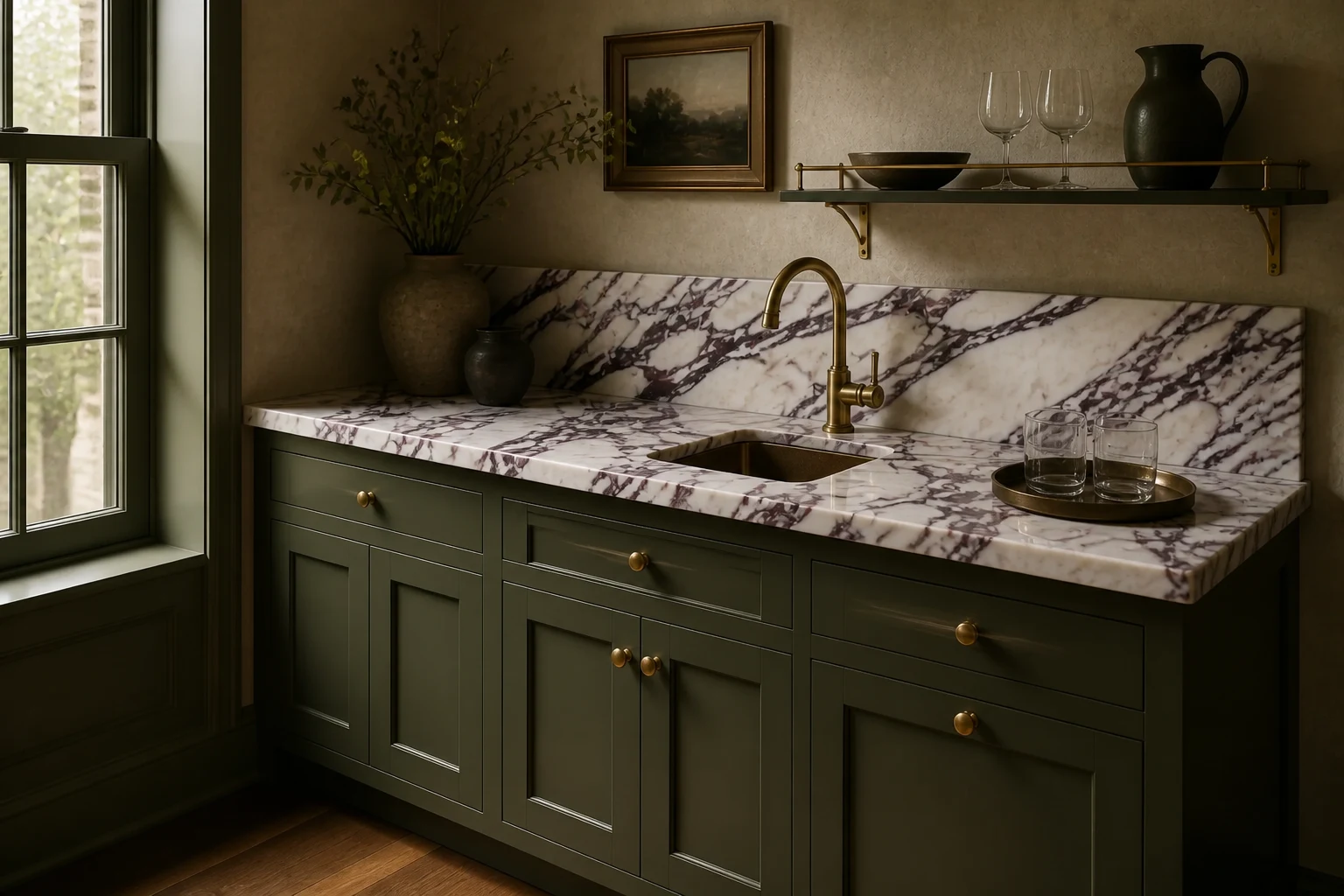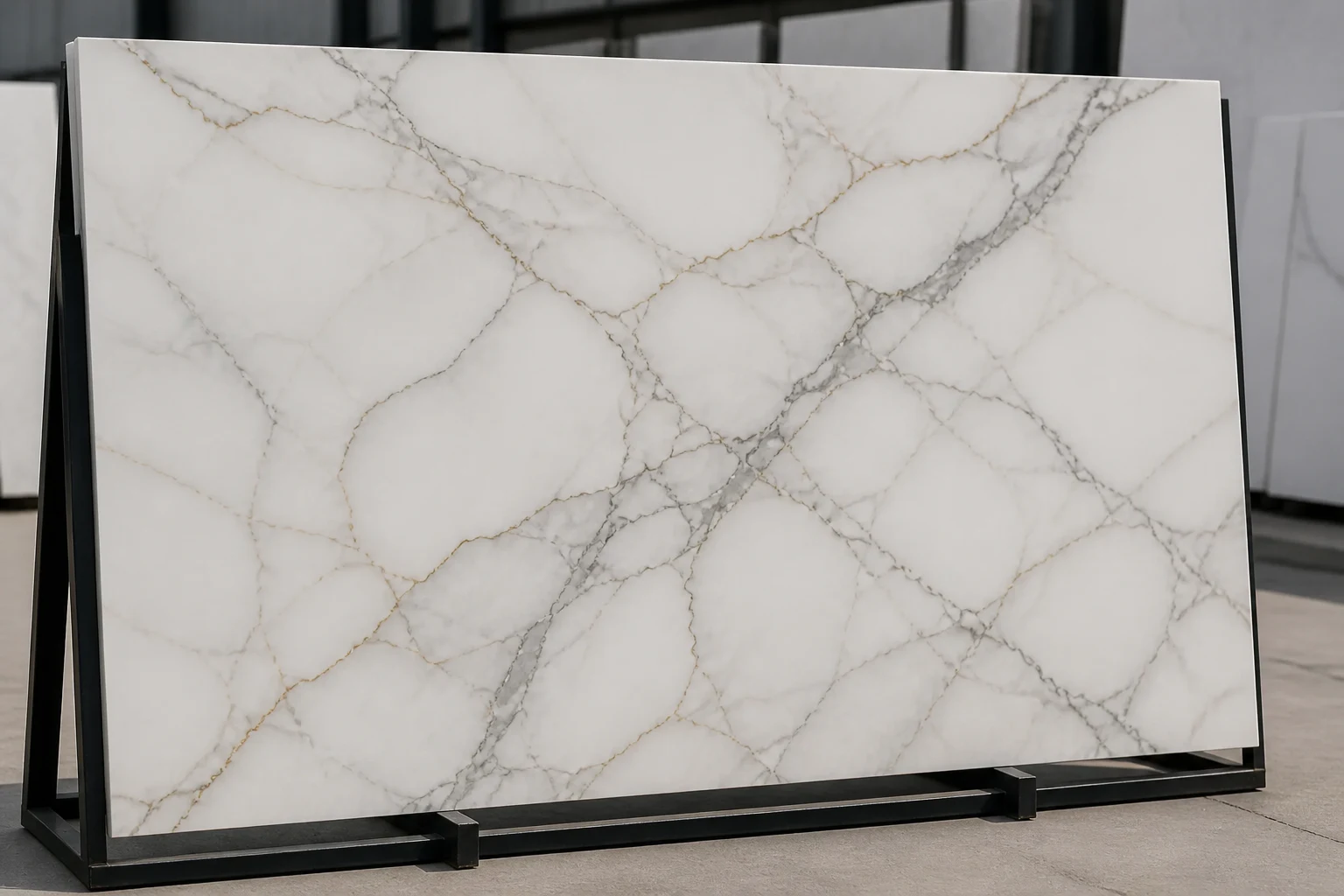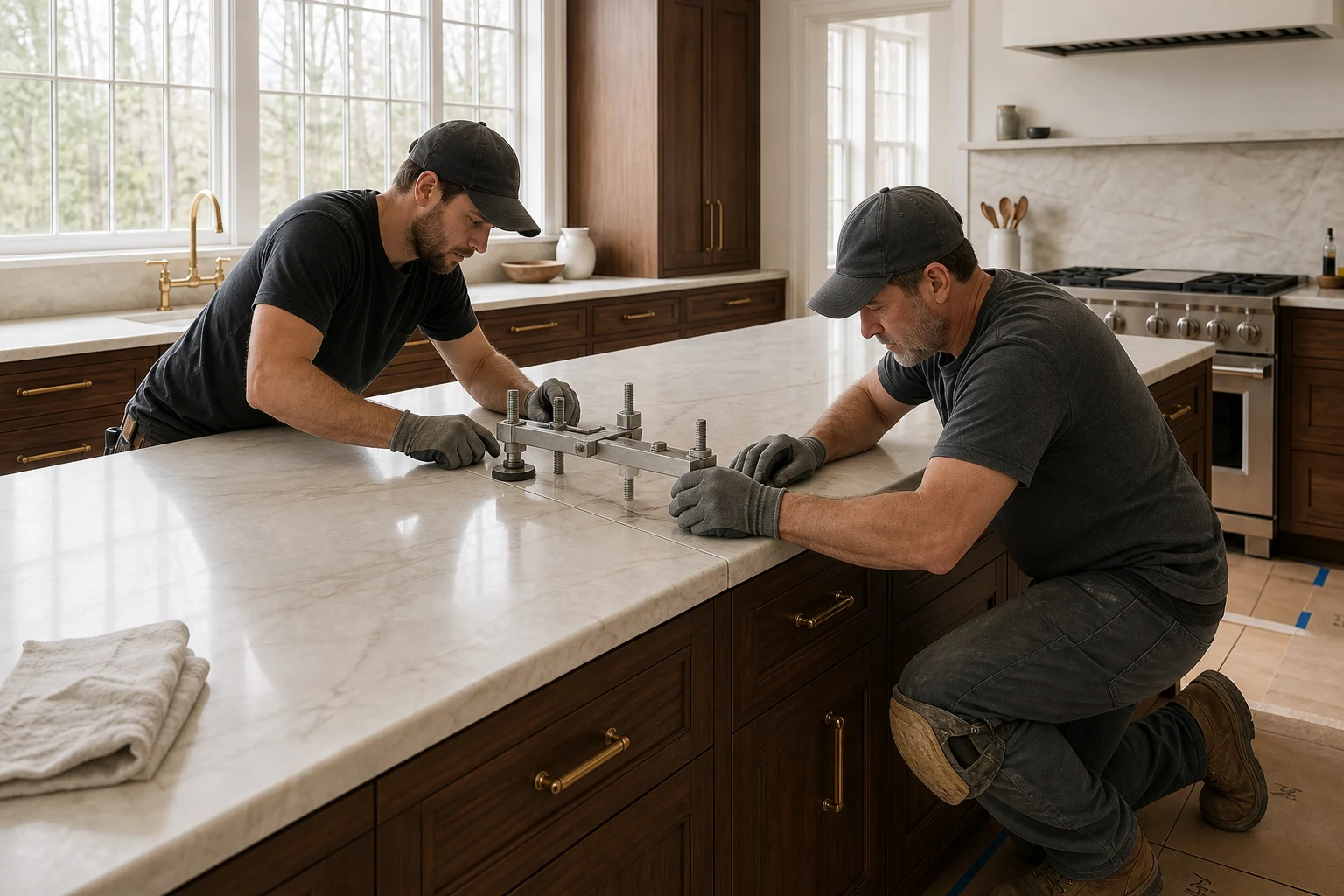
How to replace countertops on the cabinets you have: what to check, what happens to the tile backsplash and sink, timing and cost. From our Bridgeport shop.

Plenty of kitchens that need new counters don't need new cabinets. The boxes are solid, the layout works and the owner just wants the laminate or tired tile gone. Replacing only the countertops is usually the fastest way to change how a kitchen looks. It does come with a few questions a full remodel doesn't: will the old cabinets carry stone, what happens to the tile backsplash, and does the sink have to change. This guide covers what to check before you choose a slab, what changes on install day and what it costs to keep in mind.
Can your cabinets carry stone?
In most homes, yes. A standard base cabinet with a sound frame carries a stone top without trouble, because the weight sits on the cabinet sides and the stone spreads it along the run. What we look at during the estimate and the template visit:
- Whether the cabinet boxes are level and square. Stone does not flex the way laminate does, so a run that dips or twists needs shimming before the top goes on.
- Whether the sink base is still solid. Years of small leaks soften the bottom and the front frame, and that cabinet carries the most load once the sink hangs from the stone.
- Corner and end cabinets with open sides, which may need a support strip.
- Seating overhangs. Laminate tops often hang farther past the cabinets than stone can without support. A deeper overhang may need corbels or hidden steel.
If a cabinet needs work, it is better to know before the stone is cut. A carpenter can usually reinforce a sink base or add a support in an afternoon.

What happens to the existing backsplash
This is the question that decides most of the planning. When the old top comes off, the bottom row of tile usually comes with it or gets chipped, because tile is often set on top of the old counter or grouted tight to it. There is also a height difference to think about. A laminate top with a rolled front edge is often around an inch and a half thick, while a 3 cm stone top is about an inch and a quarter. That can leave a gap or a strip of unfinished wall under the bottom row of tile.
You have three practical choices:
- Keep the tile and accept some touch-up: a strip of matching tile, a stone backsplash ledge or a bead of caulk.
- Add a short stone backsplash, usually around four inches, which covers the line where the old top met the wall.
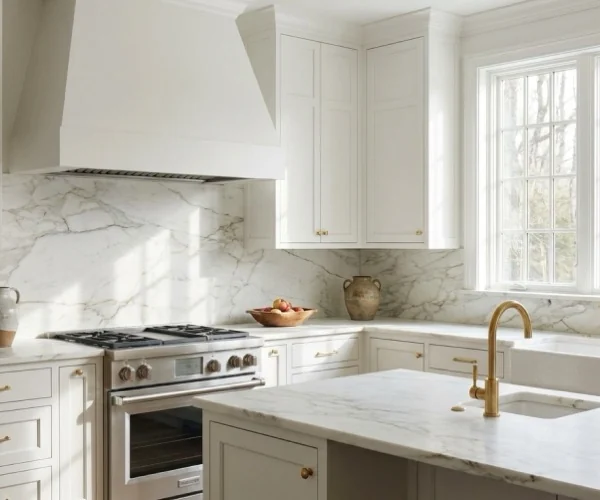
- Take the opportunity to change the backsplash. A full-height slab backsplash costs more but solves the problem completely and is the biggest visual change you can make.
If you are keeping the tile, tell us at the estimate. We plan the thickness and edge with that in mind.
The sink, faucet and cooktop
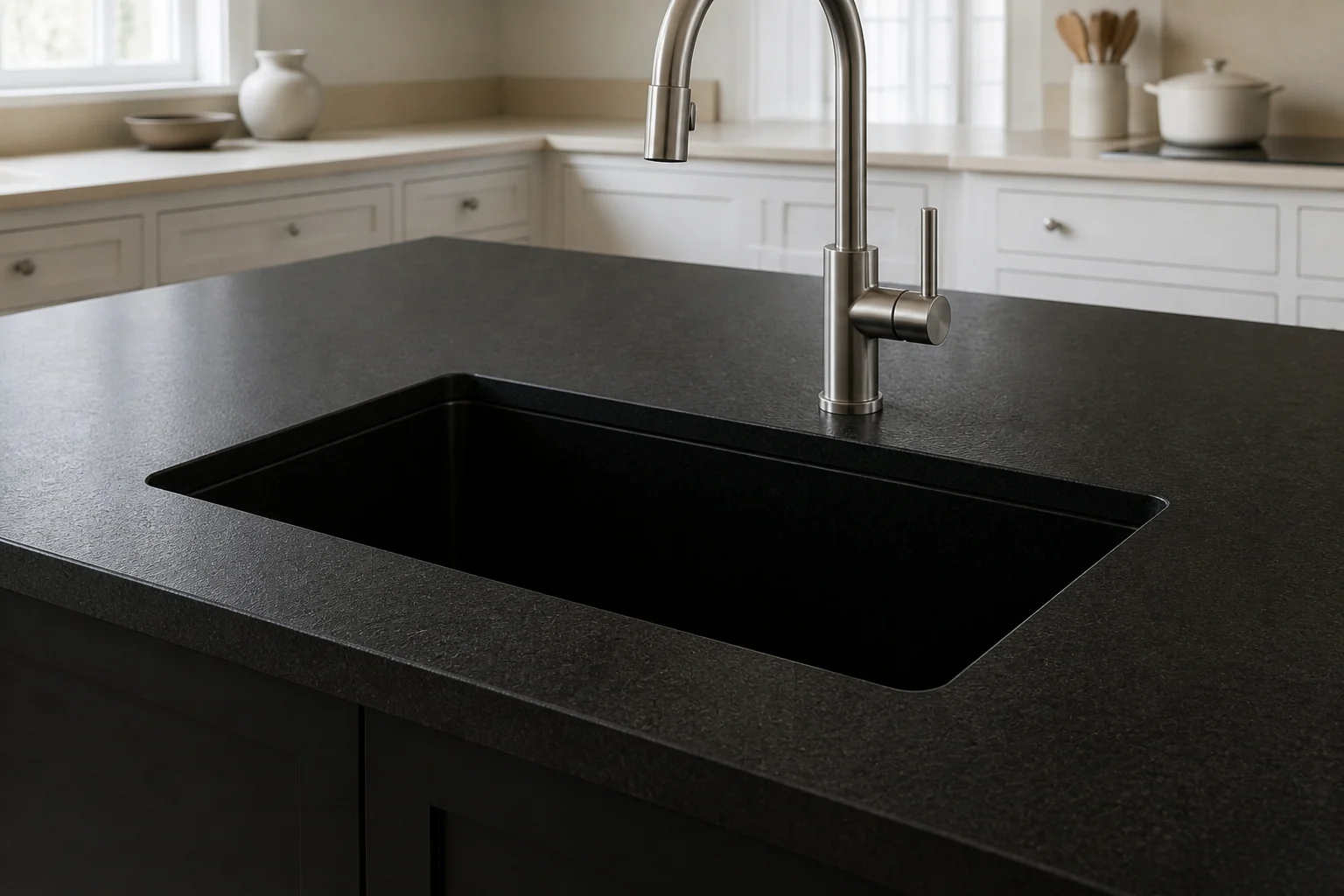
Most laminate kitchens have a drop-in sink, set from above with a rim. Stone lets you undermount a sink so the edge of the counter runs straight into the bowl, and most people make that change. An undermount sink has to be on site, or its exact model known, before we template, because the cutout is made to that sink. Your old drop-in sink can sometimes be reused if you prefer, but an undermount is cleaner and easier to wipe.
Faucet holes are drilled in the stone to suit the faucet you choose, so pick it before the template visit too. A cooktop needs its model and cutout sheet; a slide-in range needs the counter cut to fit around it. The dishwasher usually mounts to the cabinet sides instead of the underside of the counter, since you can't screw into stone.
Choosing the stone and thickness
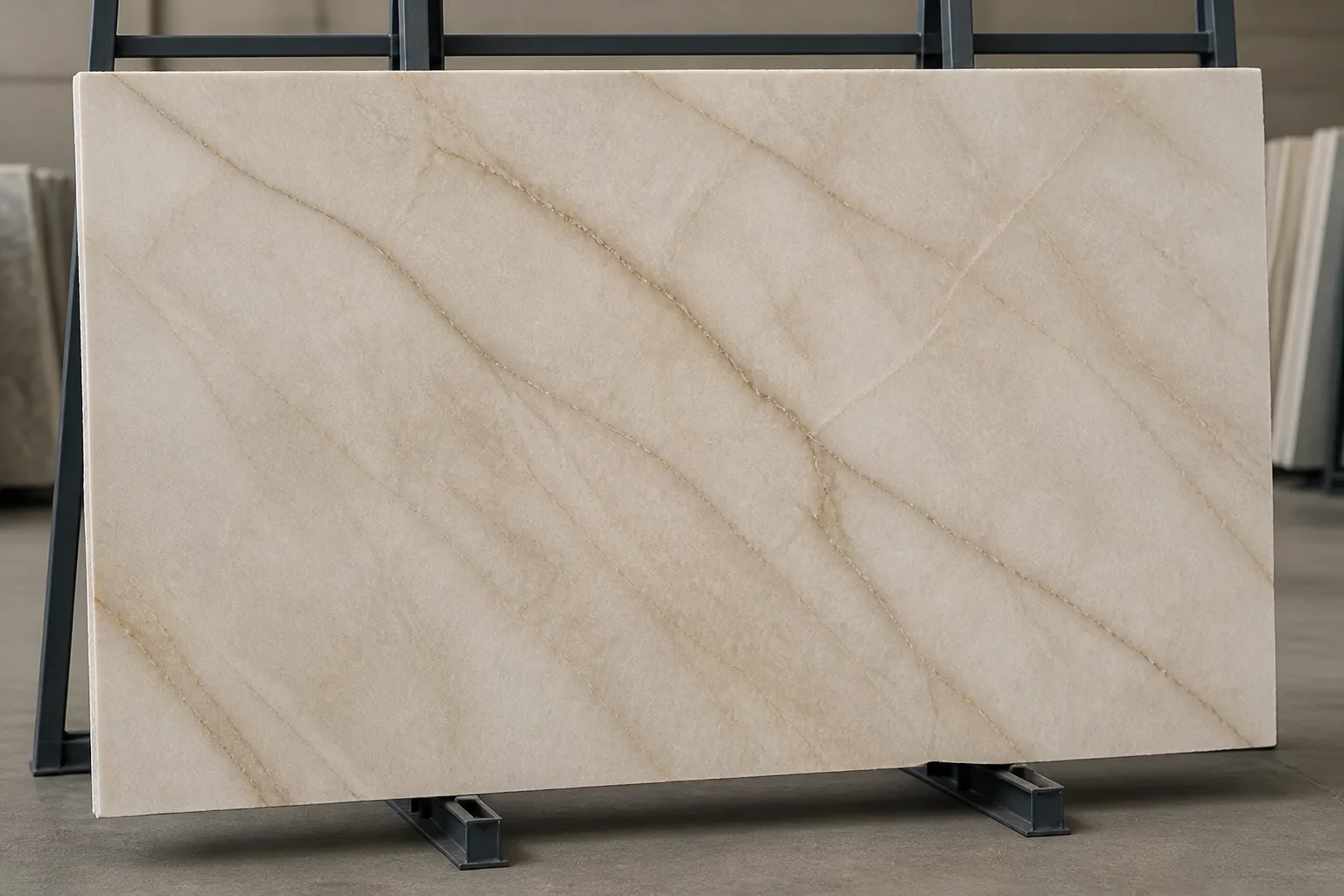
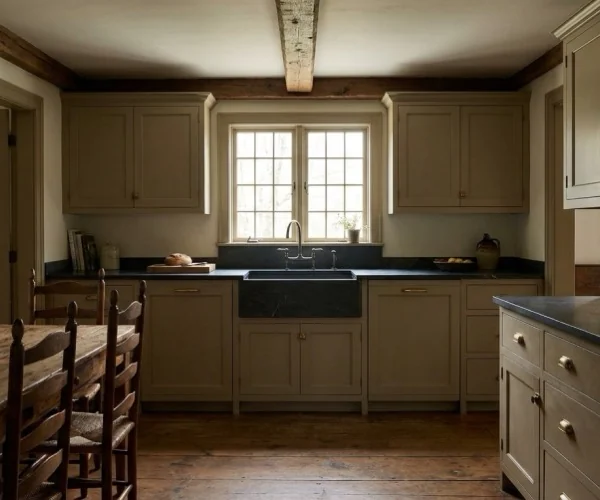
Any material works on existing cabinets. Quartz and granite are the most common choices for counter-only jobs because they are practical and come in a wide range of colors that suit cabinetry that is already in place. Bring a cabinet door, a drawer front or a piece of the tile to the yard; the stone has to work with what is staying.
Most kitchens in our area use 3 cm stone, which needs nothing under it. A 2 cm slab with a built-up edge is another option and can help when the height under a window sill or tile line is tight. Our guide to edge profiles shows how each edge looks.
What install day looks like
- The plumber disconnects the sink and faucet, and appliances that sit under or in the counter are pulled forward.
- The old tops are removed. Laminate comes off in a few pieces; old tile or stone tops take longer.
- The cabinets are checked for level and shimmed where needed.
- The new stone is set, seams are joined and the sink is mounted.
- The plumber reconnects the sink, faucet and dishwasher, usually the next day once the sink adhesive has cured.
Ask at the estimate who handles tear-out, disposal and plumbing, so nothing is left to the last minute. Our process page explains how a job moves from estimate to install.
How long it takes
From template to install is usually one to two weeks. From picking a slab to install is usually four to six weeks overall. The kitchen is out of use for a day or two around install: plan on no sink for a night and a few meals out.
Cost: what changes the number
Counter-only jobs are priced the same way as any other: the stone, the square footage, the edge, the cutouts and the install. A few things are specific to this kind of job:
- Tear-out and disposal of the old tops
- A new undermount sink and faucet
- Backsplash work, if the old tile comes off with the top
- Cabinet reinforcement or overhang supports
Our countertop cost page explains how estimates are put together. If your kitchen is small, a piece from the remnant rack may cover a run or an island for less than a full slab.
Common questions
Do I need new cabinets to get stone countertops? No. Sound, level cabinets carry stone well. We check them at the estimate and tell you if a sink base or corner needs reinforcing.
Can I keep my tile backsplash? Often, with some touch-up. The bottom row of tile is usually damaged when the old top comes off, and the new stone may sit at a slightly different height, so plan for a strip of tile, a short stone backsplash or caulk.
Do I have to replace my sink? Not always, but most people switch to an undermount sink with stone. The sink or its exact model has to be available before the template visit.
How long will the kitchen be out of use? Usually a day or two around install day, plus a night without the sink while the adhesive cures before the plumber reconnects it.
Which stone is best for a counter-only update? Quartz and granite are the most common choices for their low upkeep. Quartz vs. quartzite compares two of the most popular options.
The short version
- Most existing cabinets carry stone if they are level, square and sound.
- Decide what happens to the tile backsplash before you choose the stone.
- Pick the sink, faucet and cooktop before the template visit.
- Template to install is usually one to two weeks; slab selection to install, four to six.
- Budget for tear-out, a new sink and any backsplash touch-up.
If you are thinking about new countertops on the cabinets you have, the kitchen countertops page shows the materials we cut, and you can see slabs at our Bridgeport yard by appointment. We do this work across Fairfield County, from Trumbull to the shoreline towns. Call 203-717-1978 or send a note through our contact page with your measurements and a few photos, and we can tell you what the job involves before you visit.