
Soft gray Virginia soapstone that darkens with use. Non-porous and heat-proof, it cannot stain or etch, and light scratches sand out.
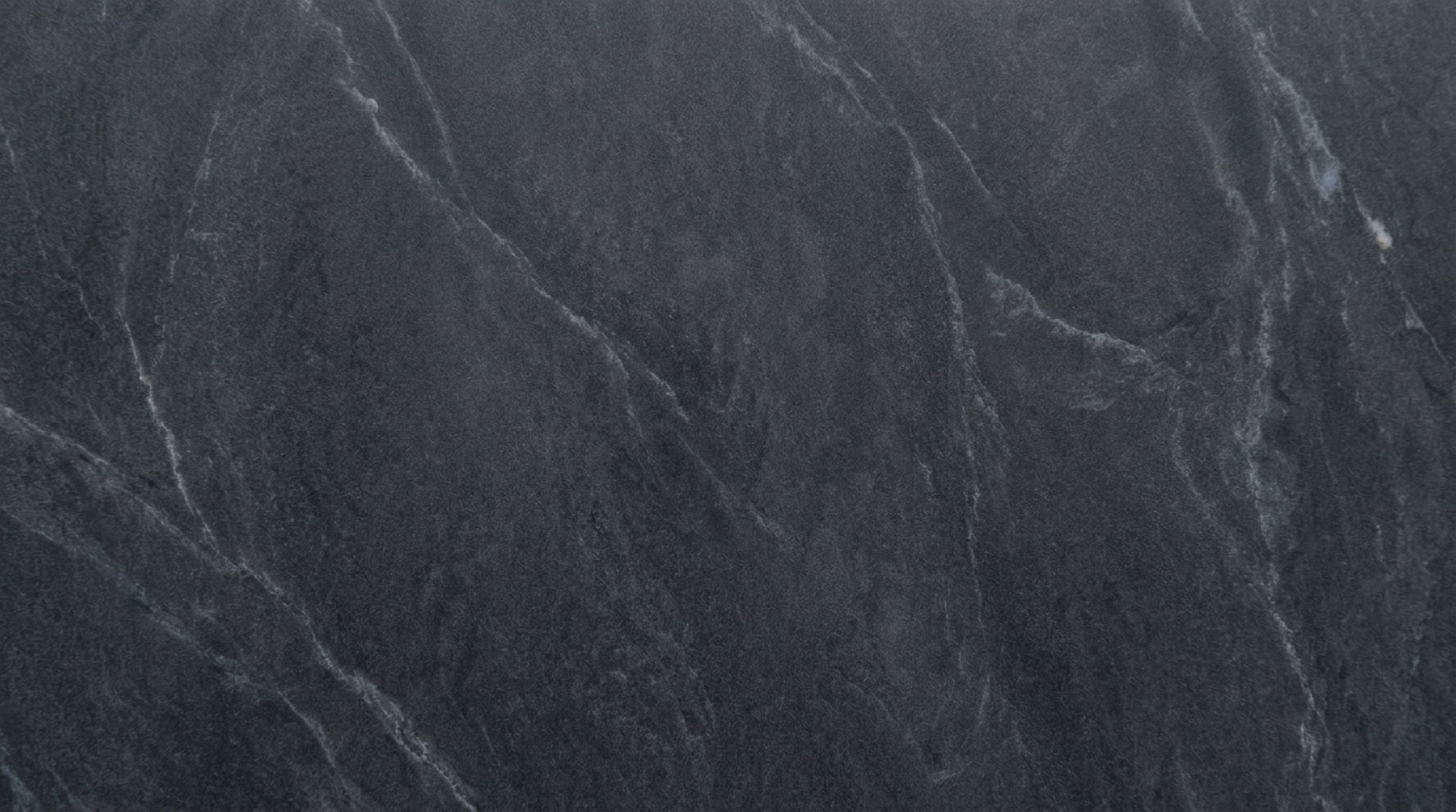
Alberene soapstone is quarried in Schuyler, Virginia, and has been used in American kitchens and laboratories for more than a century. It is soft to the touch and non-porous. It starts a soft gray and darkens toward charcoal with use, slowly over the years or right away with mineral oil.
It suits the older houses across Fairfield County better than almost anything else we fabricate. In a Colonial or a converted barn, a soapstone counter and an integral soapstone sink look right at home.
See it in our soapstone farmhouse kitchen in Easton.
Soapstone is non-porous, so it cannot stain or etch. Acid, wine and oil leave no mark, and it never needs sealing. A hot pan straight off the burner does no harm.
The trade-off is softness. It scratches and dents, and it picks up marks from the first week. Light scratches sand out with fine sandpaper, and mineral oil evens out the color.
Every top is templated, laid out and cut in our Bridgeport shop and installed by our own crew. We photograph your slab, place the template over the photo, and you approve where the veins and seams fall before anything is cut. Installation is usually one to two weeks after templating. See how a project runs and our edge profiles.
Natural stone changes from slab to slab, even within one name. Come to our Bridgeport yard, choose the actual slabs for your job, and approve the layout before we cut.
Book a slab-yard visitGet an estimate